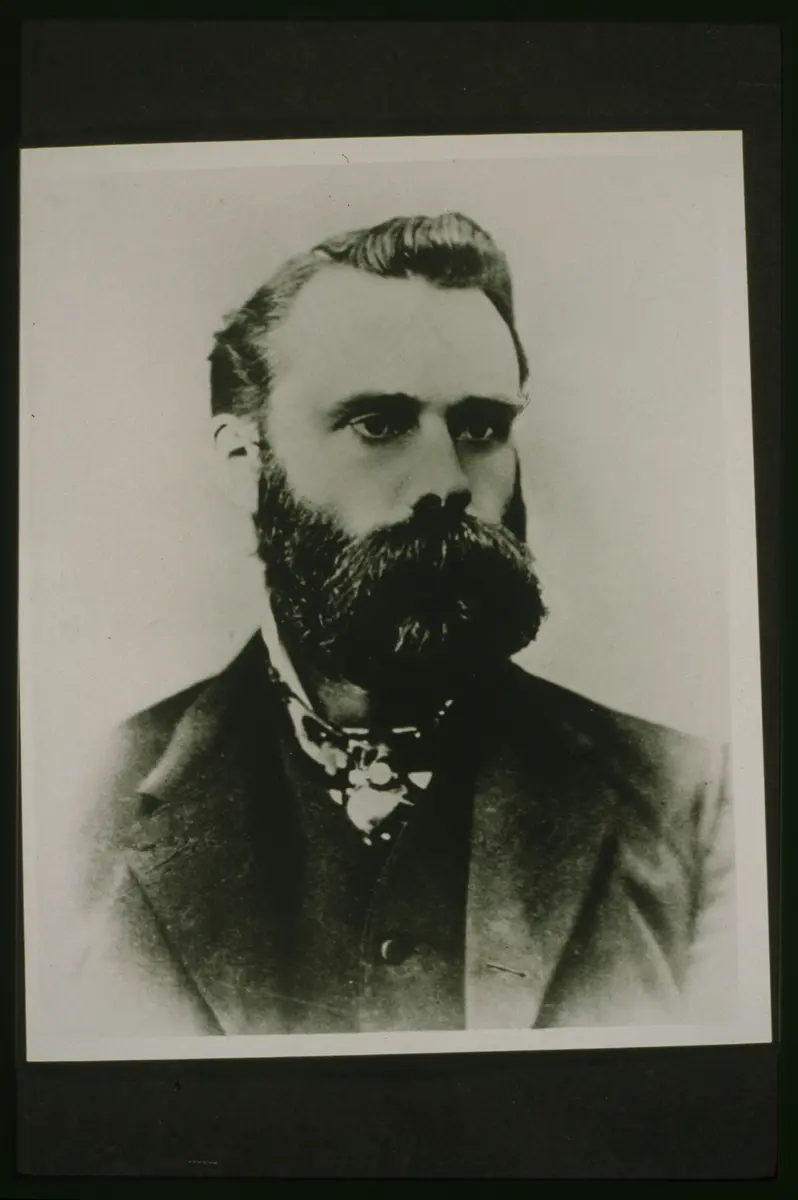
The Dow Jones Industrial Average is first published
“On 26 May 1896 Charles Dow first printed his average of twelve industrial stocks, 40.94; daily in The Wall Street Journal from October 1896, it grew to 30 stocks and is still quoted every day.”
The Dow Jones Industrial Average first appeared on 26 May 1896. Charles Dow, editor of The Wall Street Journal, took the share prices of twelve big industrial companies, added them up and divided by twelve: the answer was 40.94. The twelve were American Cotton Oil, American Sugar, American Tobacco, Chicago Gas, Distilling & Cattle Feeding, General Electric, Laclede Gas, National Lead, North American, Tennessee Coal & Iron, U.S. Leather (its preferred shares) and U.S. Rubber. The idea was one simple number that showed whether the market as a whole was rising or falling; Dow compared his averages to sticks pushed into the sand at the beach to see whether the tide was coming in or going out. At first the new average appeared only now and then; from 7 October 1896 the Journal printed it every day.
The average grew out of a news business. Dow, born in Connecticut in 1851, had reported for newspapers in Springfield and Providence, where he met Edward Jones, and had written about the Colorado silver boom of 1879 before moving to New York to work for Kiernan's financial news agency. In November 1882 he and Jones left to start Dow, Jones & Co., with a third reporter, Charles Bergstresser, whose savings paid the first bills. From a basement office at 15 Wall Street, next to the New York Stock Exchange, they wrote the news on thin copying paper, the 'flimsies', and messenger boys ran it to banks and brokers; a two-page daily summary, the Customers' Afternoon Letter, followed. On 3 July 1884 the Letter printed Dow's first average: eleven stocks, nine of them railroads, the first great national companies, plus Pacific Mail Steamship and Western Union. From February 1885 it was kept every day, with twelve stocks, ten of them railroads.
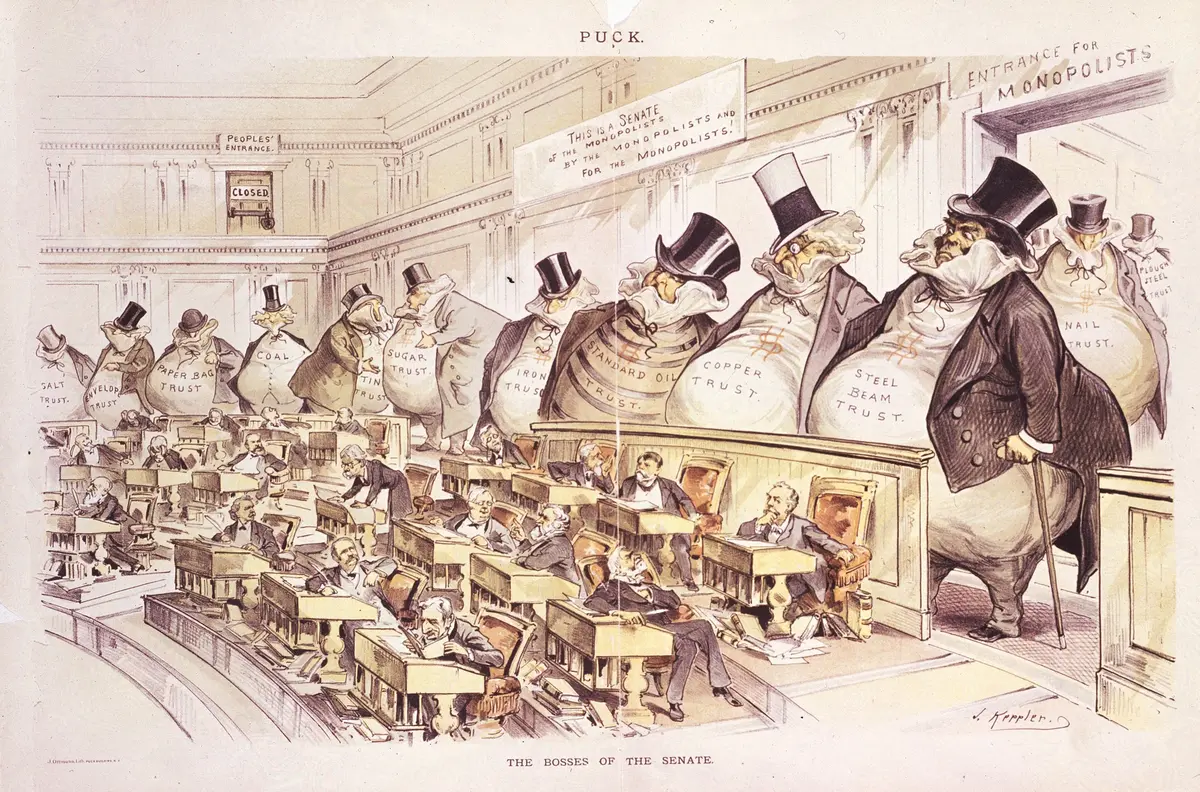
On 8 July 1889 the Letter became a real newspaper, The Wall Street Journal, a name chosen by Bergstresser: four pages for two cents, out at 3.15 every afternoon, with Dow as editor and his twelve-stock average on the front page. In the 1890s a new kind of company came to the market: industrial giants, many of them 'trusts' that had swallowed their rivals, such as the whiskey trust (Distilling & Cattle Feeding) and American Tobacco, which the courts broke up in 1911, and General Electric, formed in 1892 from Edison's company and Thomson-Houston. Shares were still seen as risky bets beside safe bonds, and reliable information was hard to find. Dow gave the industrials an average of their own in May 1896, and that autumn turned his old list into an average of twenty railroads, which lives on as today's Dow Jones Transportation Average.
From 1899 Dow used his two averages in his editorials to explain how prices move: three movements at once, the daily ups and downs, swings of a few weeks or months, and a main trend lasting years. He never used the words 'Dow theory'. They were first printed in 1902 by S. A. Nelson, who collected the editorials in a book, and William Peter Hamilton, the Journal's editor from 1908, built them into a system in which the industrial and railroad averages must confirm each other. Jones left the firm in January 1899; in 1902 Dow and Bergstresser sold it to Clarence Barron, and Dow died in Brooklyn on 4 December 1902, aged 51.
The average was enlarged to 20 stocks in 1916 and to 30 on 1 October 1928, and from 1928 the sum was divided by a special number that is changed whenever a company splits its shares or is replaced, so that the index does not jump. It is still an average of the prices of 30 large companies, which critics call crude beside broader indexes such as the S&P 500, but no other index has its long history, and it is still quoted in the news every day. Of the first twelve, only General Electric lasted: dropped and brought back in the early years, it stayed from 1907 until 26 June 2018, when Walgreens took its place. On 6 February 2026 the Dow closed above 50,000 for the first time.
What happened
- 1882
Charles Dow and Edward Jones leave Kiernan's news agency and found Dow, Jones & Co., with the reporter Charles Bergstresser as partner and paymaster. From a basement office at 15 Wall Street, next to the Stock Exchange, messenger boys run their handwritten news bulletins, the 'flimsies', to banks and brokers.
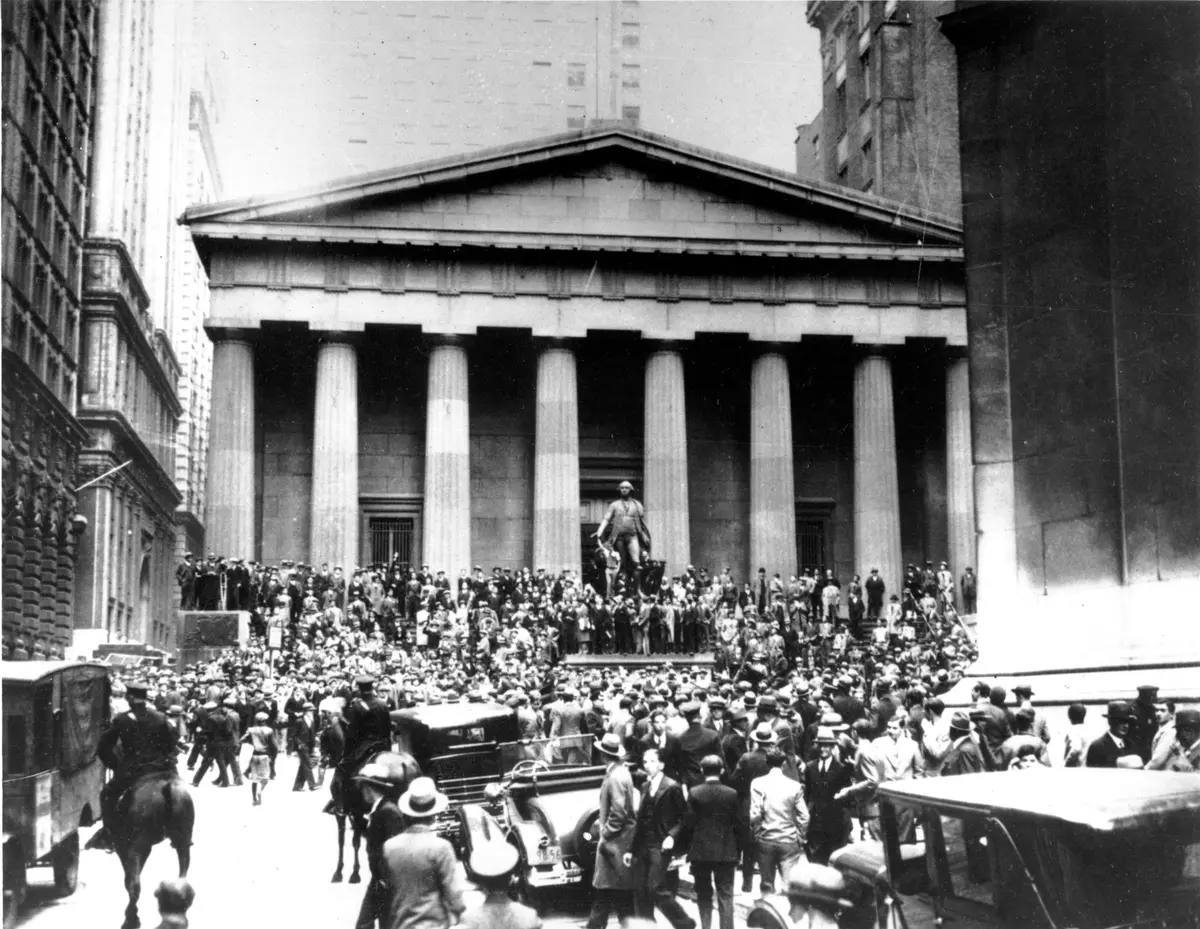
New York Stock Exchange, Broad and Wall Streets: Dow, Jones & Co. opened next door, at 15 Wall Street, in November 1882, and its averages were made from the prices traded here- 1884
The firm's two-page afternoon news sheet, the Customers' Afternoon Letter, prints Dow's first stock average: eleven stocks, nine of them railroads (the New York Central and the Union Pacific among them), plus Pacific Mail Steamship and Western Union.
Wall Street, where Dow, Jones & Co.'s messenger boys carried the news bulletins and the Customers' Afternoon Letter to banks and brokers- 1885
Dow's average is now kept every day: twelve stocks, ten of them railroads. The daily record that Dow Jones later published begins on this day.
New York Stock Exchange, Broad and Wall Streets: Dow, Jones & Co. opened next door, at 15 Wall Street, in November 1882, and its averages were made from the prices traded here- 1889
The Customers' Afternoon Letter becomes The Wall Street Journal, a name chosen by Bergstresser: Vol. 1, No. 1, four pages for two cents, out at 3.15 in the afternoon, with Dow as editor and, on the front page, his average of twelve active stocks, 87.71 at Saturday's close.
- 1892
General Electric is incorporated, taking over Thomas Edison's Edison General Electric Company and merging with Thomson-Houston: one of the new industrial giants, and the one of Dow's future twelve that would stay in the average longest.
General Electric's works at Schenectady, New York: GE was one of Dow's first twelve industrials and the last of them to leave the average, in 2018 - 1896
Dow publishes his first average of industrial stocks: the prices of twelve companies, from American Cotton Oil, American Sugar and American Tobacco to General Electric and U.S. Rubber, added up and divided by twelve. It stands at 40.94.
New York Stock Exchange, Broad and Wall Streets: Dow, Jones & Co. opened next door, at 15 Wall Street, in November 1882, and its averages were made from the prices traded hereAfter months of appearing only now and then, the industrial average is printed in The Wall Street Journal every day, beside Dow's older list, now made into an average of twenty railroads.
New York Stock Exchange, Broad and Wall Streets: Dow, Jones & Co. opened next door, at 15 Wall Street, in November 1882, and its averages were made from the prices traded here