The James Webb Space Telescope's first images
“Launched on Christmas Day 2021 and unfolded alone a million miles away, Webb showed its first pictures on 12 July 2022: a deep field of thousands of galaxies, a planet's air, two nebulae and a galaxy group.”
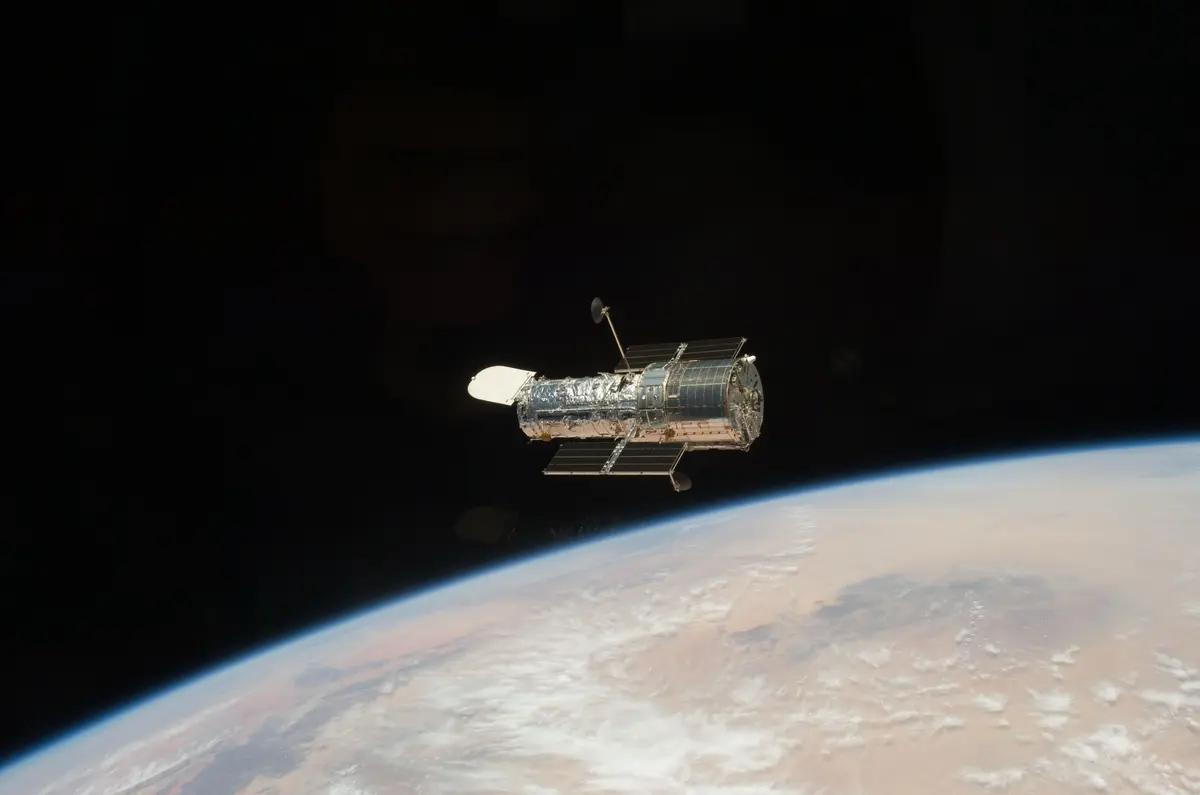
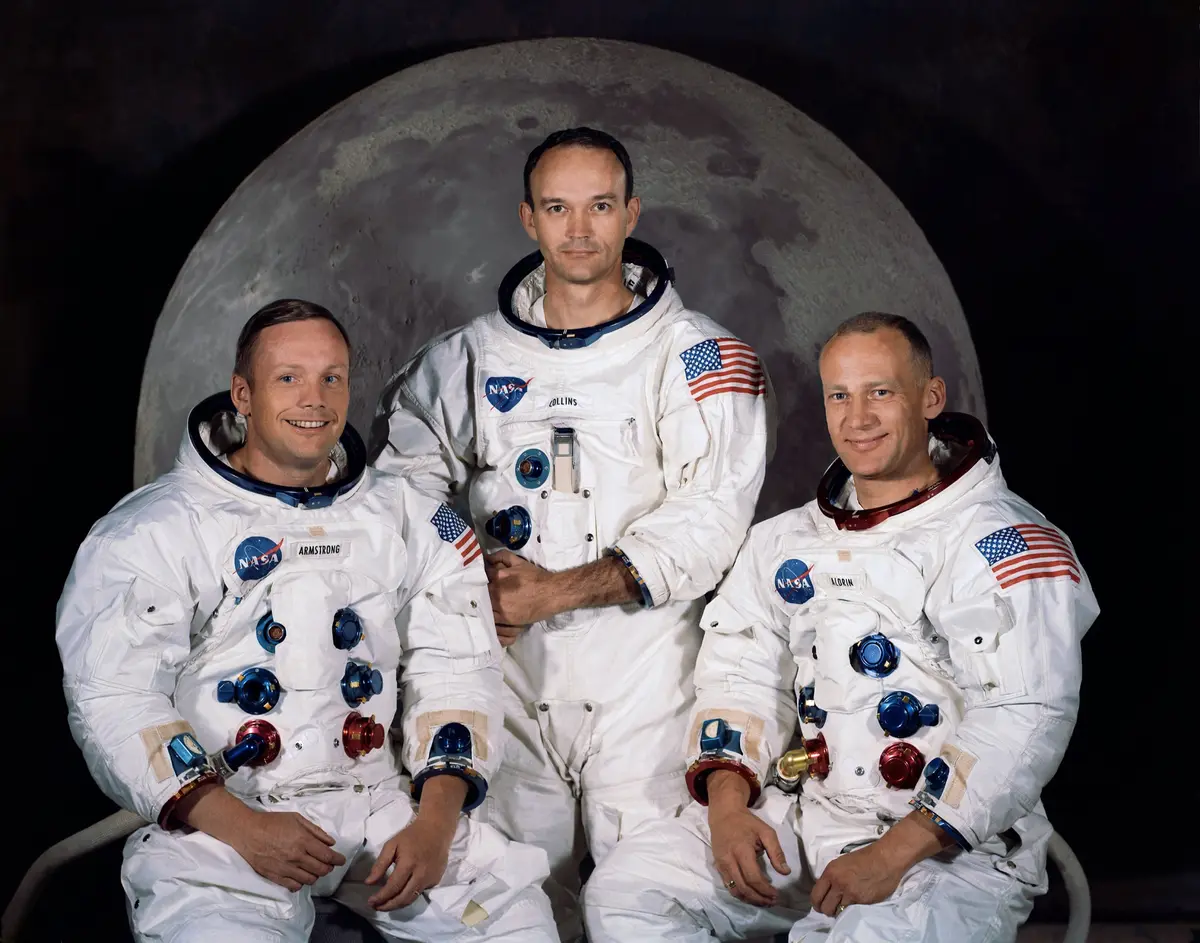
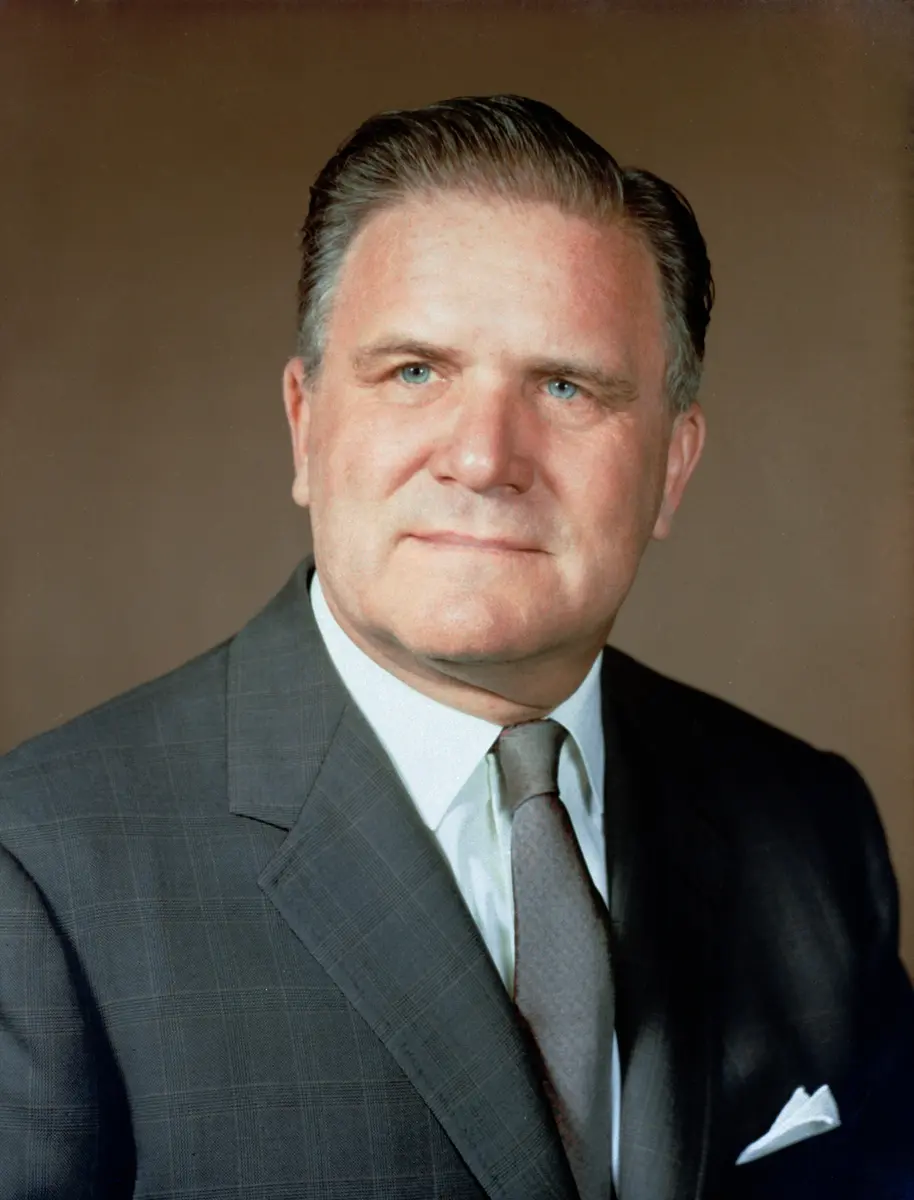
The James Webb Space Telescope is the Hubble Space Telescope's heir, and a very different machine. Its gold mirror is 6.5 metres across, against Hubble's 2.4, and it looks mostly at infrared light, from orange light to the mid-infrared (0.6 to 28 micrometres) where Hubble stops at the near-infrared (115 to 2,500 nanometres). Infrared matters because the light of the earliest galaxies has been stretched by the expanding universe until it arrives as heat, and because it passes through the dust that hides newborn stars. NASA named the telescope in 2002 for James E. Webb, the administrator who ran the agency through the Apollo years. Hubble was built to be visited by astronauts; Webb works 1.5 million kilometres from Earth, where nobody can repair it, so everything had to work the first time.
The mirror and the five-layer sunshield cannot fit in any rocket in their working size, so Webb was folded up inside an Ariane 5. After a clamp-band accident in Kourou in November, a communication fault and bad weather, it lifted off from French Guiana at 12:20 UTC on 25 December 2021. The Ariane let go of it 27 minutes later at about 1,400 kilometres up, and its solar array opened on its own. Then ground teams in Baltimore unfolded it by remote control: the sunshield, the size of a tennis court, between 28 December and 4 January; the secondary mirror on 5 January; the two wings of the main mirror on 7 and 8 January. NASA counted over 50 deployments, 178 release mechanisms and more than 300 places where one failure could have ended the mission. None did. On 24 January a burn of 297 seconds put Webb into its orbit around the Sun-Earth point called L2.
Then came the slow part, which was making 18 hexagonal mirror segments act as one mirror. In February Webb photographed one star, HD 84406, 18 times, once through each segment, and over the next weeks the team moved the segments until the 18 dots became one star. NASA announced on 16 March that the main camera was in focus, MIRI, the coldest instrument, reached its working temperature below 7 kelvins on 7 April, and on 28 April the seventh and last stage of alignment was complete, with better performance than the engineers' most optimistic predictions. In late May a micrometeoroid larger than the models predicted hit one segment, which NASA told the world on 8 June; engineers adjusted the segment, but not all the loss could be corrected.
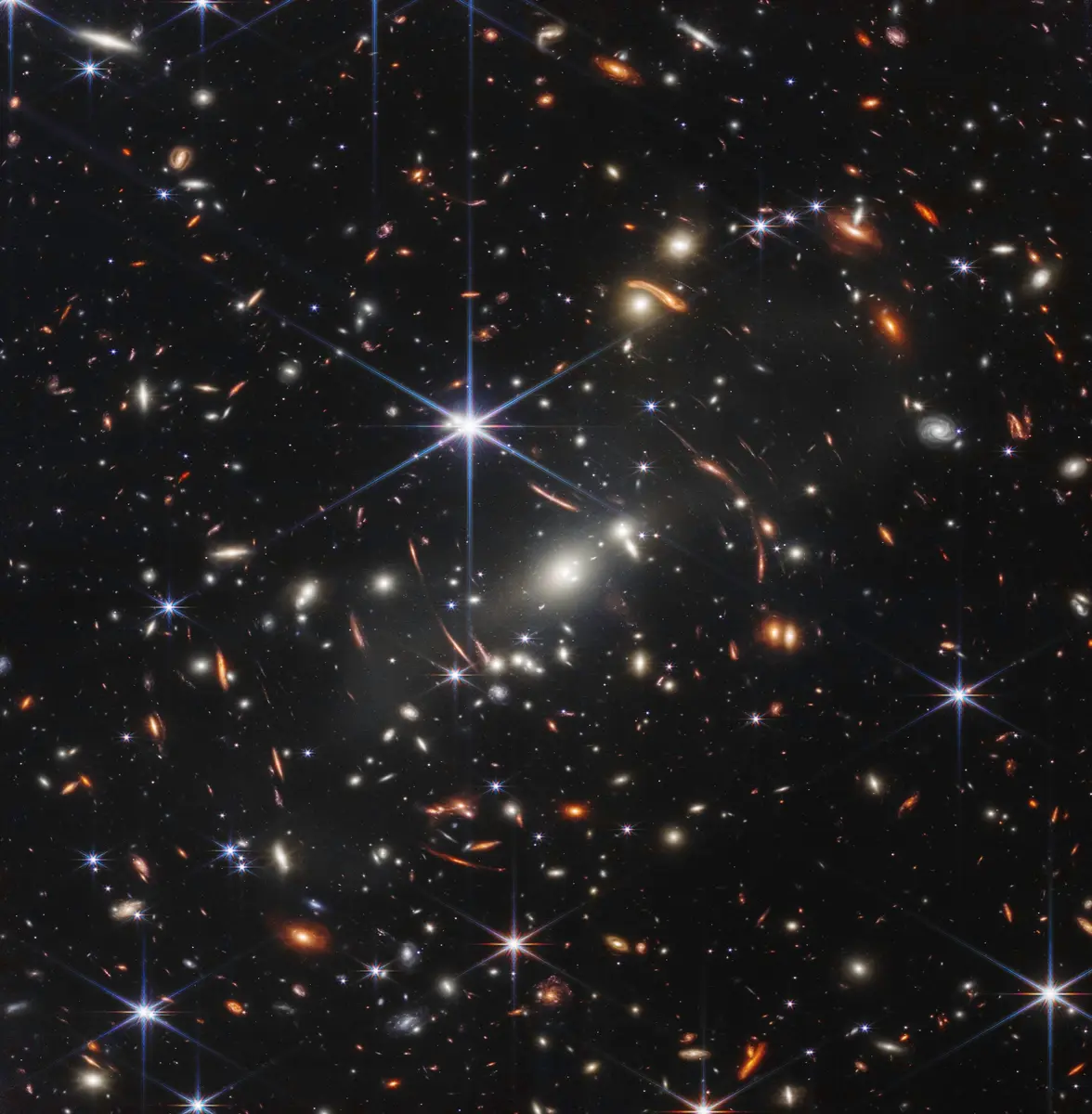
On the evening of 11 July 2022 President Joe Biden and Vice President Kamala Harris previewed the first picture in a White House briefing: Webb's First Deep Field, a cluster of galaxies called SMACS 0723 whose gravity bends the light of thousands of fainter galaxies behind it, built from 12.5 hours of looking at a patch of sky the size of a grain of sand held at arm's length. The next morning, 12 July, NASA, ESA and the Canadian Space Agency released the rest from NASA's Goddard centre: the Cosmic Cliffs of the Carina Nebula, the galaxy group Stephan's Quintet, the Southern Ring Nebula with its second, hidden star, and the spectrum of the hot planet WASP-96 b, which showed water, haze and clouds. They were chosen to show all four instruments at work.
NASA treated that release as the start of Webb's science operations: all 17 modes of its four instruments had been checked, and from then on astronomers worldwide could ask it questions. The pictures were not themselves the discoveries. They were proof that a telescope no one could repair worked better than hoped, and a first answer to the question Hubble's deep fields had asked: how far back can we see?
What happened
- 2021
- 12:20 p.m.
An Ariane 5 lifts off from ELA-3 at Kourou with Webb in its nose, at the opening of the launch window; it is 7:20 in the morning in Florida and Christmas Day. Earlier the clamp-band accident, a communication fault and bad weather had moved the launch from 18 December.
ELA-3, Guiana Space Centre, Kourou: the Ariane 5 launch complex from which Webb lifted off at 12:20 UTC on 25 December 2021 - 12:47 p.m.
The rocket releases Webb 27 minutes after liftoff at about 1,400 km, so exactly that its planned correction is not needed, and the solar array opens on its own about 30 minutes in. The Malindi station in Kenya makes the first contact.
Malindi ground station, Kenya (Broglio Space Centre): the Italian-run ESA antenna that made the first contact with Webb after it left the rocket Three days after launch ground teams begin the remote unfolding of the sunshield: the forward and aft pallet structures swing out to full length.
The Deployable Tower Assembly extends and lifts the telescope away from the sunshield.
The aft momentum flap and the membrane covers are released and deployed.
The two mid-booms extend and pull the sunshield out to its full width of 14 metres; the team then pauses for a day to tune power and the tensioning motors.
- 2022
- 4:59 p.m.
At about 11:59 a.m. EST (16:59 UTC) the fifth and last layer of the sunshield is tensioned. NASA says the sunshield, which is the size of a tennis court, is fully deployed.
- 5:23 p.m.
The secondary mirror, on its support structure, is deployed and its latching confirmed at about 12:23 p.m. EST (17:23 UTC).
- 7:11 p.m.
The port wing of the main mirror folds out and locks at about 2:11 p.m. EST (19:11 UTC).
- 6:17 p.m.
The starboard wing extends and latches at 1:17 p.m. EST (18:17 UTC), the last large deployment. In Baltimore the operations team cheers, and the three months of mirror alignment can begin.
Space Telescope Science Institute, Baltimore: Webb's science and mission operations centre, where the team unfolded the telescope and celebrated the last latch on 8 January 2022 - 7:00 p.m.
At 2 p.m. EST (19:00 UTC) the last of three course corrections, a burn of 297 seconds, puts Webb into its halo orbit around L2, about 1.5 million kilometres from Earth.
NASA reports that Webb's first starlight has passed through the whole telescope into NIRCam; the image sequence on the star HD 84406 had begun on 2 February and the seven-phase alignment starts.
NASA shows the first Webb image: 18 dots of light, the same star seen through each of the 18 unaligned mirror segments, made from 1,560 exposures.
The team finishes 'fine phasing': the segments now make one image of one star, and NIRCam is fully aligned with the mirrors. NASA announces it on 16 March and shows the sharp star.
MIRI, the mid-infrared instrument, reaches its working temperature below 7 kelvins; the sunshield alone had only cooled it to about 90 kelvins, and a cryocooler did the rest.
NASA announces that the seventh and final stage of alignment is complete: images in all four instruments are as sharp as the telescope's size allows, better than the engineers' most optimistic predictions.
Sometime between 23 and 25 May a micrometeoroid hits mirror segment C3, harder than the models predicted. NASA tells the world on 8 June; the team adjusts the segment, though not all of the loss can be corrected.
NASA reports that all 17 operating modes of Webb's four instruments have been checked and commissioning is complete.
- 10:13 p.m.
At 6:13 p.m. in Washington, in the South Court Auditorium of the Eisenhower Executive Office Building, President Biden and Vice President Harris preview the first image, Webb's First Deep Field, with NASA Administrator Bill Nelson and project scientist Jane Rigby.
Eisenhower Executive Office Building, Washington: the White House complex building whose South Court Auditorium held the 11 July 2022 preview of the first image Webb's First Deep Field is released in full: galaxy cluster SMACS 0723, 12.5 hours of NIRCam, with its lensed arcs.
The Carina Nebula's 'Cosmic Cliffs', about 7,600 light-years away, shows young stars that visible light had hidden.
Stephan's Quintet becomes the largest image Webb has made, with over 150 million pixels.
The Southern Ring Nebula shows, for the first time, the dust cloak round the second star at its centre.
WASP-96 b's spectrum shows water, haze and clouds in the air of a hot gas giant 1,150 light-years away, from a 6.4-hour observation.
- 2:30 p.m.
At 10:30 a.m. EDT NASA begins the broadcast from Goddard that releases Webb's first full-colour images and spectra, with Nelson, Zurbuchen, Robinson and Mather. NASA counts it as the start of science operations.
NASA Goddard Space Flight Center, Greenbelt, Maryland: Webb's NASA home, and the site of the broadcast that released the first five targets on 12 July 2022