The telescope
“In 1608 a Middelburg spectacle maker showed the Dutch government a tube with two lenses that made far things look near; within two years it was turned on the sky, and in 1611 it was named the telescope.”
In the last days of September 1608 a spectacle maker from Middelburg in Zeeland, Hans Lipperhey, brought a new device to The Hague: a tube with a convex lens at the far end and a concave lens at the eye, which made distant things look three or four times nearer. The government of Zeeland had given him a letter of recommendation dated 25 September, the oldest surviving record of a working telescope. Prince Maurice of Nassau, commander of the young Dutch Republic, tried it from the tower of his quarters, from where the clock of Delft and the church windows of Leiden could be seen, and showed it to his Spanish enemy Ambrogio Spinola, who was in the city to negotiate a truce. On 2 October Lipperhey asked the States General, the Republic's government, for a patent for thirty years.
He never got it. Within two weeks Jacob Metius of Alkmaar and an unnamed young man of Middelburg claimed the same art, and the device was so simple that it could not be kept secret. The States General paid Lipperhey 900 guilders for three improved instruments for both eyes, gave Metius 100, and in December refused a patent. Historians now think the telescope was not invented by one person at one moment: spectacle makers had sold convex and concave lenses for a century and more, and what happened in 1608 was that a good enough instrument reached people who saw what it was for, in war first of all. A third Middelburg claimant, Sacharias Janssen, appears only in testimony collected decades later.
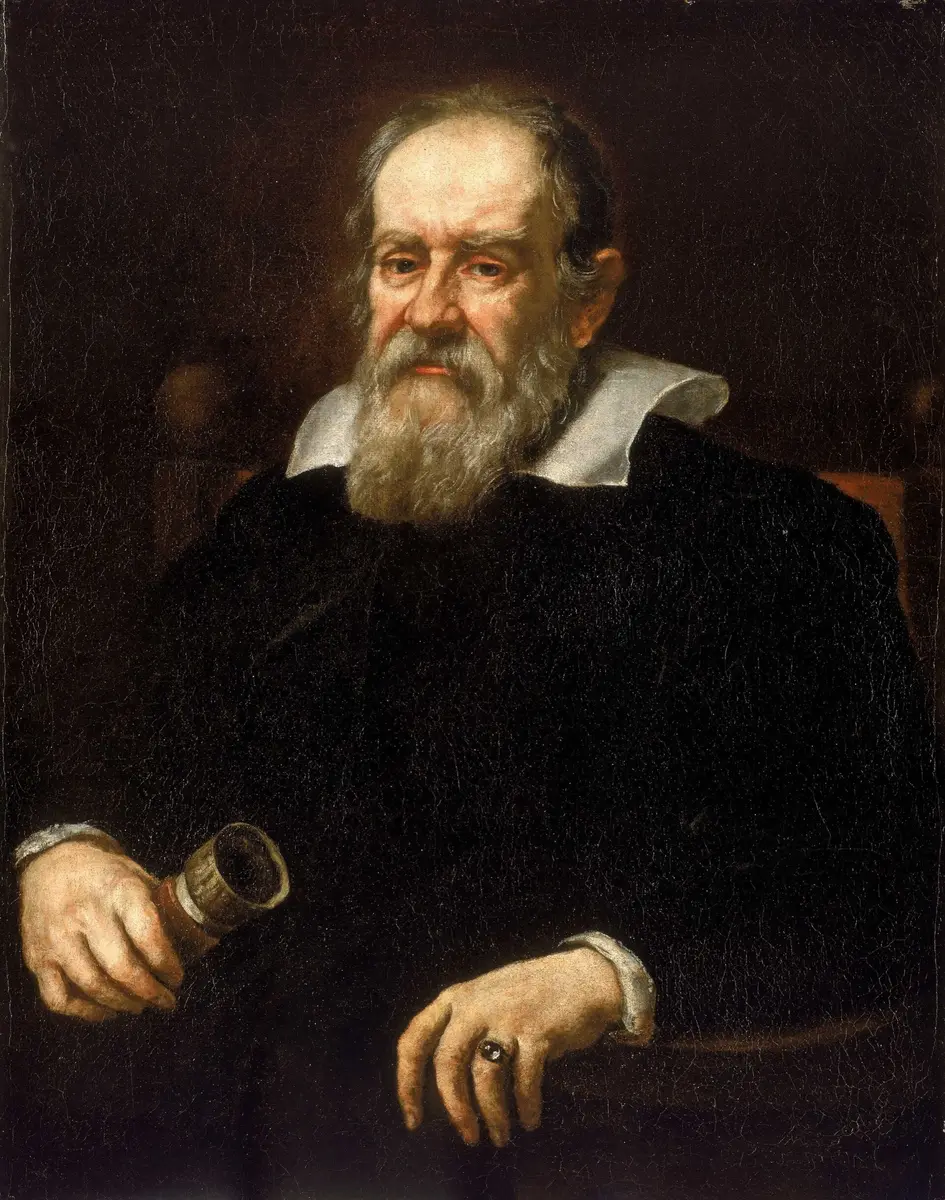
The news spread fast. A French newsletter about the visit of the King of Siam's ambassadors to Prince Maurice, printed in October, described the glasses and said they even showed stars too faint to see; by November it was read in Paris and in Venice. In spring 1609 copies were made in Brussels for the Spanish Netherlands' ruler, Archduke Albert, and spyglasses were sold on the Pont Neuf in Paris; by summer they had reached Milan, Padua and Naples. In England Thomas Harriot drew the Moon through a six-power glass on 26 July 1609. In Padua Galileo, who had heard of the Dutch device, made better ones, showed one to Venetian noblemen from the bell tower of St Mark's and to the Senate in August, and with an instrument magnifying about twenty times found mountains on the Moon and four moons around Jupiter, which he published in March 1610.
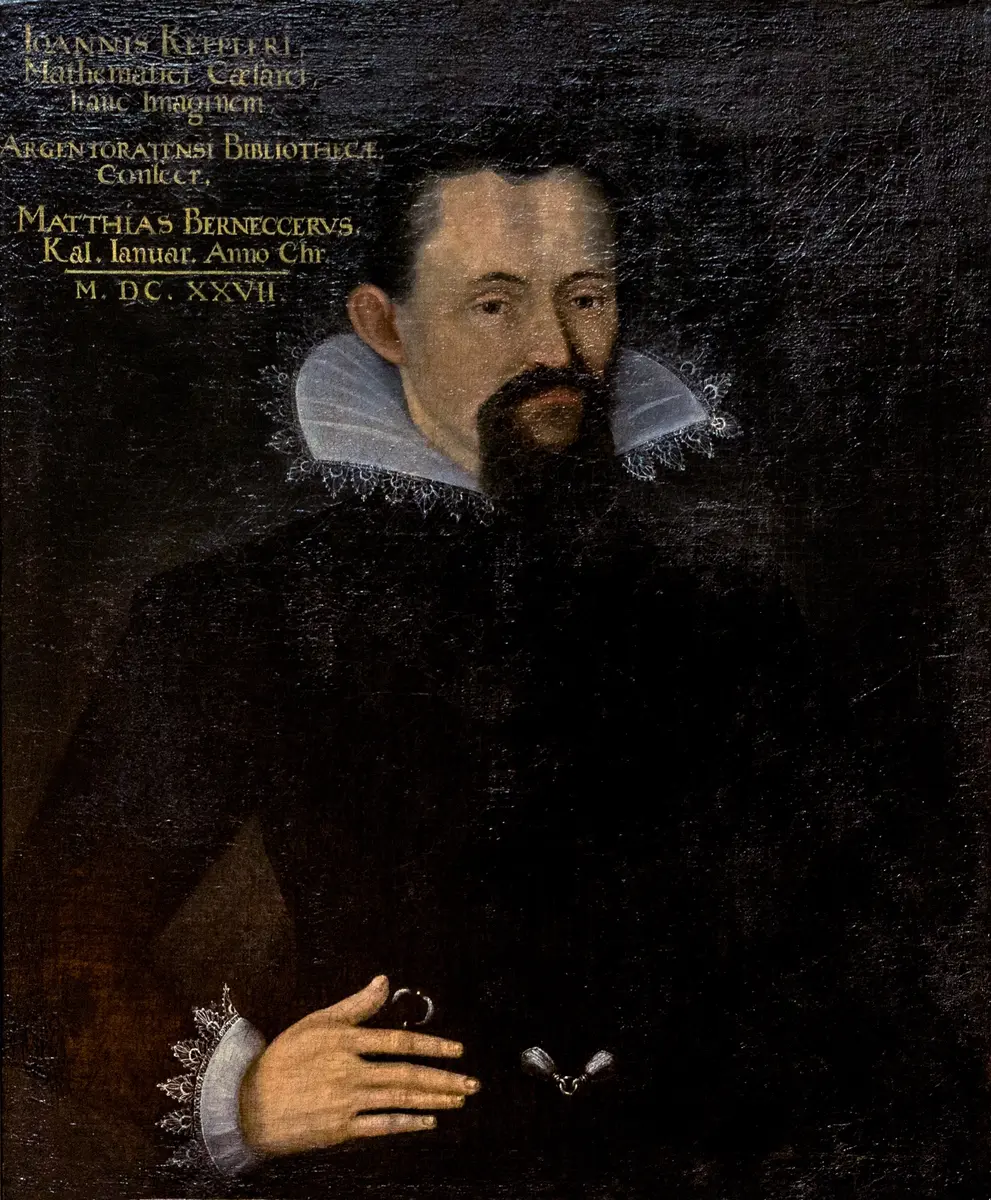
Johannes Kepler explained how the lenses work in his Dioptrice, dedicated on 1 January 1611, and showed that a telescope could also be made with two convex lenses; that design turns the image upside down but, as Christoph Scheiner later found, gives a brighter and much wider view, and as the 'astronomical telescope' it was generally accepted by astronomers by the middle of the century. In April 1611, at a banquet of the Accademia dei Lincei in Rome, the instrument got the name it still has, telescopium, from the Greek for 'far' and 'to see'. It was the first instrument to extend one of the human senses, and it showed that anyone with a good tube could see what Aristotle had never imagined, so it helped move authority in the study of nature from famous men to instruments and observation.
What happened
- 1608
In Middelburg, the councillors of Zeeland write to their delegates at the States General for the spectacle maker Hans Lipperhey, who 'claims to have a certain device by means of which all things at a very great distance can be seen as if they were nearby'. It is the earliest record of a telescope.
Nieuwe Kerk, Middelburg: Hans Lipperhey's house and workshop, De Amandel Bale, stood against this church's front on the Kapoenstraat (demolished in 1848); he set out from here for The Hague in September 1608By this day, when the Spanish commander Ambrogio Spinola leaves The Hague, Lipperhey has shown his glass to Prince Maurice. From the tower of the prince's quarters they can make out the clock of Delft and the church windows of Leiden. Spinola, shown it too, says he will no longer be safe, since he can be seen from afar; Maurice's brother Frederick Henry promises that their men will not shoot at him.
Maurits Tower, Binnenhof, The Hague: the tower of the stadtholder's quarters, from which the spyglass was shown to Prince Maurice and Spinola at the end of September 1608 and tested by the States General's deputies on 4 OctoberThe States General discuss Lipperhey's request for a thirty-year patent, or else a pension, on his 'kijker' (looker). They ask whether he can make one to look through with both eyes.
Maurits Tower, Binnenhof, The Hague: the tower of the stadtholder's quarters, from which the spyglass was shown to Prince Maurice and Spinola at the end of September 1608 and tested by the States General's deputies on 4 OctoberAfter deputies of each province test the instrument on the tower of Maurice's quarters the day before, the States General agree to pay Lipperhey 900 guilders for three instruments for both eyes, with lenses of the best glass or rock crystal, 300 at once; he is not to make them for anyone else.
Maurits Tower, Binnenhof, The Hague: the tower of the stadtholder's quarters, from which the spyglass was shown to Prince Maurice and Spinola at the end of September 1608 and tested by the States General's deputies on 4 OctoberIn Middelburg the councillors of Zeeland note that another man, a young man whose name the clerk leaves blank, also knows the art of making instruments to see faraway things nearby.
Nieuwe Kerk, Middelburg: Hans Lipperhey's house and workshop, De Amandel Bale, stood against this church's front on the Kapoenstraat (demolished in 1848); he set out from here for The Hague in September 1608Jacob Metius of Alkmaar asks the States General for a patent on the same instrument, admitting his is of poor material. They tell him to perfect it first and give him 100 guilders.
Alkmaar: home of Jacob Metius, who asked the States General for a patent on 17 October 1608A French newsletter on the embassy of the King of Siam to Prince Maurice, written and printed in The Hague in October, with the spyglass in its last pages, reaches Paris by mid-month, where it is printed again, and then Lyon; in Venice, Galileo's friend Paolo Sarpi receives the same report.
Lipperhey delivers the first of his binocular instruments this month, and the deputies find it good; but the States General refuse him a patent, since others clearly know the art and the tube is easy to copy.
Maurits Tower, Binnenhof, The Hague: the tower of the stadtholder's quarters, from which the spyglass was shown to Prince Maurice and Spinola at the end of September 1608 and tested by the States General's deputies on 4 October- 1609
Lipperhey delivers the other two binocular instruments. The 900 guilders let him buy the house next to his own in Middelburg, which he names after the three far-seers he made, De Drie Vare Gesichten.
Nieuwe Kerk, Middelburg: Hans Lipperhey's house and workshop, De Amandel Bale, stood against this church's front on the Kapoenstraat (demolished in 1848); he set out from here for The Hague in September 1608In Brussels, copies made at Spinola's request are tested at a heron hunt held for Archduke Albert outside the city: the papal nuncio is amazed to see a tower more than ten miles away and orders one for Pope Paul V.
Coudenberg palace, Brussels: the court of Archduke Albert and Infanta Isabella, where Spinola reported on the Dutch glass and copies were made in early 1609Spyglasses magnifying three times are on sale in the spectacle makers' shops on the Pont Neuf in Paris. The same month the Twelve Years' Truce between Spain and the Dutch Republic is agreed at Antwerp.
- 9:00 p.m.
At Syon House near London, Thomas Harriot draws the five-day-old Moon as seen through a six-power telescope: the first known drawing made with a telescope.
Syon House, west London: Thomas Harriot, living in its grounds, drew the Moon through a six-power telescope on 26 July 1609 Having heard of the Dutch device and made his own, Galileo takes Venetian noblemen up St Mark's Campanile to look through it as far as Chioggia, Treviso and Padua. On 24 August he presents it to the Doge and Senate, and the next day they confirm his chair at Padua for life and double his salary.
St Mark's Campanile, Venice: Galileo showed his telescope to Venetian noblemen from the top on 21 August 1609In Naples the scholar Giambattista della Porta sketches a spyglass that has reached him, a silver tube with a convex and a concave lens, in a letter to Prince Federico Cesi in Rome, and calls it a hoax taken from his own book. It is the earliest known drawing of a telescope.
With an instrument that now magnifies about twenty times, Galileo begins drawing the Moon night after night, until 19 December.
- 1610
Galileo's Sidereus Nuncius comes off the press in Venice. It tells how he built his perspicillum and how to test it, and reports mountains on the Moon, countless new stars and four moons of Jupiter.
In Prague Johannes Kepler, imperial mathematician, gets the use of a good enough telescope and sees Jupiter's moons for himself.
Jupiter's moons are now seen by others too: by Harriot in England, by Peiresc in Provence and by the Jesuit mathematicians of the Collegio Romano in Rome.
- 1611
Kepler dates the dedication of his Dioptrice to Ernst, Archbishop-Elector of Cologne. Printed at Augsburg this year, it is the first theory of how the lenses of a telescope work, and shows that two convex lenses would also make one.
In Rome, Galileo is made a member of the Accademia dei Lincei at a banquet given by its founder, Prince Federico Cesi, and there the instrument is first called a telescope, from the Greek for 'far' and 'to see'.