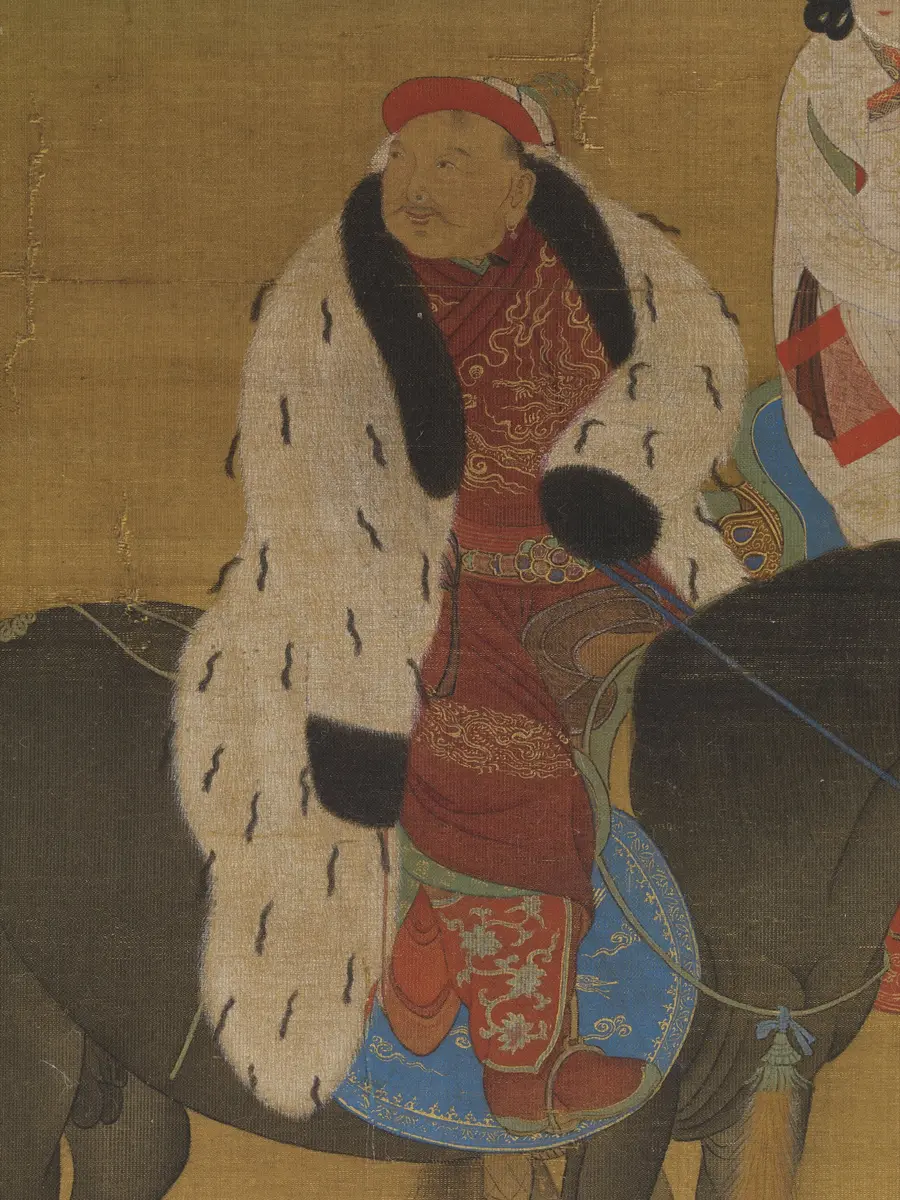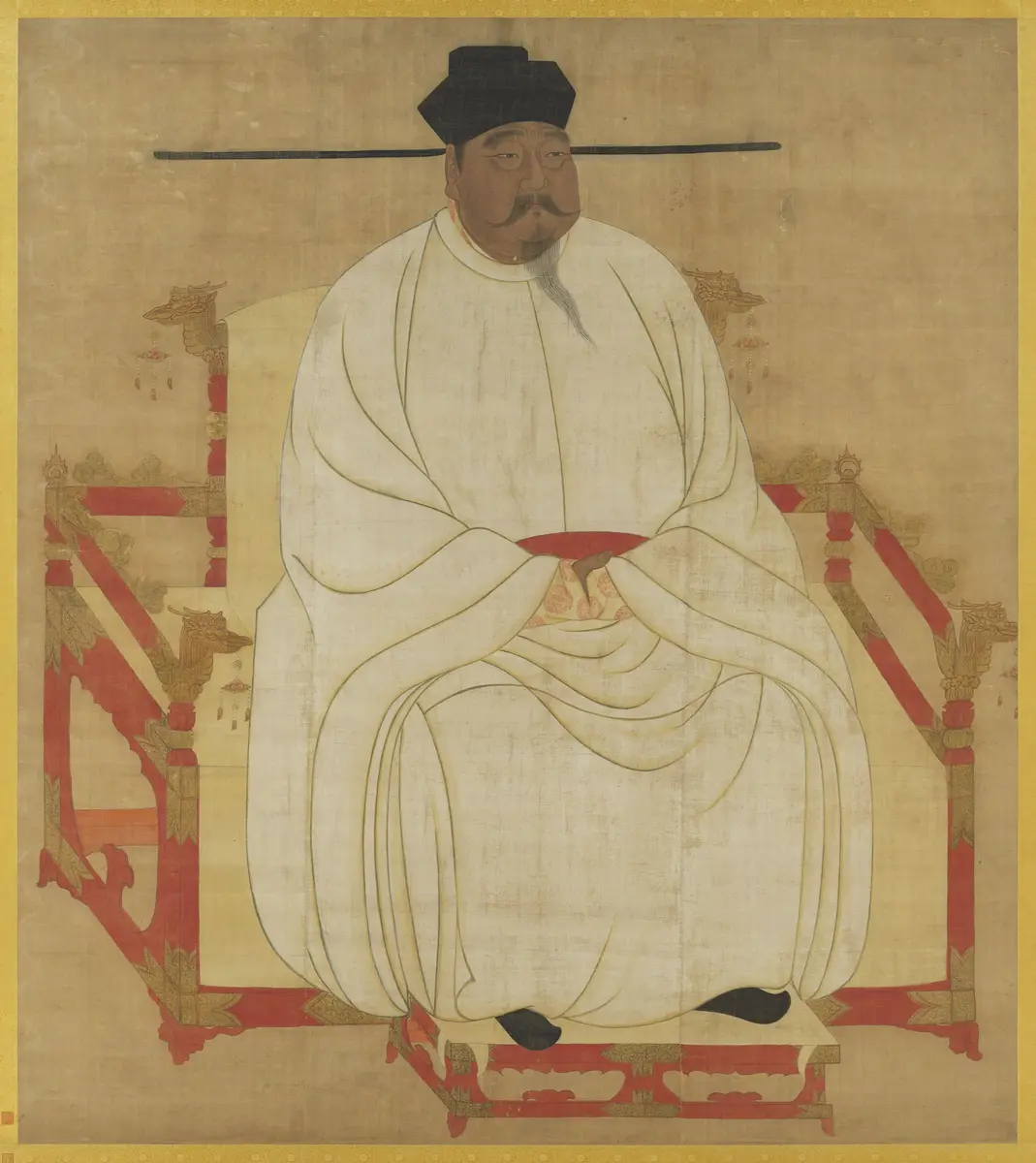
Song dynasty (China)
“China's dynasty of 960–1279, ruled from Kaifeng and, after the Jurchen took the north in 1127, from Hangzhou: an age of scholar-officials, paper money, printing and great painting, ended by the Mongols.”
The Song dynasty ruled China from 960 to 1279, in what Britannica calls one of the most brilliant cultural epochs in Chinese history. It began with a coup. Early in 960 the army of the Later Zhou, the last of the short-lived dynasties that had followed the fall of the Tang, camped at a bridge outside the capital, Kaifeng, and hailed its commander Zhao Kuangyin as emperor. As Emperor Taizu he talked the other generals into giving up their armies for titles and pensions, put civil officials over the provinces, strengthened the examinations that chose them, and conquered the southern kingdoms one by one: Sichuan in 965, the far south in 971, the lower Yangtze in 975. His brother Taizong completed the reunification in 979, but the Khitan Liao empire kept the land around today's Beijing, and from 1005 the Song paid it a yearly 100,000 ounces of silver and 200,000 bolts of silk for peace.
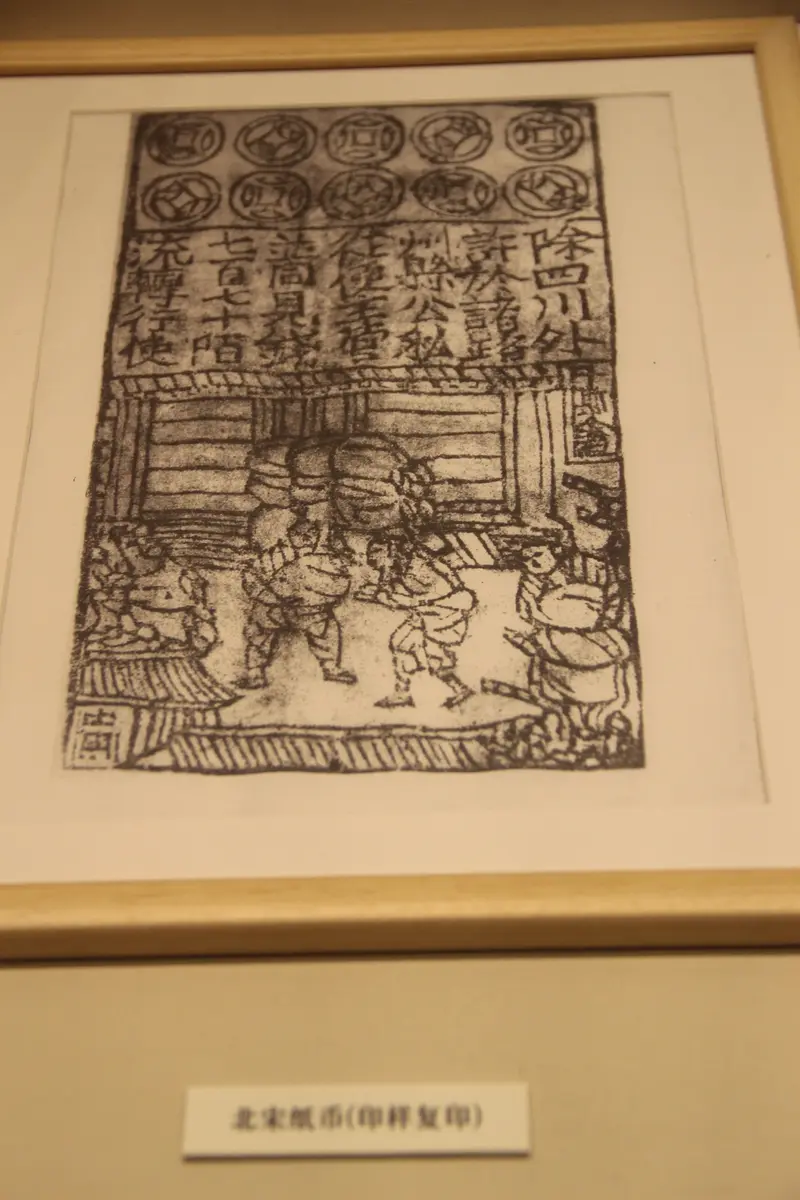
The Northern Song, ruled from Kaifeng until 1127, was governed by scholar-officials chosen in written examinations, and China's economy grew as never before. Early-ripening rice from Champa allowed two harvests a year, the population passed 100 million, the output of iron and coal soared, and Kaifeng, with some 600,000 to 700,000 people, was the greatest trading city of East Asia. The state issued the world's first government paper money in 1024, printing put books into many more hands, and the period produced the first written gunpowder formulas, the compass at sea and Su Song's water-driven astronomical clock. Politics were bitter: from 1069 the minister Wang Anshi's New Policies lent money to farmers and drew the state into trade; his opponents, the poet Su Shi among them, undid them after the emperor's death in 1085, and the reformers came back in 1093. It was also a great age of art, from the mountain landscapes of Fan Kuan and Guo Xi to the court of Emperor Huizong, himself a painter and calligrapher.
Huizong's foreign policy ruined the dynasty. He allied with the Jurchen of Manchuria against the Liao, and when the Liao fell in 1125 the Jurchen, now ruling as the Jin dynasty, turned on the Song. Huizong abdicated in favour of his son, Kaifeng was besieged in 1126 and taken in January 1127, and both emperors were carried off to captivity in Manchuria with most of the imperial house. One son of Huizong, away from the capital, escaped and became Emperor Gaozong. He rebuilt the state in the south, made Hangzhou his capital under the name Lin'an, 'temporary safety', and in 1141 bought peace with a heavy yearly tribute and the status of a vassal of the Jin, giving up the north. The general Yue Fei, who wanted to fight on, was put to death on a false charge of treason and became China's great symbol of patriotism.
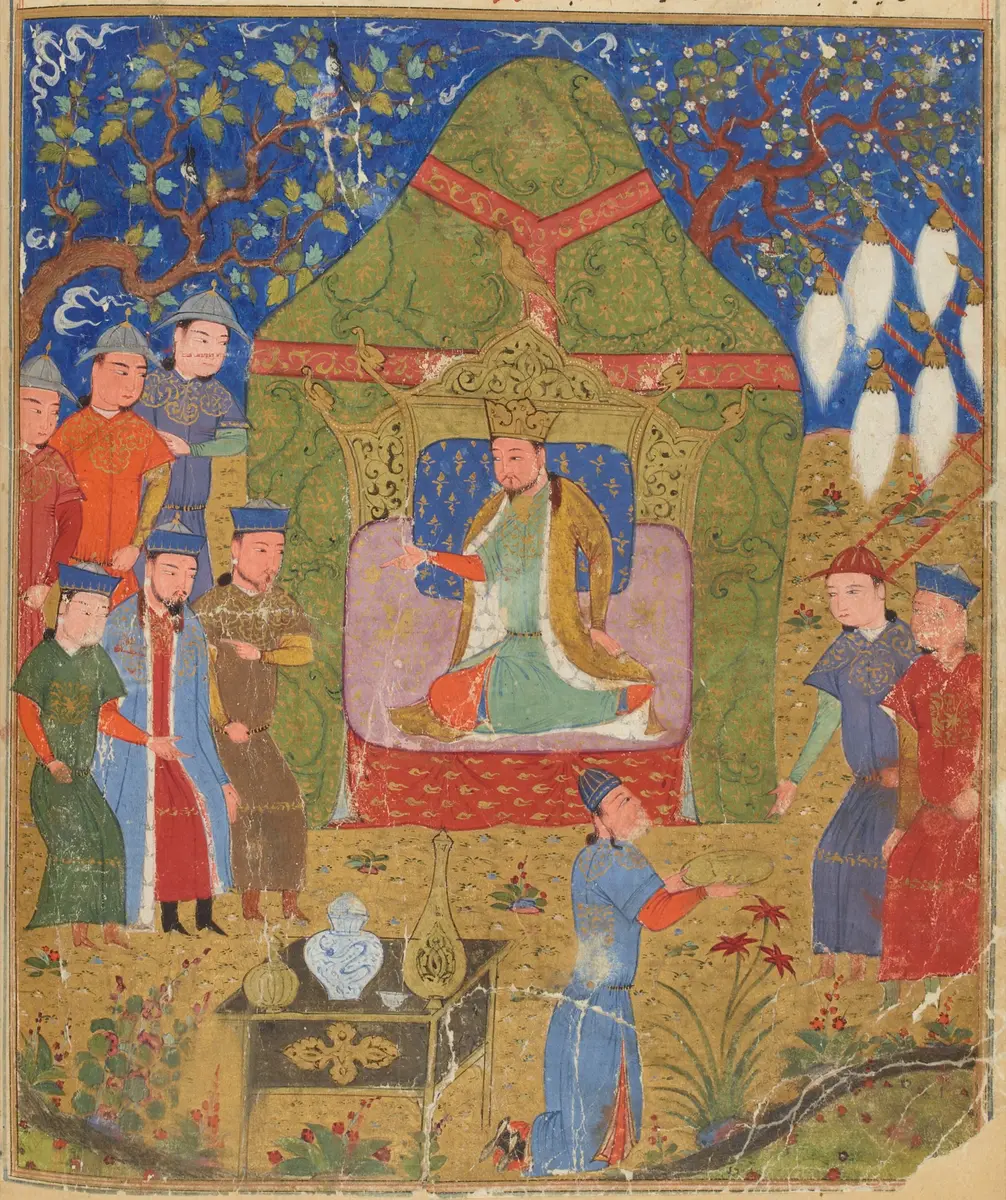
The Southern Song (1127–1279) was smaller than the Northern Song but grew richer still. Lin'an, between West Lake and the sea, reached about a million people, and Quanzhou, the port foreign sailors called Zayton, traded with Southeast Asia, India and the Persian Gulf, shipping silk and porcelain out and bringing pepper, fragrant woods and ivory in. The philosopher Zhu Xi (1130–1200) shaped the Neo-Confucianism that dominated Chinese thought for centuries. In 1234 the Song helped the Mongols destroy the Jin, and then faced the Mongols alone. Kublai Khan's armies besieged the river fortress of Xiangyang from 1268 to 1273, took Lin'an in February 1276 and carried the boy emperor north; in March 1279, at the sea battle of Yamen on the coast south of Guangzhou, a loyal minister drowned himself with the last Song prince, and for the first time all of China was ruled by foreign conquerors.
Much that later seemed typically Chinese began under the Song: rice and tea as the everyday food and drink, the scholar-official who rose by examination, the Neo-Confucian orthodoxy of the later empire, the curving roof with upturned corners, and also the binding of women's feet. Its landscape paintings, its calligraphy and its ceramics, from the pale blue-green Ru ware of the Northern Song to the celadons of Longquan, are among the great treasures of the museums of Taipei and Beijing. Historians struck by its cities, paper money and printed books have called Song China 'early modern', centuries ahead of Europe; as Britannica notes, though, that early start did not lead on to a modern economy.
What happened
- 960
Facing a Khitan invasion, the Later Zhou army camps at Chenqiao outside Kaifeng; its officers wake their commander, Zhao Kuangyin, robe him in imperial yellow and proclaim him emperor. He returns to the capital, takes the throne from the boy ruler and names his dynasty Song.
Chenqiao, north-east of Kaifeng: where the army proclaimed Zhao Kuangyin emperor in 960- 965
Song armies take Sichuan, the first of the southern kingdoms to fall; Taizu mixes war with lenient terms that promise defeated rivals generous treatment.
- 975
After taking the far south in 971, the Song conquer the rich lower Yangtze: the Southern Tang capital Jinling (Nanjing) falls, and its poet-king Li Yu is taken to Kaifeng.
- 976
Taizu dies at Kaifeng, aged 49; his younger brother takes the throne as Taizong instead of Taizu's young son, which leaves a legend of murder.
Kaifeng (Bianjing), the Northern Song capital until the Jurchen took it in 1127- 979
Wu-Yue having surrendered without a fight in 978, Taizong conquers Northern Han, the last of the rival states, and China is reunited, except the region around today's Beijing, which stays in the hands of the Khitan Liao.
- 1005
After a Liao invasion that the emperor Zhenzong meets in person, the two empires swear a peace at Chanyuan: the Song will pay the Khitan 100,000 ounces of silver and 200,000 bolts of silk a year. The peace holds for more than a century.
- 1024
The state issues its own paper notes in Sichuan, where merchants' deposit notes had circulated: the world's first government paper money.
- 1034
After the death of the empress dowager who had ruled in his name, Renzong deposes his first empress, Guo, a divorce Confucian critics hold against him, and makes Lady Cao, of a leading military family, empress in her place; she will act as regent for his successor in 1063.
- 1044
Reformers at court stop the Tangut state of Xi Xia on the north-west frontier and make peace with it; the same year the court's military encyclopedia, the Wujing zongyao, records the first written gunpowder formulas.
- 1069
The young emperor Shenzong puts Wang Anshi in charge; his New Policies lend money to farmers at sowing time, buy and sell goods for the state, reassess land taxes and organise village militias, and split the officials into bitter factions.
- 1072
The court painter Guo Xi paints Early Spring and dates it, one of the masterpieces of Northern Song landscape painting.
- 1082
At Huangzhou on the Yangtze, where he was banished in 1079 for opposing the reforms, the poet Su Shi writes his two poems on the Cold Food festival in the rain; his copy of them becomes the most admired calligraphy of the Song.
- 1085
Shenzong dies; the regent empress dowager recalls the conservatives, who undo most of the New Policies until 1093, when the young emperor Zhezong brings the reformers back.
- 1090
In Kaifeng, Su Song's astronomical clock tower, driven by a water-wheel, turns an armillary sphere and a celestial globe and tells the hours; his illustrated account of it is written about this year.
Kaifeng (Bianjing), the Northern Song capital until the Jurchen took it in 1127 - 1100
Huizong comes to the throne: a painter of birds and flowers, a calligrapher in his own 'slender gold' style and a great collector, who brings the court painting academy to its height and leaves the government to favourites.
- 1112
On the evening after the Lantern Festival, cranes circle over the Xuande Gate of the palace in Kaifeng; Huizong takes them for a good omen and paints them, with a poem in his own hand.
Kaifeng (Bianjing), the Northern Song capital until the Jurchen took it in 1127- 1126
The Jurchen, who had destroyed the Liao in 1125 as Song allies, invade the Song; Huizong abdicates in favour of his son Qinzong, and the Jin army lays siege to Kaifeng, which buys it off with ransoms of gold and silver.
Kaifeng (Bianjing), the Northern Song capital until the Jurchen took it in 1127- 1127
The Jin come back and take Kaifeng. The two emperors and most of the imperial house are carried off to Manchuria and the Northern Song ends; Huizong's son Zhao Gou, away from the capital, escapes and later that year is proclaimed emperor as Gaozong.
Kaifeng (Bianjing), the Northern Song capital until the Jurchen took it in 1127- 1135
Huizong dies in captivity at Yilan in Manchuria, after nearly ten years as a prisoner of the Jin.
- 1138
Gaozong, who had chosen Hangzhou over Nanjing as safer, makes it the capital of the Southern Song, still called Lin'an, 'temporary safety', the imperial headquarters Marco Polo later knew as Quinsai.
Hangzhou (Lin'an), the Southern Song capital from 1138 until the Mongols took it in 1276 - 1142
Yue Fei, the general who had won back land from the Jin and wanted to retake the north, is put to death in prison at Lin'an on a false charge of treason, while Gaozong and his minister Qin Hui conclude the peace: a yearly tribute, the status of a vassal of the Jin and the border on the Huai River.
Yue Fei's tomb and temple by West Lake, Hangzhou- 1175
The philosopher Zhu Xi debates Lu Jiuyuan and, with Lu Ziqian, compiles 'Reflections on Things at Hand', the anthology at the heart of the Neo-Confucianism that will dominate Chinese thought for centuries.
- 1193
About this year Huang Shang, tutor of the prince who will reign as Ningzong from 1194, draws for him a map of China, a star chart, a table of history and a plan of Suzhou, to remind him of the northern half of the empire still in foreign hands.
- 1225
Zhao Rukua, superintendent of customs at Quanzhou, writes his account of the foreign lands Chinese merchants trade with, from Srivijaya to Malabar, Cairo and Baghdad, and of their goods: pearls, ivory, myrrh, pepper.
The Luoyang Bridge at Quanzhou, the Song port foreigners called Zayton - 1229
The plan of Pingjiang, today's Suzhou, is carved on stone: the walled city with its canals, streets, bridges, offices and temples, the oldest surviving detailed map of a Chinese city.
Suzhou (Pingjiang): the Confucian Temple that keeps the Song stone maps of 1229 and 1247 - 1234
The Jin empire, attacked from the north by the Mongols and from the south by their Song allies, is destroyed; its last emperor, Aizong, kills himself. The Song now face the Mongols alone.
- 1259
The great khan Möngke dies in Sichuan while besieging a Song fortress; his brother Kublai, who succeeds him, offers peace, but the Song chancellor Jia Sidao interns his envoy.
- 1268
The Mongols, with Chinese troops and engineers, lay siege to Xiangyang on the Han River, the fortress that blocks the way to the Yangtze; it holds out for five years until its commander surrenders in 1273.
Xiangyang on the Han River, besieged by the Mongols from 1268 to 1273 - 1276
Mongol armies take Lin'an. The empress dowager and the boy emperor are taken north to Kublai's capital, Dadu, while loyalists flee south with two young princes.
Hangzhou (Lin'an), the Southern Song capital from 1138 until the Mongols took it in 1276- 1279
At Yamen, off the coast south of Guangzhou, the Mongol fleet destroys the last Song fleet; the minister Lu Xiufu takes the boy emperor Zhao Bing in his arms and jumps into the sea. The Song dynasty ends, and all of China is ruled by foreign conquerors for the first time.
Yamen: the sea battle of March 1279 that ended the Song