Tang dynasty (China)
“China's golden age (618–907): a cosmopolitan empire ruled from Chang'an at the end of the Silk Road, the age of the poets Li Bai and Du Fu and of Wu Zetian, the only woman to rule China as emperor.”
The Tang dynasty ruled China from 618 to 907, and the Chinese have looked back on it ever since as a golden age. Its founder, Li Yuan, was a general of the Sui dynasty who rose in revolt in 617, took the capital Chang'an (today's Xi'an) and proclaimed himself emperor the next year. His second son, Li Shimin, did much of the fighting against rival claimants; in 626 he ambushed and killed two of his brothers at the Xuanwu Gate of the palace and forced his father to step down. As the emperor Taizong (626–649) he became one of the most admired rulers in Chinese history. He defeated the Eastern Turks and carried Chinese power further west than ever before, and he made a government built on Sui models work: officials partly chosen by examination, a law code that became the model for all of East Asia, and a copper coin that lasted as long as the dynasty.
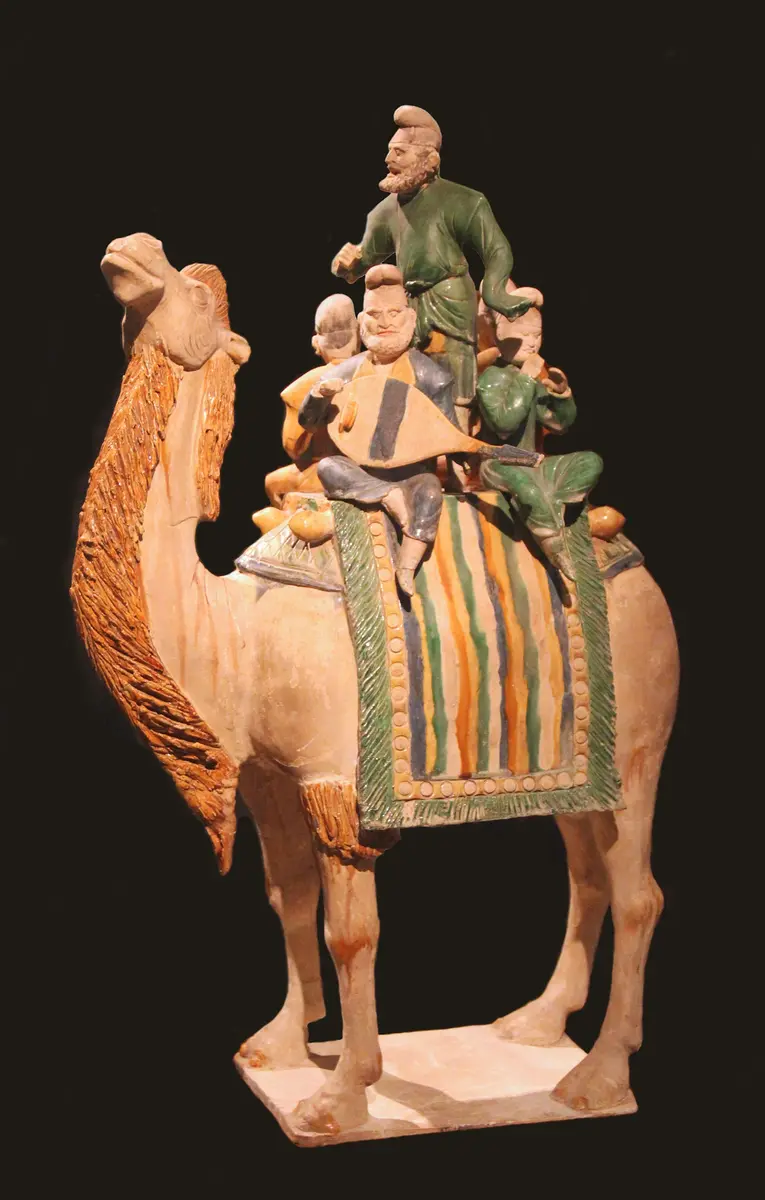
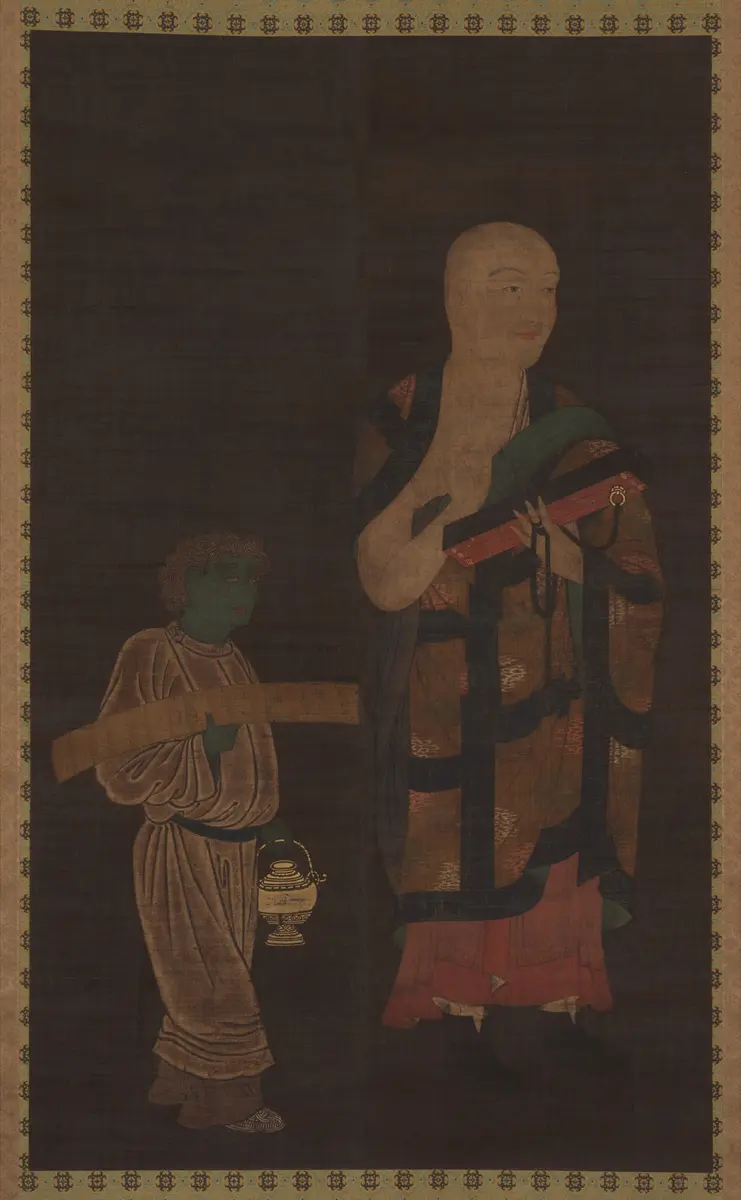
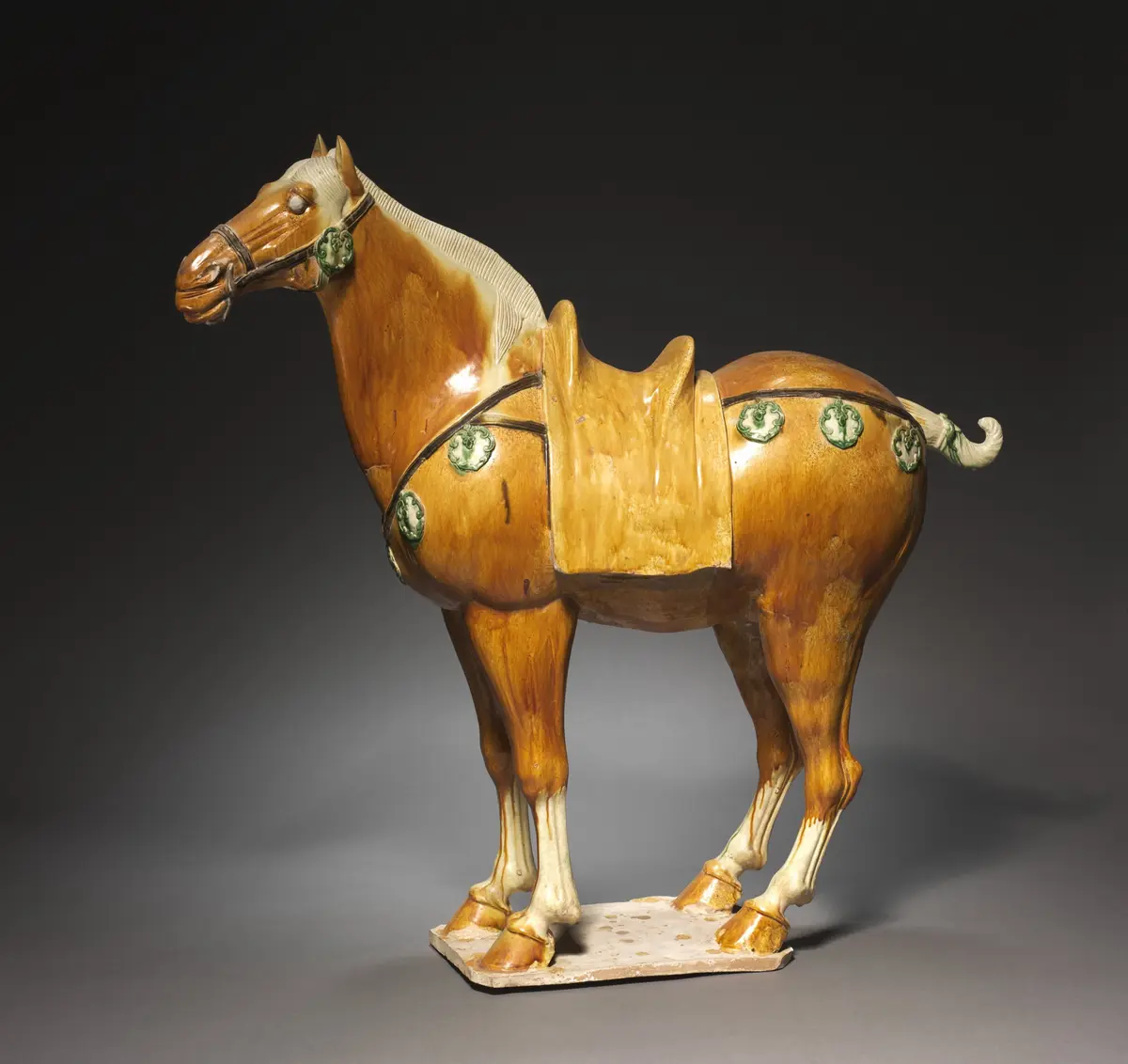
Tang Chang'an was the greatest city of its time. It covered some 84 square kilometres and held about a million people, divided into a Palace City, an Imperial City for the officials and an Outer City for artisans and merchants. Merchants, monks and envoys from India, Persia, Arabia, Syria, Korea and Japan crowded its streets, and Sogdian merchants from the region of Samarkand were among the leading traders of the Silk Road, which ended there. Buddhism reached its height in China: the monk Xuanzang, who had slipped out of the city in 629 to study in India, came home in 645 with 657 texts and spent the rest of his life translating them, while Zoroastrians, Manichaeans and Christians had their own temples. Foreign music, horses and silver were the fashion, and the glazed figures of horses, camels, grooms and court ladies placed in Tang tombs still show that world.
Two rulers shaped the dynasty's peak. Wu Zhao entered the palace as a junior concubine of Taizong, became empress to his son Gaozong in 655 and governed for him through his long illnesses. In 690 she took the throne herself as emperor of a new Zhou dynasty, the only woman in Chinese history to do so, and ruled until her ministers forced her out in 705. Her grandson Xuanzong (712–756) presided over the empire's greatest wealth and power and over its classical age of art: the poets Li Bai and Du Fu, the painters Wu Daozi and Wang Wei, and Han Gan's portraits of the emperor's horses. Nearly 50,000 poems by some 2,000 Tang poets survive.
The turn came in the middle of the 8th century. In 751 an Abbasid army defeated a Tang army near the Talas river in Central Asia, and the westward expansion was over. At the end of 755 An Lushan, a frontier general of foreign descent who commanded the armies of the north-east, turned on the court; he took Luoyang, declared himself emperor and in 756 took Chang'an. Xuanzong fled towards Sichuan, his guards killed his favourite consort Yang Guifei on the way, and he gave up the throne. The rebellion was ended only in 763, with help from the Uighurs, and it left the provinces to military governors who obeyed the court when they chose. The dynasty lasted another century and a half and restored its authority over most of the country by 818, but the court turned on the Buddhist monasteries in 842–845, the rebel Huang Chao sacked Guangzhou in 879 and Chang'an in 881, and in 904 the warlord Zhu Wen killed the emperor and moved the court to Luoyang. In 907 he made the last Tang emperor, a boy, abdicate in his favour.
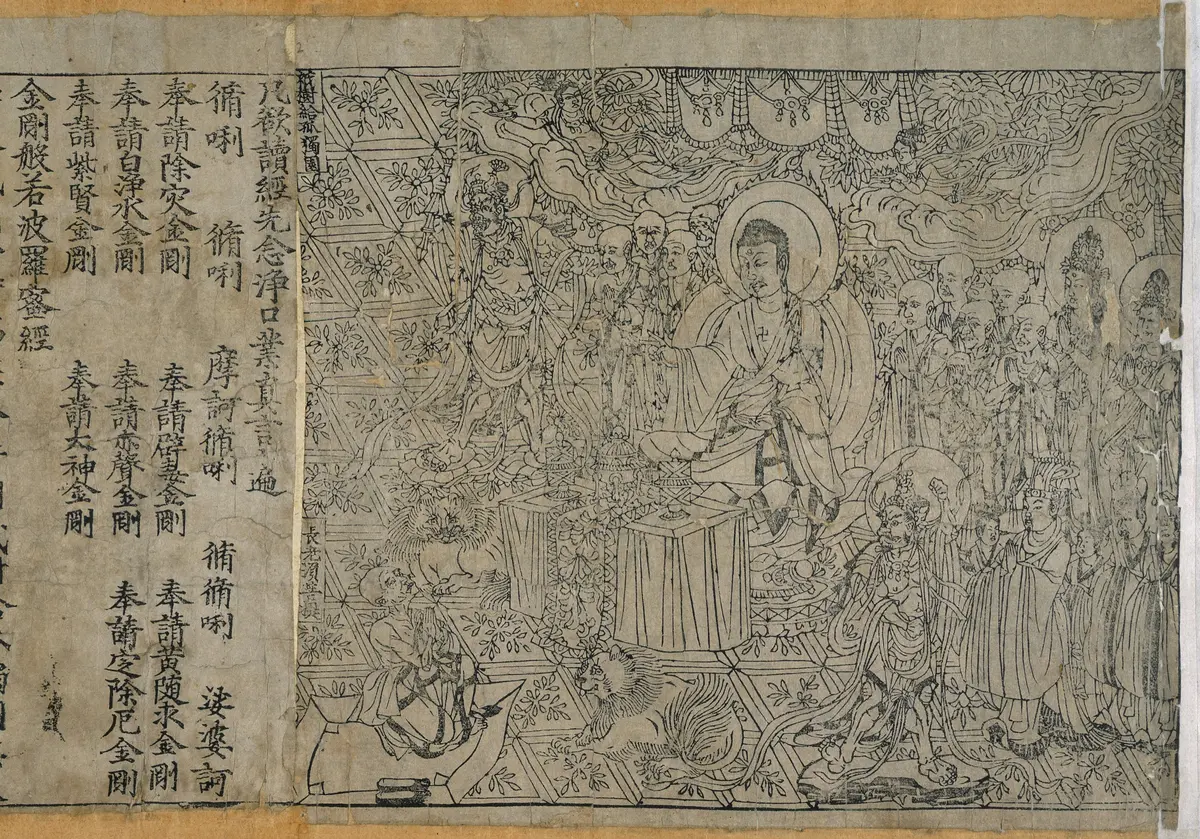
China then broke into rival states for more than fifty years, until the Song dynasty reunited it in 960. The Tang left a model of what a Chinese empire could be. Its government and law were copied across East Asia, and Japan in particular took over Tang administration, arts and Buddhism. Tang poetry set the standard for all later Chinese poets, and its painting and sculpture the standard for later artists; the earliest dated printed book, a Diamond Sutra of 868, comes from its last century. The glazed horses and camels from its tombs, the cave temples of Longmen and Dunhuang and the pagodas of Xi'an are among the best-known images of old China.
What happened
- 618
Li Yuan, the Sui general who had risen in revolt and taken Chang'an the year before, proclaims himself emperor of a new Tang dynasty; he is remembered as Gaozu.
Chang'an (Xi'an): the Tang capital, the largest and most cosmopolitan city of its time- 621
His son Li Shimin takes the eastern capital Luoyang after a long siege, riding the horse Saluzi, which is struck by an arrow; the same year the new dynasty starts minting the Kaiyuan tongbao, the copper coin it will keep for three centuries.
Luoyang: the eastern capital, Wu Zetian's seat, taken by An Lushan in 755 and the court's last home from 904 - 626
Li Shimin ambushes and kills his elder brother, the crown prince, and a younger brother at the Xuanwu Gate of the palace; two months later Gaozu abdicates and Li Shimin becomes the emperor Taizong.
Chang'an (Xi'an): the Tang capital, the largest and most cosmopolitan city of its time- 636
Taizong chooses Mount Jiuzong, north-west of the capital, for his tomb, Zhaoling; stone reliefs of six horses he rode in the wars of the founding, drawn by Yan Liben, are carved for the altar at the northern foot of the mountain.
Zhaoling, Taizong's tomb on Mount Jiuzong, chosen in 636: the north gate where the six horse reliefs stood - 641
In spring the Tibetan minister Gar Tongtsen comes to Chang'an to escort Princess Wencheng, whom Taizong has given as a bride to the Tibetan king Songtsen Gampo; the emperor's audience for him is the subject of the scroll 'Bunian tu'.
Chang'an (Xi'an): the Tang capital, the largest and most cosmopolitan city of its time - 645
The monk Xuanzang, who had slipped out of Chang'an in 629 to study Buddhism in India, comes home after sixteen years with 657 texts; Taizong receives him and offers him office, which he declines in order to translate them.
Chang'an (Xi'an): the Tang capital, the largest and most cosmopolitan city of its time - 649
Taizong dies and is buried at Zhaoling; his son Gaozong succeeds him.
Zhaoling, Taizong's tomb on Mount Jiuzong, chosen in 636: the north gate where the six horse reliefs stood- 652
The Big Wild Goose Pagoda is built in the Da Ci'en monastery of Chang'an to house the library Xuanzang brought from India; it is rebuilt in 701–704 in the form that stands today.
The Da Ci'en monastery and the Big Wild Goose Pagoda, built in 652 for Xuanzang's library - 655
Wu Zhao, once a junior concubine of Taizong, becomes Gaozong's empress; by 660 she has broken the old ministers and rules in the name of the sickly emperor, and her generals go on to conquer Korea.
- 663
The Daming Palace on the northern edge of Chang'an, begun by Taizong in 634 for his retired father, is finished and becomes the emperors' main seat.
The Daming Palace: the main palace of the Tang emperors in Chang'an from 663, now a heritage park - 675
The colossal Vairocana Buddha of the Fengxian cave at Longmen, carved under Gaozong with the empress Wu's support, is finished: the high point of Tang royal cave sculpture.
The Longmen Grottoes south of Luoyang, with the colossal Vairocana of the Fengxian cave - 690
Seven years after Gaozong's death, having deposed one son and kept another as a puppet, Wu Zhao takes the throne in her own name as emperor of a new Zhou dynasty, ruling from Luoyang: the only woman in Chinese history to do so. Women of her court ride, and even play polo, in men's clothes.
Luoyang: the eastern capital, Wu Zetian's seat, taken by An Lushan in 755 and the court's last home from 904- 705
Leading ministers and generals seize the palace, kill her favourites the Zhang brothers and force the old empress to give the throne back to her son Zhongzong; the Tang is restored.
Luoyang: the eastern capital, Wu Zetian's seat, taken by An Lushan in 755 and the court's last home from 904Wu Zetian dies at Luoyang; she is buried beside Gaozong at Qianling, where her stele is left without an epitaph.
Qianling: the tomb of Gaozong and Wu Zetian- 712
Ruizong abdicates in favour of his son Xuanzong, who takes full power the next year; his long reign brings the empire its greatest wealth and power and a court of music, poetry and painting, where trained horses dance and bow with a cup to the emperor on his birthday.
- 713
Work begins on the Giant Buddha carved into the cliff at Leshan in Sichuan; it will take ninety years.
The Leshan Giant Buddha, carved in the 8th century above the meeting of three rivers - 742
The poet Li Bai comes to Chang'an and is welcomed among the court poets, though no post follows; he leaves in the autumn of 744, and on his wanderings meets the younger Du Fu, who admires him all his life.
Chang'an (Xi'an): the Tang capital, the largest and most cosmopolitan city of its time - 750
About this year Han Gan paints Night-Shining White, one of Xuanzong's chargers, the most famous horse portrait in Chinese art.
- 751
An Abbasid army defeats the Tang army of Gao Xianzhi near the Talas river in Central Asia, ending Tang expansion to the west.
Talas: where an Abbasid army defeated the Tang in 751- 755
An Lushan, the general who commands the north-eastern frontier armies, turns them on the court from his base at Fanyang; within a month he takes Luoyang, and at the start of the new year he proclaims himself emperor of Great Yan.
Luoyang: the eastern capital, Wu Zetian's seat, taken by An Lushan in 755 and the court's last home from 904- 756
After the rebels break through the passes, Xuanzong flees Chang'an; at Mawei his guards kill Yang Guozhong and force the death of Yang Guifei. The emperor goes on to Sichuan and gives up the throne to his son.
Mawei: where Xuanzong's guards killed Yang Guifei on the flight from Chang'an in 756- 763
The rebellion, carried on after An Lushan's murder in 757 by his son and by Shi Siming and his son, ends with the death of Shi Chaoyi; Uighur troops have helped the Tang win, and the surviving rebel generals keep their provinces. In the autumn a Tibetan army briefly occupies Chang'an.
Chang'an (Xi'an): the Tang capital, the largest and most cosmopolitan city of its time - 781
A stele is set up in Chang'an recording the coming of Christianity, the 'luminous religion' of the Church of the East, to China in 635; the capital also has Zoroastrian and Manichaean temples.
The Forest of Steles (Beilin Museum), Xi'an: home of the Christian stele of 781 and four of Taizong's six horse reliefs - 830
About this year an Arab ship sewn in the Persian Gulf manner, laden at Canton with some 60,000 Tang ceramics, gold and silver, sinks off Belitung on its way west.
The Belitung wreck: an Arab ship lost about 830 with a cargo loaded in Tang China - 845
The persecution of Buddhism under Emperor Wuzong, begun in 842, reaches its height: monasteries are closed, scriptures and images destroyed, monks and nuns sent back to lay life. The Japanese monk Ennin, in the capital, records it.
Chang'an (Xi'an): the Tang capital, the largest and most cosmopolitan city of its time - 848
At Dunhuang, held by Tibet since 781, Zhang Yichao drives out the Tibetans and offers the city back to the Tang; his victory procession is painted in Mogao Cave 156.
The Mogao Caves at Dunhuang: Tang cave temples on the Silk Road, and the Library Cave - 868
Wang Jie has a Diamond Sutra printed from carved wooden blocks; found in the Library Cave at Dunhuang in 1900, it is the oldest dated printed book in the world.
The Mogao Caves at Dunhuang: Tang cave temples on the Silk Road, and the Library Cave- 881
Huang Chao, a failed examination candidate turned salt smuggler who rose in 875 and sacked the trading city of Guangzhou in 879, takes Chang'an and proclaims himself emperor of Qi. He is driven out in 883 with the help of the Shatuo Turks and dies in 884, but the Tang never recovers control of the country.
Chang'an (Xi'an): the Tang capital, the largest and most cosmopolitan city of its time - 904
Zhu Wen, a former general of Huang Chao, forces the emperor Zhaozong to move the court from Chang'an to Luoyang, then murders him and his sons, leaving only a boy of thirteen on the throne.
Luoyang: the eastern capital, Wu Zetian's seat, taken by An Lushan in 755 and the court's last home from 904 - 907
Zhu Wen makes the last Tang emperor, the boy Aidi, abdicate in his favour and proclaims himself first emperor of the Later Liang; China breaks into rival states.