Alexander Graham Bell
“The Edinburgh-born teacher of the deaf who invented the telephone in 1876, then the photophone, flying kites and a record-breaking hydrofoil in Nova Scotia.”
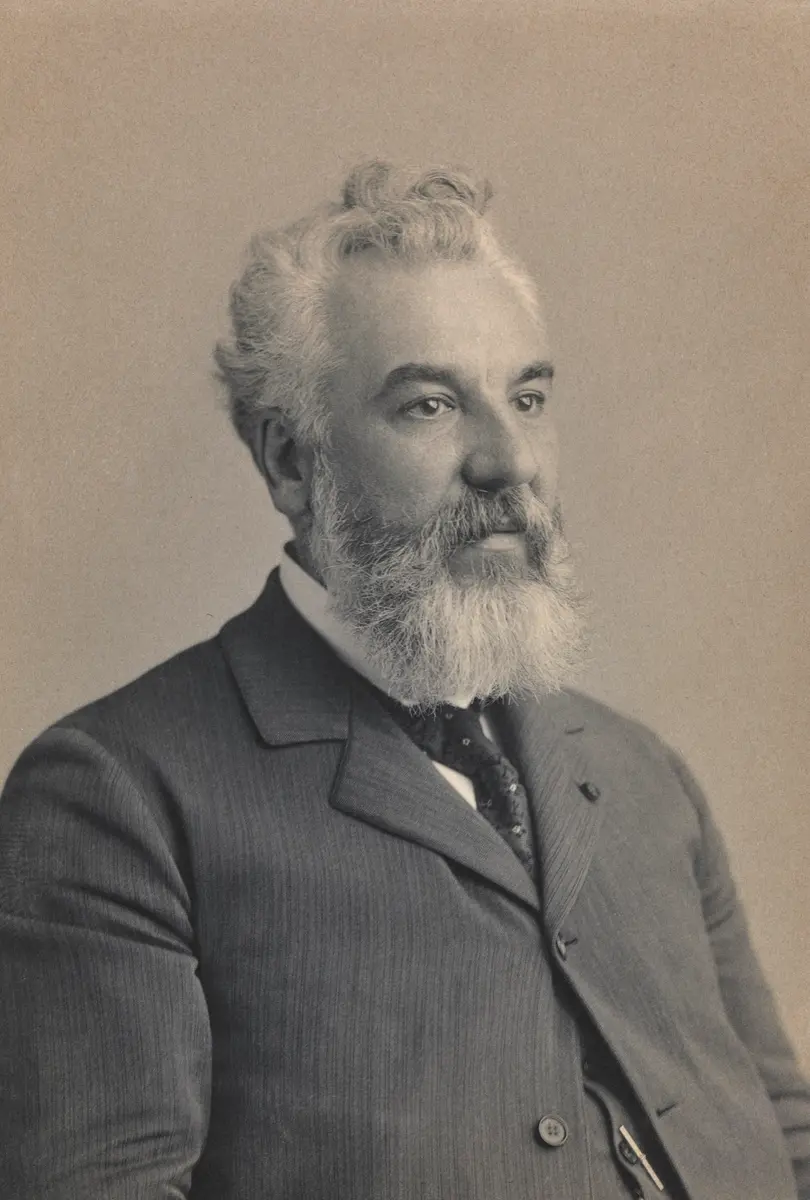
Alexander Graham Bell (1847–1922) was a Scottish-born teacher of the deaf and inventor, best known for the telephone. He was born in Edinburgh into a family that lived for speech: his grandfather taught elocution and cured stammering, and his father, Alexander Melville Bell, invented 'Visible Speech', a set of written symbols that showed how the lips, tongue and throat make every sound. His mother was almost deaf. Bell trained as his father's assistant in London, but after his two brothers died of tuberculosis the family moved to Canada in 1870, to a country house at Tutelo Heights near Brantford, Ontario.
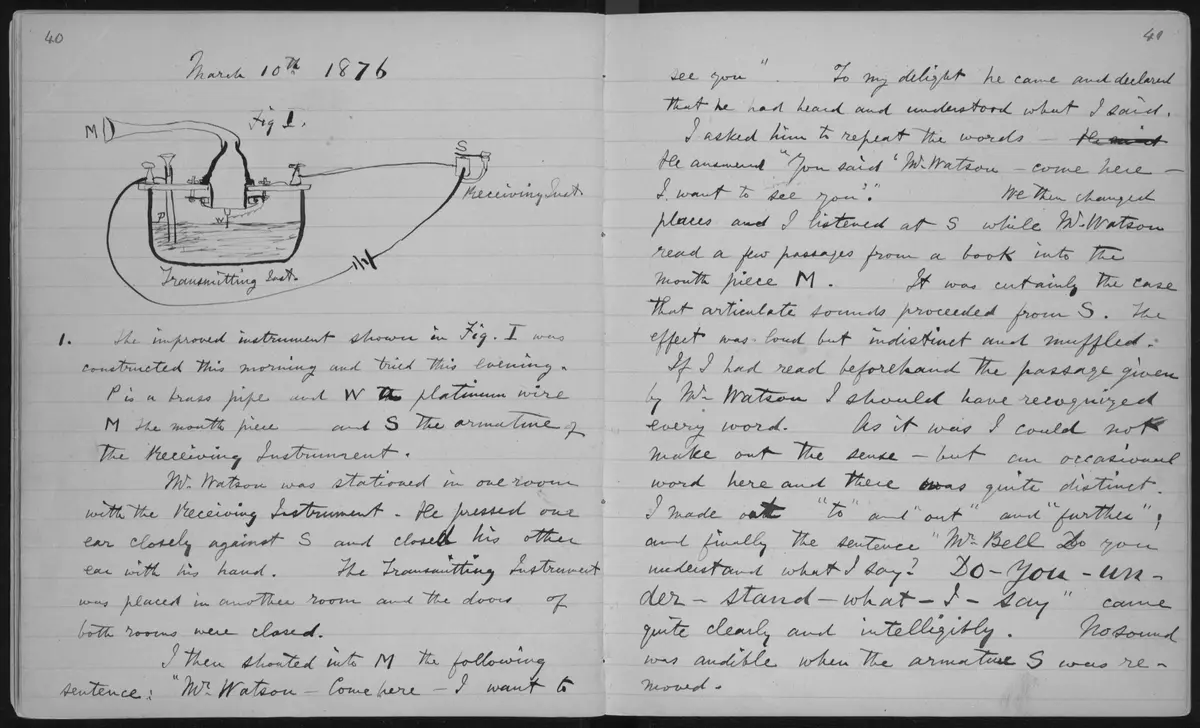
In 1871 Bell went to Boston to teach deaf children to speak, and he soon ran his own school and taught at Boston University. Among his private pupils was Mabel Hubbard, deaf since childhood, whose father, the lawyer Gardiner Greene Hubbard, paid for Bell's experiments on sending several telegraph messages along one wire. These experiments led him, between 1874 and 1876, to the telephone: he patented it on 7 March 1876 and three days later spoke its first sentence to his assistant Thomas Watson. The story of that invention, and the rival claims of Elisha Gray, Antonio Meucci and Philipp Reis, is told in the telephone's own entry. In 1877 the Bell Telephone Company was founded and Bell married Mabel; the telephone made them rich, and Mabel managed the money.
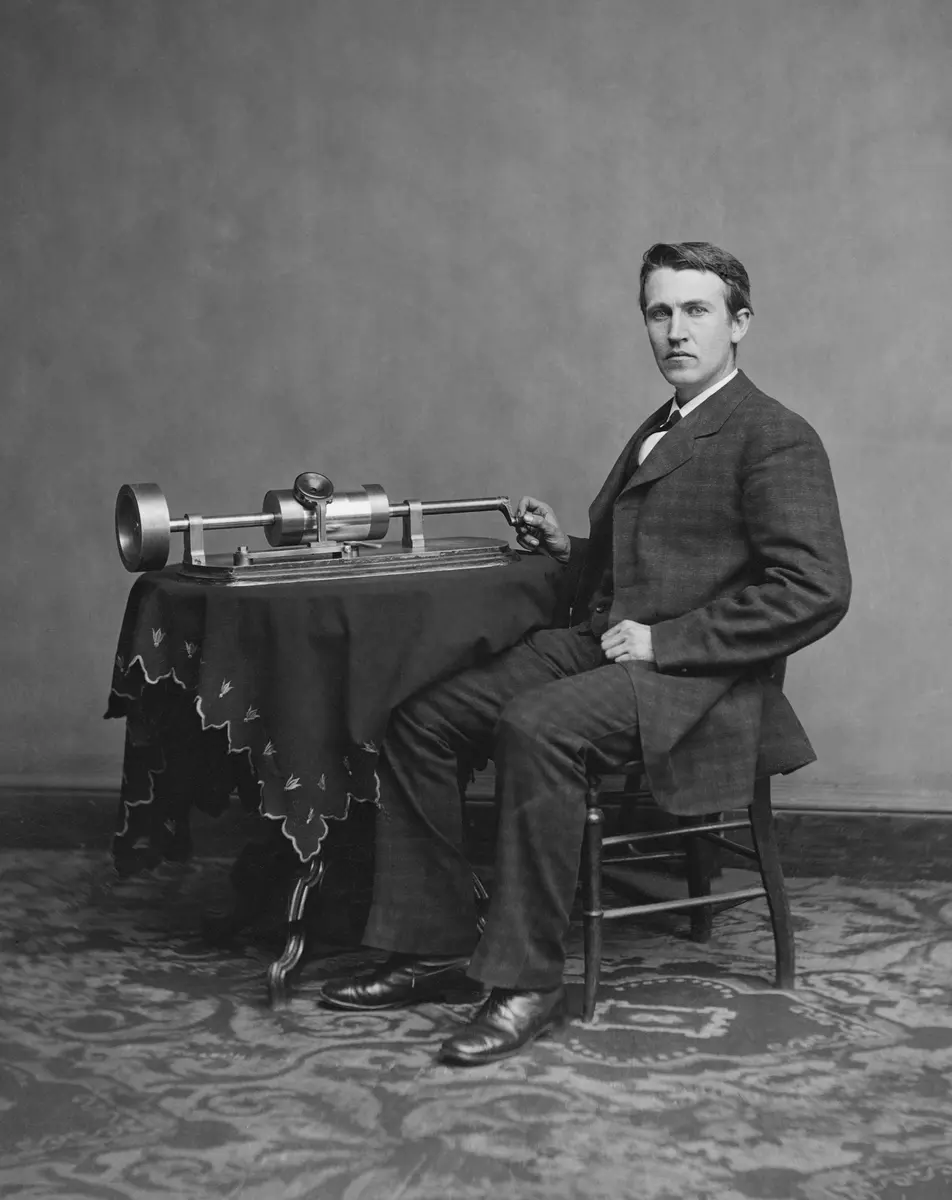
Bell never stopped inventing. With Charles Sumner Tainter he built the photophone (1880), which carried the voice on a beam of sunlight, a distant ancestor of fibre-optic links. With the French Volta Prize he set up the Volta Laboratory in Washington, where he, his cousin Chichester Bell and Tainter improved Edison's phonograph into the wax-cylinder graphophone. In 1881 he tried to find the bullet in the wounded President Garfield with an electrical detector. He became an American citizen in 1882, built a summer estate, Beinn Bhreagh, at Baddeck on Cape Breton Island in Nova Scotia, and turned it into a laboratory. There he flew huge kites made of light, strong tetrahedral cells; in 1907 he founded the Aerial Experiment Association, whose Silver Dart made the first powered flight in Canada in 1909; and with Casey Baldwin he built the HD-4 hydrofoil boat, which set a world water speed record in 1919.
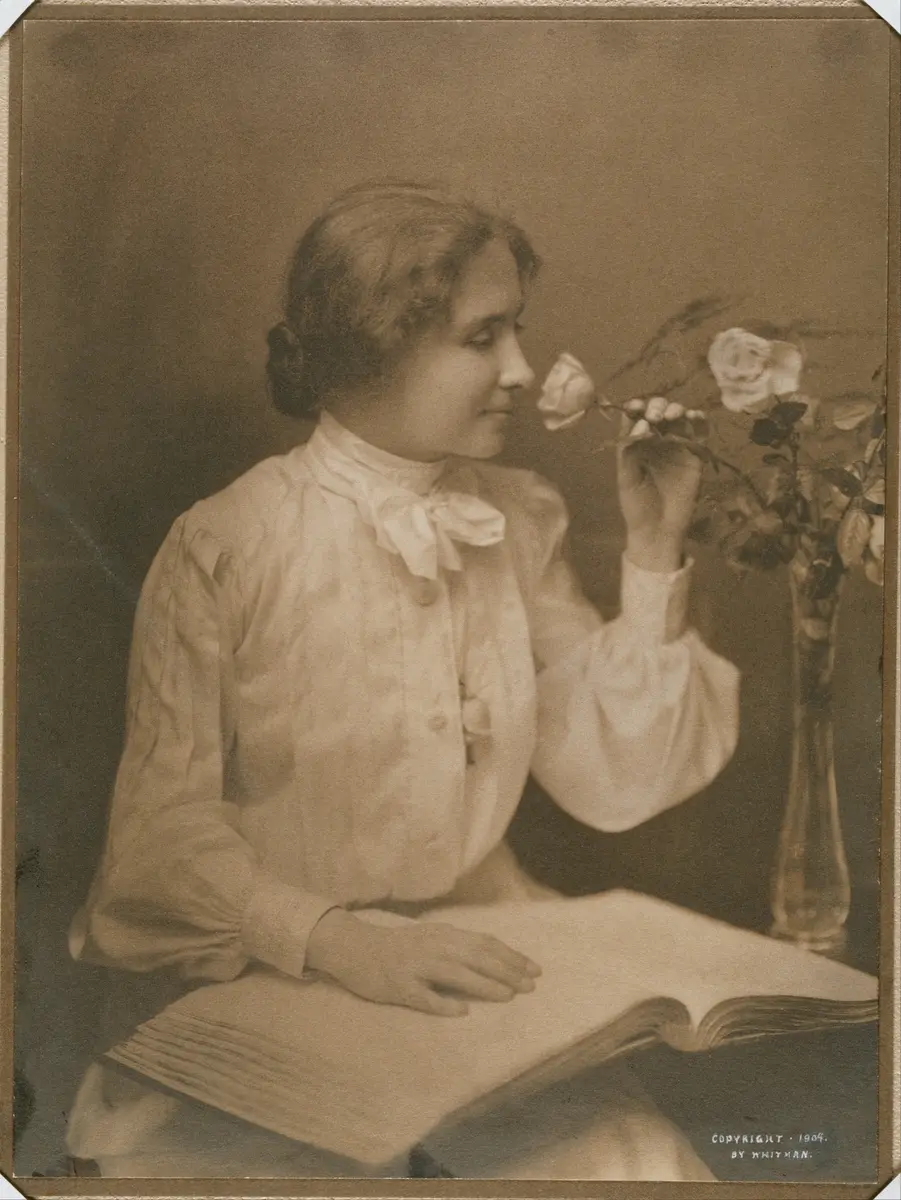
Bell always called himself a teacher of the deaf first. He met the six-year-old Helen Keller in 1887 and helped her family find her teacher, Anne Sullivan, and he gave much of his money to deaf education, the Volta Bureau and science: he funded the journal Science and, as the second president of the National Geographic Society, set its magazine on the road to photographs. His views were also controversial. He was the leading voice of 'oralism', teaching deaf people to speak and lip-read rather than to sign, and his paper of 1884 on a 'deaf variety of the human race' drew him close to the eugenics of his time; many deaf people still see him as an enemy of sign language.
He died at Beinn Bhreagh on 2 August 1922, aged 75, and was buried on the hill above Baddeck Bay; during his funeral the telephones of North America were briefly silenced. Three countries claim him: Scotland, where he was born, Canada, where he conceived the telephone and spent his summers, and the United States, where he built it and became a citizen. He is remembered as one of the last great independent inventors, whose restless curiosity reached from speech and sound to light, medicine, flight and boats.
What happened
- 1847
Alexander Bell is born in a flat on South Charlotte Street, Edinburgh, the second of the three sons of Alexander Melville Bell, a teacher of elocution, and Eliza Grace Symonds, a painter of miniatures who is almost deaf.
South Charlotte Street, Edinburgh: Bell was born in a flat here on 3 March 1847; an inscribed stone marks the house- 1858
On his eleventh birthday he takes the middle name Graham, after Alexander Graham, a former student of his father's from Newfoundland who has visited the family.
- 1862
He goes to London to spend a year with his widowed grandfather, the elocutionist Alexander Bell, who makes him ashamed of his poor schooling. With his father he sees Charles Wheatstone's copy of von Kempelen's speaking machine, and he and his brother Melly later build a talking head of their own.
- 1863
At sixteen he becomes a pupil-teacher of elocution and music at Weston House Academy in Elgin, in the north of Scotland, while studying Latin and Greek himself.
- 1864
In the autumn he enters the University of Edinburgh for a year, then returns to Elgin and experiments with the pitch of vowel sounds; in 1866–67 he teaches at Somersetshire College in Bath.
- 1867
His younger brother Edward dies of tuberculosis at nineteen. That summer his father publishes Visible Speech, dedicated to Edward, and makes Aleck his assistant.
- 1868
He begins teaching speech to deaf children with Visible Speech at Susanna Hull's school in Kensington, London, and takes courses at University College London, which he never finishes.
- 1870
His older brother Melville also dies of tuberculosis, at twenty-five. Afraid for their last son's health, the parents decide to emigrate.
Bell, his parents and his widowed sister-in-law land at Quebec; within a week his father buys a farmhouse on Tutelo Heights above the Grand River near Brantford, Ontario.
Bell Homestead, Tutela Heights, Brantford, Ontario: the family's home from 1870, where he conceived the telephone in July 1874- 1871
He moves to Boston to teach at Sarah Fuller's Boston School for Deaf Mutes; within weeks his pupils use hundreds of syllables, and he is asked to demonstrate at Northampton and Hartford.
Pemberton Square, Boston: the Boston School for Deaf Mutes, where he began teaching in April 1871; Boston was his home and workplace until 1879- 1872
He meets Gardiner Greene Hubbard, a Boston patent lawyer and president of the Clarke Institution for the deaf, whose daughter Mabel lost her hearing at five.
He opens his own School of Vocal Physiology in Boston to train teachers of the deaf, and at night starts experimenting with a telegraph that could send several messages on one wire.
- 1873
Now professor of vocal physiology at Boston University, he begins tutoring the fifteen-year-old Mabel Hubbard; her father agrees to back his telegraph experiments.
- 1874
At his 'dreaming place' behind the house on Tutelo Heights he works out the principle of the telephone: a current that varies exactly as the air does when a sound is made.
Bell Homestead, Tutela Heights, Brantford, Ontario: the family's home from 1870, where he conceived the telephone in July 1874- 1876
He is granted US Patent 174,465 for the telephone; three days later, in Boston, he speaks the first sentence to Thomas Watson: 'Mr. Watson—come here—I want to see you.'
He shows the telephone to the judges of the Centennial Exhibition in Philadelphia, among them Emperor Pedro II of Brazil and Sir William Thomson, and becomes famous.
- 1877
Two days after the Bell Telephone Company is formed, he marries Mabel Hubbard at her parents' home in Cambridge, Massachusetts; in August they sail for a year in Britain.
- 1878
He demonstrates the telephone to Queen Victoria. On 8 May their first daughter, Elsie, is born.
- 1880
Experimenting with selenium, whose electrical resistance changes with light, he writes to his father: 'I have heard a ray of the sun.' His second daughter, Daisy, was born eleven days before.
Tainter speaks into the photophone on the roof of the Franklin School in Washington and Bell hears him in his laboratory window at 1325 L Street, 213 metres away, carried on a beam of light. In the autumn France awards Bell the Volta Prize of 50,000 francs, with which he founds the Volta Laboratory.
- 1881
In the evening he carries his induction balance, an electrical metal detector, to the White House to search for the bullet in the wounded President Garfield; a wrongly connected condenser spoils the test.
A second trial on the President fails to locate the bullet; Garfield dies in September. Two weeks later, on 15 August, the Bells' newborn son Edward dies.
- 1882
He becomes a citizen of the United States; the family now lives in Washington.
- 1883
He opens a day school for deaf children at Scott Circle, Washington, is elected to the National Academy of Sciences, and with Hubbard funds the new journal Science. In November his second son, Robert, dies at birth.
- 1884
His 'Memoir upon the formation of a deaf variety of the human race', on how deafness runs in families, is published; misreported in the press, it angers deaf people, and his study of heredity draws him towards the eugenics of his time.
- 1885
On holiday in Nova Scotia the Bells discover Baddeck on the Bras d'Or Lake of Cape Breton Island, which reminds him of Scotland; the next summer he begins buying land there.
- 1886
The graphophone patents of Bell, Chichester Bell and Tainter are granted; Bell founds the Volta Bureau for the study of deafness and later endows it with his share of the graphophone money.
- 1887
He meets the six-year-old Helen Keller, deaf and blind, in Washington, and advises her father to seek help from Michael Anagnos, director of the Perkins Institution for the Blind in Boston: the step that brought her the teacher Anne Sullivan.
- 1888
Before the British Royal Commission on the Blind and the Deaf and Dumb he answers more than 600 questions, defending the teaching of speech against Edward Miner Gallaudet's sign language.
- 1893
His great house on Red Head across the bay from Baddeck is finished; he names it Beinn Bhreagh, Gaelic for 'beautiful mountain', and from now on spends every summer and autumn there.
Beinn Bhreagh Hall, Baddeck, Nova Scotia: his summer home and laboratory from 1893, where the kites, the Silver Dart and the HD-4 were made and where he died on 2 August 1922- 1894
The Volta Bureau works from its own building at 1537 Thirty-fifth Street in Georgetown, a library and information centre on deafness.
Volta Laboratory and Bureau, Georgetown, Washington: the institution for the study of deafness he founded with his Volta Prize and graphophone money - 1898
After Gardiner Hubbard's death he becomes president of the National Geographic Society and, the same year, a regent of the Smithsonian Institution; he later urges its editor, his son-in-law Gilbert Grosvenor, to fill the magazine with photographs.
- 1901
Over the winter he invents the tetrahedral kite cell, four triangular faces that make a structure light, strong and rigid.
- 1903
At Beinn Bhreagh he is photographed kissing Mabel as she stands inside one of his tetrahedral kite frames.
Beinn Bhreagh Hall, Baddeck, Nova Scotia: his summer home and laboratory from 1893, where the kites, the Silver Dart and the HD-4 were made and where he died on 2 August 1922- 1904
He is granted US Patent 757,012 for aerial vehicles built of triangular cells, filed the year before.
- 1905
His kite Frost King, made of 1,300 red-silk cells, lifts a man about 30 feet into the air at Baddeck.
Beinn Bhreagh Hall, Baddeck, Nova Scotia: his summer home and laboratory from 1893, where the kites, the Silver Dart and the HD-4 were made and where he died on 2 August 1922- 1907
With Casey Baldwin, J. A. D. McCurdy, Glenn Curtiss and Lieutenant Thomas Selfridge, and with Mabel's money, he founds the Aerial Experiment Association in Halifax 'to get into the air'.
His giant kite Cygnet, more than 3,000 cells on pontoons, is towed over Baddeck Bay with Selfridge aboard and carries him into the air before it is wrecked on landing.
Beinn Bhreagh Hall, Baddeck, Nova Scotia: his summer home and laboratory from 1893, where the kites, the Silver Dart and the HD-4 were made and where he died on 2 August 1922- 1909
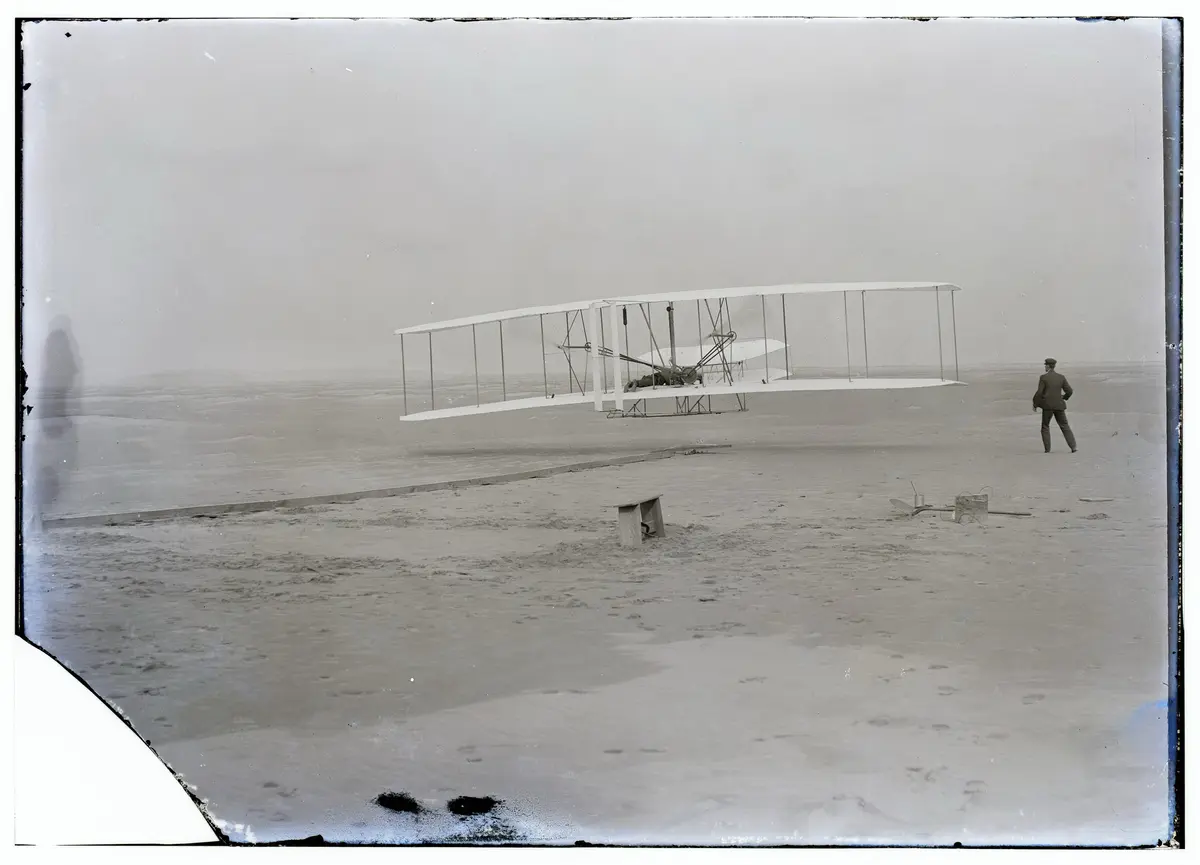
McCurdy flies the AEA's Silver Dart from the ice of Baddeck Bay, the first powered, heavier-than-air flight in Canada.
Beinn Bhreagh Hall, Baddeck, Nova Scotia: his summer home and laboratory from 1893, where the kites, the Silver Dart and the HD-4 were made and where he died on 2 August 1922- 1915
In New York he opens the first transcontinental telephone line, speaking to Thomas Watson in San Francisco.
- 1919
The HD-4 hydrofoil, designed with Baldwin and driven by him, sets a world marine speed record of 70.86 miles an hour on the Bras d'Or Lake; it stands for ten years.
Beinn Bhreagh Hall, Baddeck, Nova Scotia: his summer home and laboratory from 1893, where the kites, the Silver Dart and the HD-4 were made and where he died on 2 August 1922- 1922
He dies at Beinn Bhreagh of complications of diabetes, with Mabel beside him, aged 75, and is buried on the hilltop above Baddeck Bay; during his funeral the telephones of North America are silenced.
Beinn Bhreagh Hall, Baddeck, Nova Scotia: his summer home and laboratory from 1893, where the kites, the Silver Dart and the HD-4 were made and where he died on 2 August 1922