Alfred Russel Wallace
“The self-taught naturalist who, collecting in the Indonesian islands, found natural selection on his own, sent it to Darwin from Ternate in 1858, and traced the Wallace Line between Asia's animals and Australia's.”
Alfred Russel Wallace was the British naturalist who, while collecting birds and insects for sale in the islands of today's Indonesia, arrived on his own at the idea that species change through a natural struggle in which only the better-suited varieties survive and spread. He wrote it out on Ternate, in the Moluccas, in February 1858 and posted it to Charles Darwin, who had been building the same theory in private for twenty years. On 1 July 1858 Wallace's essay and extracts from Darwin's notes were read side by side at the Linnean Society in London: the first public statement of evolution by natural selection. Wallace also found that a sharp boundary runs through the archipelago, between Bali and Lombok and between Borneo and Sulawesi, with Asian animals on one side and Australian ones on the other. It is still called the Wallace Line.
He was born on 8 January 1823 at Kensington Cottage, just across the river from Usk in Monmouthshire, the eighth of nine children of a family whose money was running out, and grew up in Hertford, where he left the grammar school at fourteen. He learned land surveying from his eldest brother William, read Humboldt, Darwin's account of the Beagle voyage, Lyell's geology and Malthus, and in 1844, teaching in Leicester, met Henry Walter Bates, who got him collecting beetles. In 1848 the two friends sailed for Brazil to pay their way by selling specimens to collectors in London. Wallace spent four years on the Amazon and the Rio Negro, but in August 1852 the ship taking him home caught fire and sank in mid-Atlantic with nearly all his collections. He saved a tin box of drawings, spent ten days in an open boat and reached England in October.
From April 1854 to February 1862 he travelled some 14,000 miles through the Malay Archipelago, most of it then part of the Dutch East Indies, on sixty or seventy separate journeys: Sarawak on Borneo, Bali and Lombok, Makassar, the Aru Islands, Ternate, Bacan, New Guinea, Timor, Seram and Java. With local helpers, above all Ali, a young Malay from Sarawak who went with him everywhere, he brought home 125,660 specimens, 83,200 of them beetles, and hundreds, probably thousands, of species new to science, from the orang-utans of Borneo to the Standardwing bird of paradise that Ali shot on Bacan. In Sarawak in 1855 he wrote the 'Sarawak Law' paper, which argued that every new species appears close in time and place to a related one; on Ternate, during a bout of fever, he saw how new varieties could push out the old.
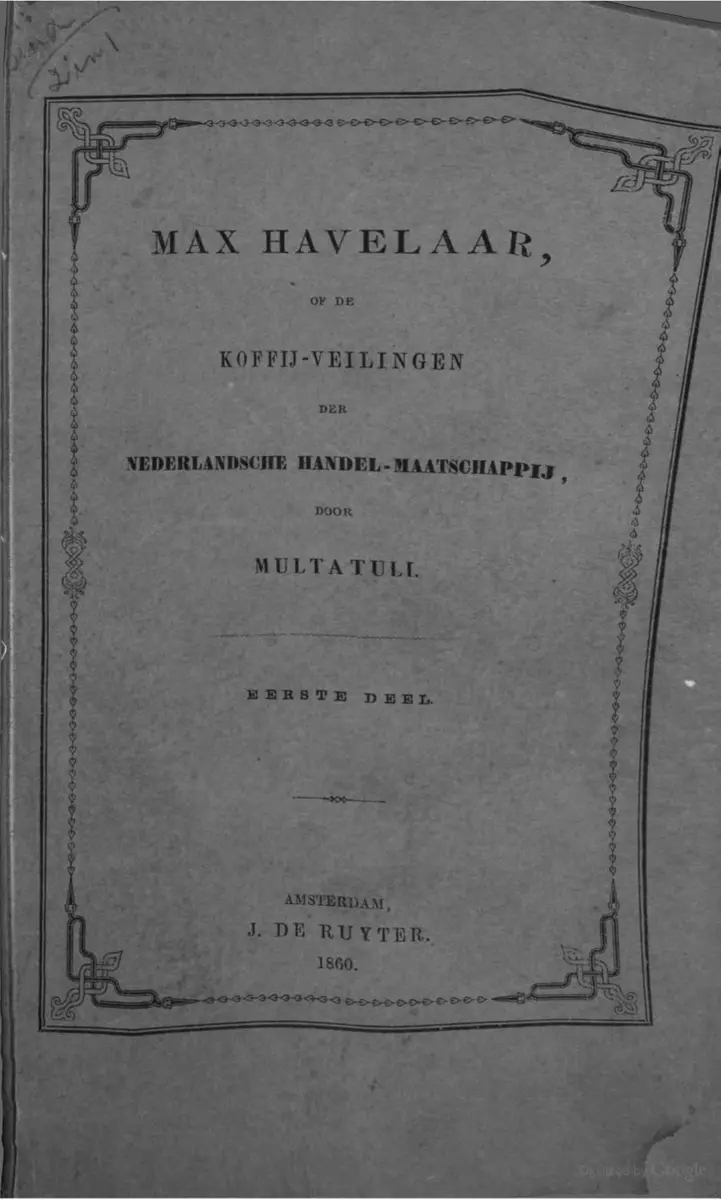
Back in England from 1 April 1862, Wallace never held a permanent post. He lost his savings in bad investments and lived by writing, lecturing and marking examination papers, helped from 1881 by a government pension that Darwin and Huxley arranged. The Malay Archipelago (1869), dedicated to Darwin, is still the classic travel book on the islands; it also praised the Dutch Cultivation System in Java and dismissed Max Havelaar, the novel that attacked it, as tedious. The Geographical Distribution of Animals (1876), which divided the world into six zoological regions, Island Life (1880) and Darwinism (1889) made him one of the leading evolutionists of his time, although he broke with Darwin over the human mind, which he held natural selection could not explain.
From 1865 he was a convinced spiritualist, and in later life he campaigned for land nationalisation, socialism and women's rights and against vaccination, causes that cost him the respect of many colleagues. He was generous about priority: he called his own book on the theory Darwinism, and at the Linnean Society's jubilee in 1908 he reminded his audience that Darwin had had the idea twenty years before him. That year brought him the first Darwin–Wallace Medal, the Royal Society's Copley Medal and the Order of Merit. He died at his house, Old Orchard, in Broadstone, Dorset, on 7 November 1913, aged ninety, and lies in the village cemetery under a fossil tree trunk. In Indonesia his name marks the country's great natural divide.
What happened
- 1823
Born at Kensington Cottage, across the river from Usk in Monmouthshire, the eighth of nine children of Thomas Vere Wallace and Mary Anne Greenell, who had moved there because living was cheap. When he is about six the family moves to Hertford.
Kensington Cottage, Llanbadoc, across the river from Usk, Monmouthshire: Wallace was born here on 8 January 1823 and lived here until the family moved to Hertford- 1837
Leaves Hertford Grammar School at fourteen and joins his brother John, an apprentice builder in London, where at a 'Hall of Science' for working men he meets the ideas of Robert Owen and of religious sceptics. That summer he starts to learn land surveying from his eldest brother William in Bedfordshire.
- 1844
With little surveying work to be had, he teaches at the Collegiate School in Leicester, and there meets Henry Walter Bates, a young enthusiast for insects, who turns him into a beetle collector.
- 1845
His brother William dies and Wallace takes over the surveying business in Neath, in South Wales, where with his brother John he designs the Mechanics' Institute and lectures on science. The same year he reads the anonymous Vestiges of the Natural History of Creation, which argues that species develop over time.
- 1848
Wallace and Bates leave England for Pará (Belém) in Brazil as professional collectors, to pay their way by selling insects and birds through the London agent Samuel Stevens. After about nine months they split up, and Wallace works his way up the Rio Negro.
- 1852
Three and a half weeks out of Pará (he sailed on 12 July), the Helen catches fire in mid-Atlantic and burns to the waterline with nearly all his specimens, his notes and his live parrots and monkeys. He saves a tin box with drawings of fishes and palms, spends ten days and nights in an open boat, is picked up by the Jordeson and lands at Deal on 1 October.
- 1853
Publishes Palm Trees of the Amazon and Their Uses, illustrated from the drawings he saved, and A Narrative of Travels on the Amazon and Rio Negro; his papers to London's scientific societies win him the backing of the Royal Geographical Society for a new journey.
- 1854
With a passage paid by the government, he lands in Singapore with a teenage assistant, Charles Allen. His eight years of wandering through the Malay Archipelago begin: 'the central and controlling incident of my life', as he later wrote.
Arrives in Sarawak on Borneo, where the English Rajah, Sir James Brooke, makes him welcome in his house; he stays until 25 January 1856, and names a great green and black birdwing butterfly after his host, Ornithoptera brookiana.
- 1855
Alone with a Malay cook in a little house at the foot of Mount Santubong, he writes 'On the law which has regulated the introduction of new species', dated Sarawak, February 1855, and printed in London that September: every species has come into existence close in time and place to a related species. He leaves the reader to infer that species descend from one another.
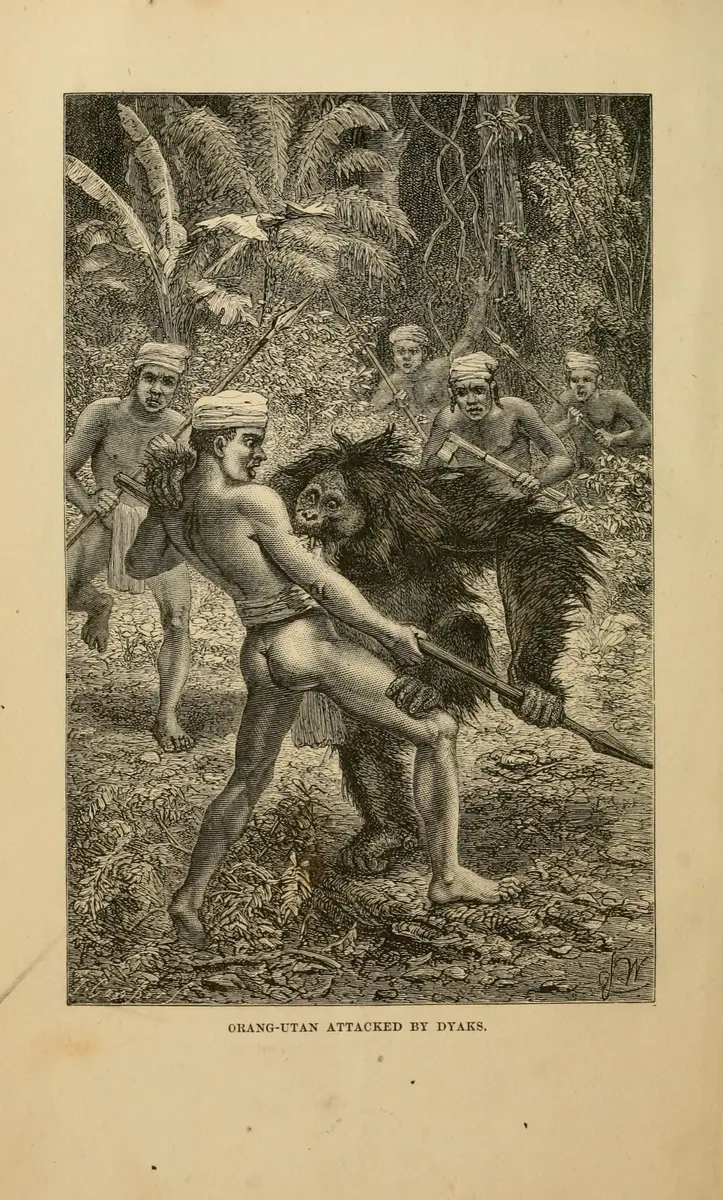
Mount Santubong, at the mouth of the Sarawak river: in a little house at its foot Wallace wrote his 'Sarawak Law' paper in the wet season of 1855Moves to the new coal works on the Simunjon, a branch of the Sadong river, the best collecting ground of all his years in the tropics, where the felling of the forest brings him beetles by the thousand. There he hunts orang-utans for museum specimens, nurses an orphaned baby for a while, and is brought a tree frog with huge webbed feet that glides down from the trees.
- 1856
Unable to find a ship straight to Makassar, he lands at Buleleng in the north of Bali and then crosses to Lombok. The two islands are only 15 miles (24 km) apart, yet Lombok has Australian cockatoos and honeyeaters that Bali lacks: his first sight of the boundary between the animals of Asia and those of Australia.
After two and a half months in Lombok he reaches Makassar in Celebes (Sulawesi), stays nearly three months, and in December sails east in a native trading prau for the Aru Islands.
- 1857
Lands at Dobo on the small island of Wamar, the trading town of the Bugis and Chinese in the Aru Islands, which no English collector has visited before. A raid by pirates from Mindanao keeps him waiting in Dobo for two months.
Dobo on Wamar, the Aru Islands: the traders' settlement that was Wallace's base from January to July 1857, the months of the birds of paradiseCrosses to the main islands of Aru, where up a small stream he is brought the king bird of paradise, and some months later, when their plumes are full, the great bird of paradise. He leaves Aru on 2 July with fifteen Makassar praus; it was, he wrote, the most successful of all his journeys.
- 1858
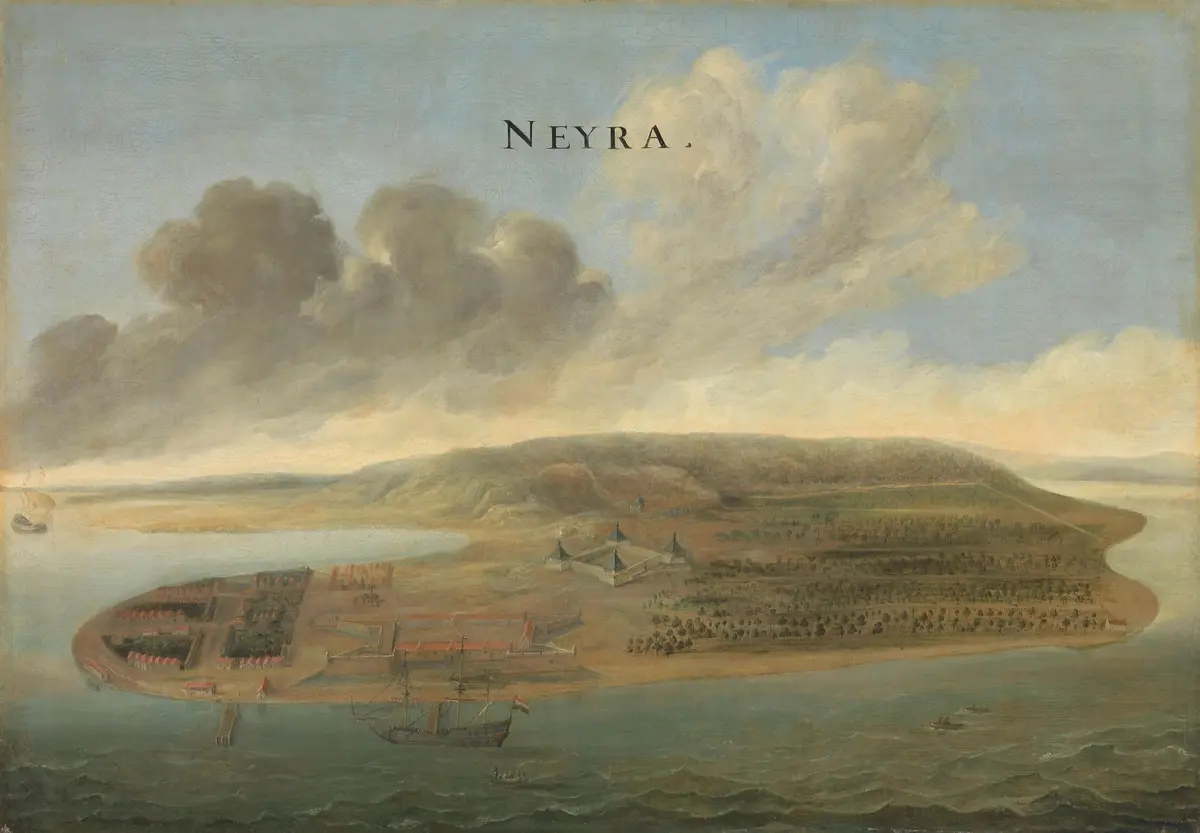
Arrives at Ternate, a volcanic island off the west coast of Halmahera (then called Gilolo), which becomes his base for the Moluccas and New Guinea; in the first months he makes two trips to Halmahera.
Ternate, North Maluku: Wallace's base for the Moluccas and New Guinea from January 1858, where in February 1858 he wrote the essay he sent to DarwinLaid low by bouts of fever, he thinks out how, in the struggle to survive, a better-suited variety can replace its parent species, and how this, repeated, carries varieties ever further from the original type. He writes the essay 'On the tendency of varieties to depart indefinitely from the original type', signs it Ternate, February 1858, and sends it to Darwin, asking him to show it to Lyell if he thinks it worth it; it most likely left by the April mail steamer.
Ternate, North Maluku: Wallace's base for the Moluccas and New Guinea from January 1858, where in February 1858 he wrote the essay he sent to DarwinSails in a trading schooner to Dorey (Manokwari) on the north coast of New Guinea, where he stays three or four months, the first European to live alone on the island, as he later wrote; rain, fever and an accident that keeps him indoors for a month bring fewer birds of paradise than he had hoped.
In London, Lyell and Hooker present Wallace's essay to the Linnean Society together with two extracts from Darwin's unpublished writings, so that Darwin's twenty years of work are recorded beside Wallace's essay; the joint paper is printed on 20 August. When the news reaches Wallace months later, he writes home that it will make him known to these eminent men when he returns.
Reaches Bacan (Batchian), where Ali comes back from shooting with a bird no European had described, a bird of paradise with long white feathers standing out from its shoulders: Wallace's Standardwing, Semioptera wallacii. In January 1859 Wallace catches the golden birdwing butterfly he names Ornithoptera croesus.
- 1859
Leaves Ternate by the Dutch mail steamer for Timor, calling at Ambon and spending two days at Banda among the nutmeg plantations; in his book he would defend the Dutch government's nutmeg monopoly there.
His paper 'On the zoological geography of the Malay Archipelago', which traces the line between the Indian and Australian animals of the islands, is read at the Linnean Society; the same month Darwin publishes On the Origin of Species.
- 1861
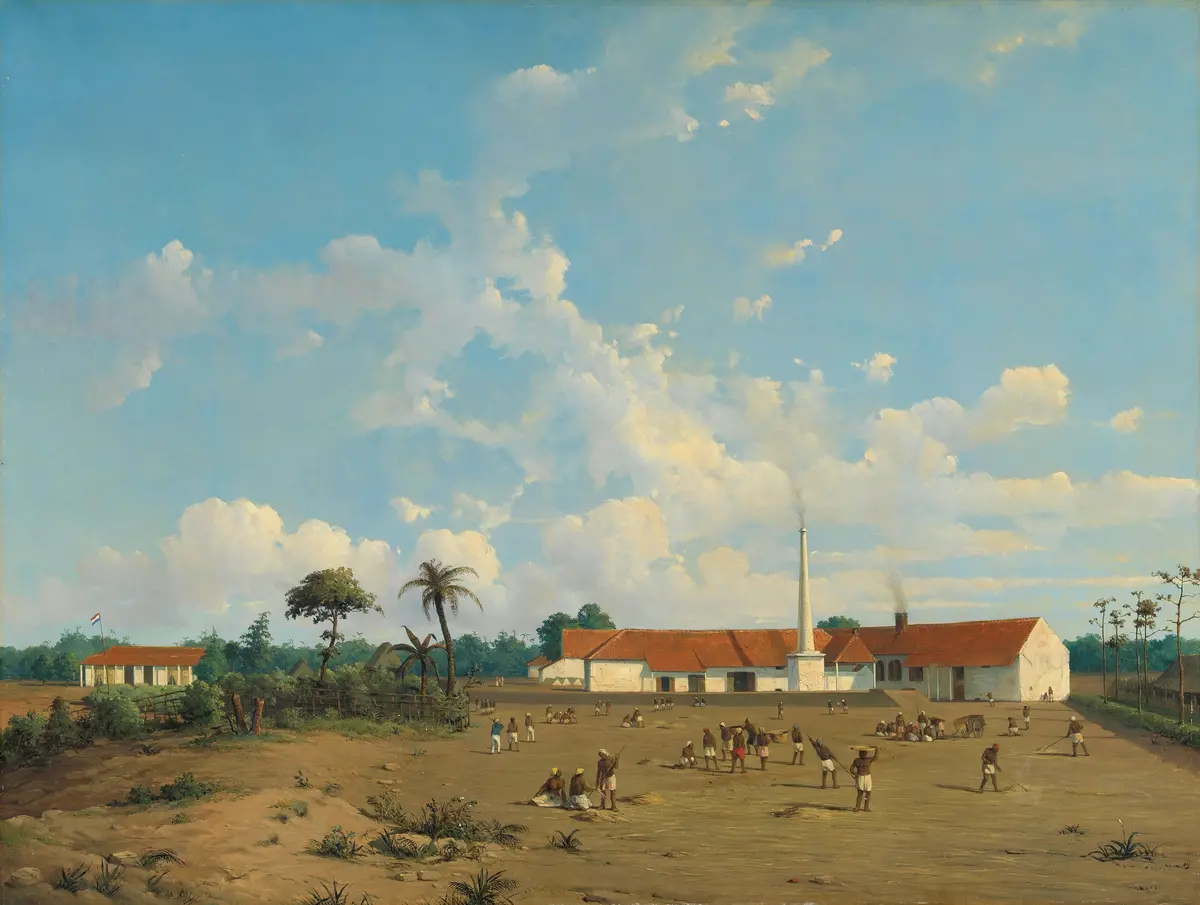
Begins three and a half months in Java, to 31 October, and studies how the Dutch govern it; in The Malay Archipelago he praises the Cultivation System of state-run export crops and finds Max Havelaar, the novel that attacked it, 'tedious and long-winded'.
- 1862
Before leaving the East he has his photograph taken in Singapore, dressed for the steamer home, and parts from Ali, who had been with him on all his journeys; Charles Allen stays behind and makes his life in Singapore.
Back in England, he moves in with his sister and her husband Thomas Sims, a photographer in Westbourne Grove, and unpacks the collections his agent had kept for him; that summer Darwin invites him to Down House for the first time.
- 1863
His paper 'On the physical geography of the Malay Archipelago' is read to the Royal Geographical Society and printed with a map on which a red line divides the Indo-Malayan from the Austro-Malayan region.
- 1865
A year after his fiancée breaks off their engagement, he begins attending séances and soon becomes convinced that the phenomena of spiritualism are real; in 1866 he publishes 'The Scientific Aspect of the Supernatural'.
- 1866
Marries Annie Mitten, daughter of his friend the botanist William Mitten; of their three children, Herbert dies at four, while Violet and William outlive their father.
- 1869
Macmillan publishes The Malay Archipelago: The Land of the Orang-utan, and the Bird of Paradise in two volumes, dedicated to Darwin 'as a token of personal esteem and friendship'.
- 1870
Contributions to the Theory of Natural Selection gathers his essays and argues that natural selection cannot explain the higher powers of the human mind, his main break with Darwin. The same year he uses his surveying skills on the Old Bedford canal to win a wager that the Earth's surface is curved, and the loser persecutes him for years.
- 1876
The Geographical Distribution of Animals, in two volumes, follows the ornithologist Philip Sclater in dividing the world into six zoological regions and becomes the standard work on where animals live.
- 1880
Island Life explains how plants and animals reach islands and change there; in 1881 he becomes the first president of the Land Nationalisation Society and receives a Civil List pension arranged by Darwin and Huxley.
- 1889
After a lecture tour of the United States and Canada in 1886–87, he publishes Darwinism, a clear account of the theory and its evidence that he insisted on naming after Darwin.
- 1902
Moves into Old Orchard, the house he has built at Broadstone in Dorset; there he writes his autobiography, My Life (1905), and his last books.
Broadstone, Dorset: Old Orchard, the house he built in 1902, where he died on 7 November 1913; he is buried in the village cemetery- 1908
At the Linnean Society's celebration of the fiftieth anniversary of the 1858 reading he receives the first Darwin–Wallace Medal, and tells his audience that the idea came to Darwin in 1838, nearly twenty years before it came to him.
Receives the Royal Society's Copley Medal and, from the King, the Order of Merit.
- 1913
Dies in his sleep at Old Orchard, aged ninety, after a last year spent on two books about social reform. On 10 November he is buried in Broadstone cemetery, where a fossil tree trunk now marks his grave, and in 1915 a medallion with his name is placed in Westminster Abbey.
Broadstone, Dorset: Old Orchard, the house he built in 1902, where he died on 7 November 1913; he is buried in the village cemetery