Charles Darwin
“The Beagle's naturalist, who worked out that all living things descend with modification from common ancestors by natural selection, and said so in On the Origin of Species on November 24, 1859.”
Charles Darwin was the English naturalist who showed that living things are not fixed creations but the changed descendants of earlier forms, and who found the mechanism, natural selection, by which the change happens. He was born on February 12, 1809, at The Mount in Shrewsbury, the son of a rich doctor and the grandson of two famous men, the physician and poet Erasmus Darwin and the potter Josiah Wedgwood. He hated the surgery he saw as a medical student in Edinburgh, so his father sent him to Christ's College, Cambridge, to become a country parson. There he collected beetles and walked with the botany professor John Stevens Henslow, and it was Henslow who, in August 1831, got him the place of naturalist and captain's companion on HMS Beagle, a navy survey ship bound for South America.
The Beagle left Plymouth on December 27, 1831, and came home on October 2, 1836. Darwin spent most of those five years ashore: he dug fossil giants out of the pampas, felt the coast of Chile rise in an earthquake, learned to read the land with Charles Lyell's new geology, and in September 1835 spent five weeks in the Galápagos, where the mockingbirds and the tortoises differed from island to island. Back in London he filled notebooks on the 'transmutation' of species, sketched the first tree of descent in July 1837, and in September 1838, reading Malthus on the struggle for food in a growing population, saw that in nature the variations that helped an animal survive would be kept and the rest destroyed. He married his cousin Emma Wedgwood in 1839, moved to Down House in Kent in 1842, wrote his theory out in secret, and then spent eight years dissecting barnacles to prove himself a zoologist.
On June 18, 1858, a letter from Alfred Russel Wallace, collecting in the Moluccas, arrived at Down with an essay that set out the same idea. Lyell and Joseph Hooker had extracts from both men read to the Linnean Society on July 1, 1858, and Darwin at last wrote his book. On the Origin of Species, 1,250 copies, was published on November 24, 1859, and the booksellers had already ordered more than that at Murray's sale two days before. In one long chain of evidence, from pigeon fanciers to fossils and island birds, it argued that species had descended with modification from common ancestors. Churchmen were outraged and scientists divided; at Oxford in June 1860 Bishop Wilberforce and Thomas Huxley fought it out before a crowd of hundreds while Darwin, as always, stayed at home. He went on to orchids, pigeons and climbing plants, and in 1871 The Descent of Man put humans in the tree too, which the cartoonists answered by drawing him as an ape.
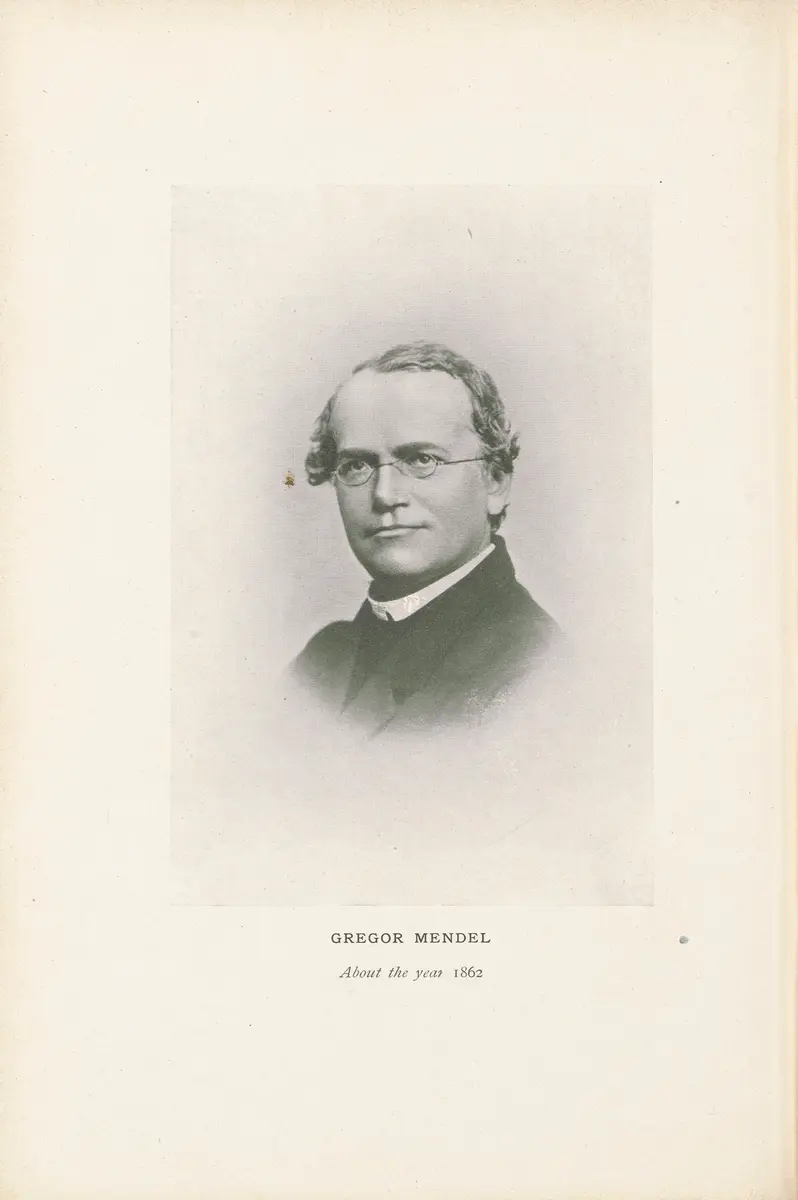
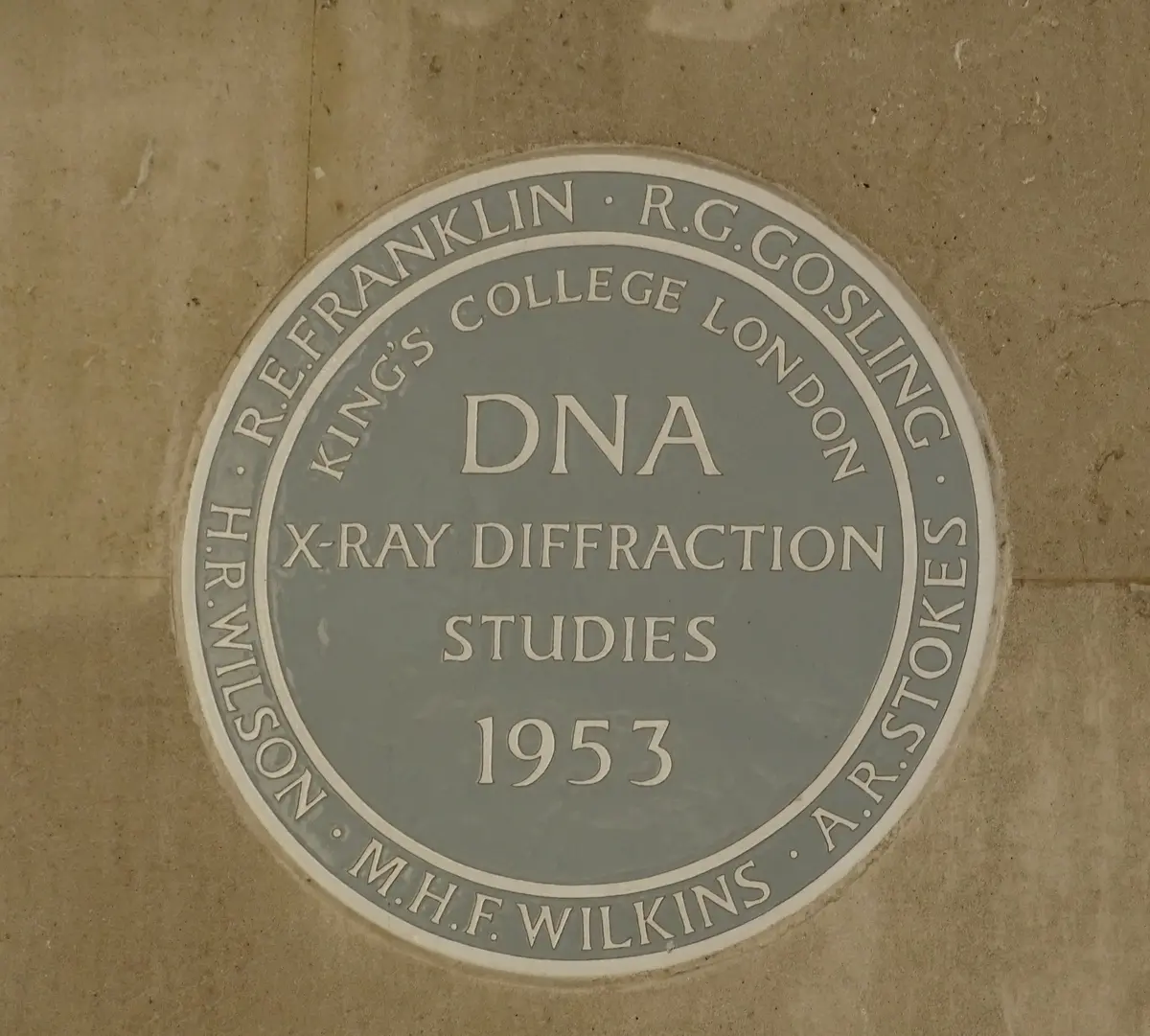
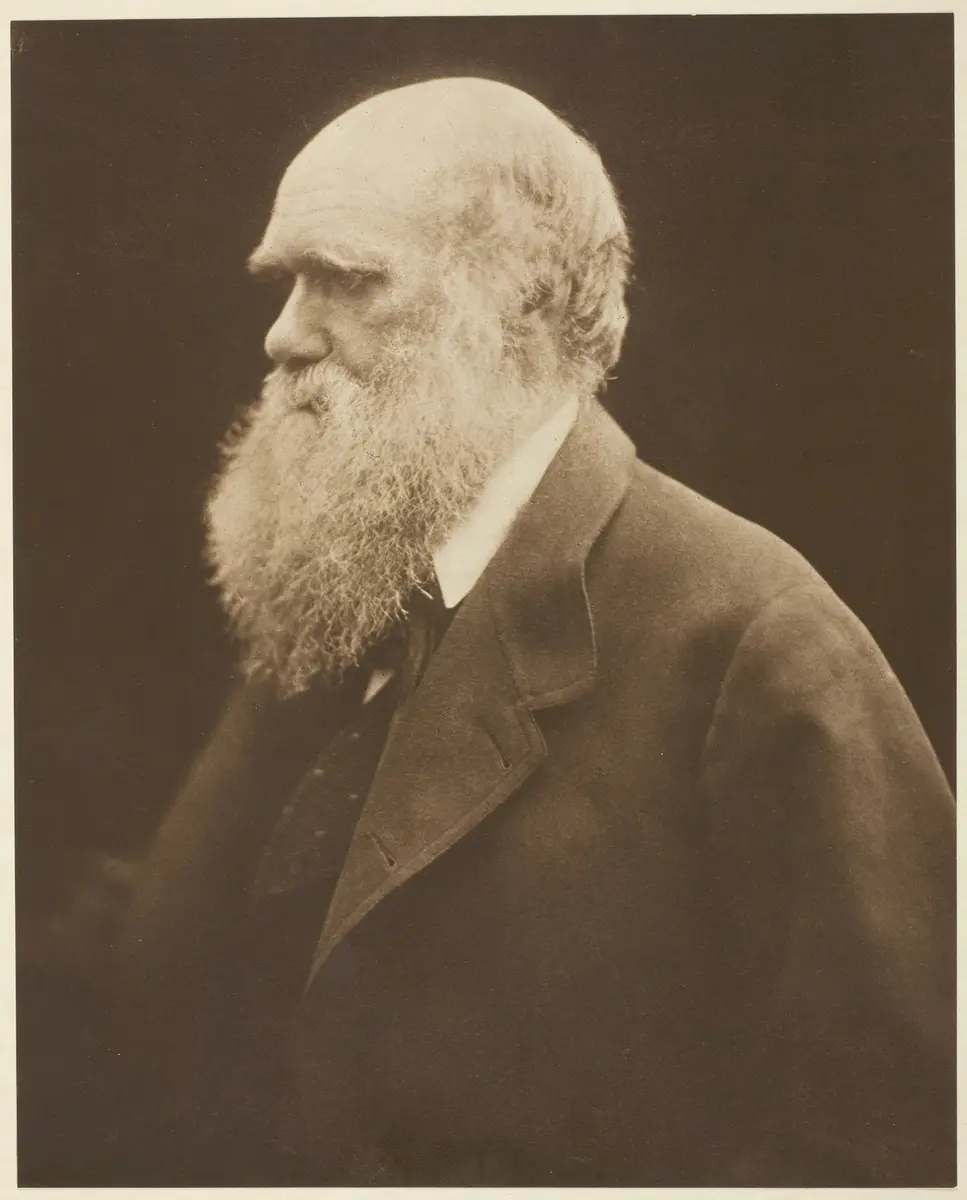
Darwin was ill for most of his adult life and never held a post; he worked at Down for forty years, writing on a board across his knees and sending letters to breeders, gardeners and consuls all over the world. His last book, on earthworms, came out in 1881. He died at Down House on April 19, 1882, and, though he had expected the village churchyard, was buried in Westminster Abbey on April 26, next to Herschel and a few feet from Newton. What he never knew was how inheritance works: Mendel's peas, published in 1866, went unread until 1900, and the gene and the double helix of 1953 finished the argument he had begun. Evolution by natural selection is now the frame of all biology, and the bearded old man of Julia Margaret Cameron's photograph is one of the few faces of science that everyone knows.
What happened
- 1809
Born at The Mount, Shrewsbury, the fifth of the six children of Dr Robert Darwin and Susannah Wedgwood; both grandfathers, Erasmus Darwin and Josiah Wedgwood, are famous men.
The Mount, Shrewsbury: the house where Darwin was born on February 12, 1809- 1825
Enters the University of Edinburgh with his brother Erasmus to study medicine; the lectures bore him and surgery without anaesthetic horrifies him, but he learns taxidermy from John Edmonstone, a freed slave from Guyana, and studies sea creatures with Robert Grant. He leaves in April 1827 without a degree.
- 1828
Comes up to Christ's College, Cambridge, which admitted him on October 15, 1827, to read for the ordinary degree that leads to holy orders; he collects beetles, rides and shoots, and spends his Friday evenings with the botany professor John Stevens Henslow. He passes his BA examination on January 22, 1831.
Christ's College, Cambridge: his college from 1828 to 1831, where he had rooms in First Court- 1831
After Henslow's letter in August and two false starts in the winter gales, HMS Beagle sails from Plymouth under Captain Robert FitzRoy with Darwin, aged twenty-two, as naturalist and the captain's gentleman companion; the voyage will last almost five years.
- 1835
The Beagle anchors off Chatham Island (San Cristóbal) and Darwin steps ashore in the Galápagos for the first time; in five weeks among the islands, until October 20, he collects mockingbirds, finches and plants and hears that the tortoises differ from island to island.
Chatham Island (San Cristóbal), Galápagos: the Beagle's first anchorage in the islands, where Darwin went ashore on September 16, 1835- 1836
The Beagle drops anchor at Falmouth and Darwin is home in Shrewsbury two days later; within months the ornithologist John Gould tells him that his Galápagos birds are a dozen separate species of finch and that the mockingbirds are different species on different islands.
- 1837
Living in London, Darwin opens Notebook B on the transmutation of species and sketches a branching tree of descent under the words 'I think'.
Christ's College, Cambridge: his college from 1828 to 1831, where he had rooms in First Court- 1838
Reads Malthus on population for amusement and sees that, since far more are born than can survive, the variations that help an animal live would be kept and the harmful ones destroyed: natural selection, a theory to work with, as he later wrote.
- 1839
Marries his cousin Emma Wedgwood at Maer, five days after his election to the Royal Society; his Journal of Researches is published the same year, and George Richmond paints the couple in 1840.
- 1842
The Darwins move from London to Down House in the Kent countryside with two small children and a third on the way; that year he writes a pencil sketch of his theory, which in 1844 he expands into an essay to be published if he dies.
Down House, Downe, Kent: his home from September 1842, where the Origin was written and where he died on April 19, 1882- 1846
Begins to dissect the barnacles he brought back from Chile; the work grows to cover every known species, living and fossil, fills two Ray Society volumes (1851 and 1854) and earns him the Royal Society's Royal Medal in 1853.
Down House, Downe, Kent: his home from September 1842, where the Origin was written and where he died on April 19, 1882- 1851
His eldest daughter Annie dies at Malvern aged ten, where he had taken her for the water cure; of the ten Darwin children three die young, and this loss marks him for life.
- 1858
A letter from Alfred Russel Wallace in Ternate arrives at Down with an essay on how varieties depart from the original type: the same theory. Darwin sends it to Lyell the same day, writing that he never saw a more striking coincidence.
Down House, Downe, Kent: his home from September 1842, where the Origin was written and where he died on April 19, 1882Lyell and Hooker have extracts from Darwin's writings and Wallace's essay read together at the Linnean Society in London; neither author is present, Darwin having lost his baby son to scarlet fever on June 28. The papers are printed on August 20, and on July 20 he begins the 'abstract' that becomes the Origin.
- 1859
On the Origin of Species is published by John Murray while Darwin takes the water cure at Ilkley; 1,250 copies are printed, and the booksellers at Murray's sale on November 22 order more than that.
- 1860
At the British Association's meeting in Oxford, in the library of the new museum, Bishop Samuel Wilberforce attacks the Origin before seven hundred to a thousand people and Huxley and Hooker answer him; Darwin, absent as always, hears of it from Hooker's letter.
- 1871
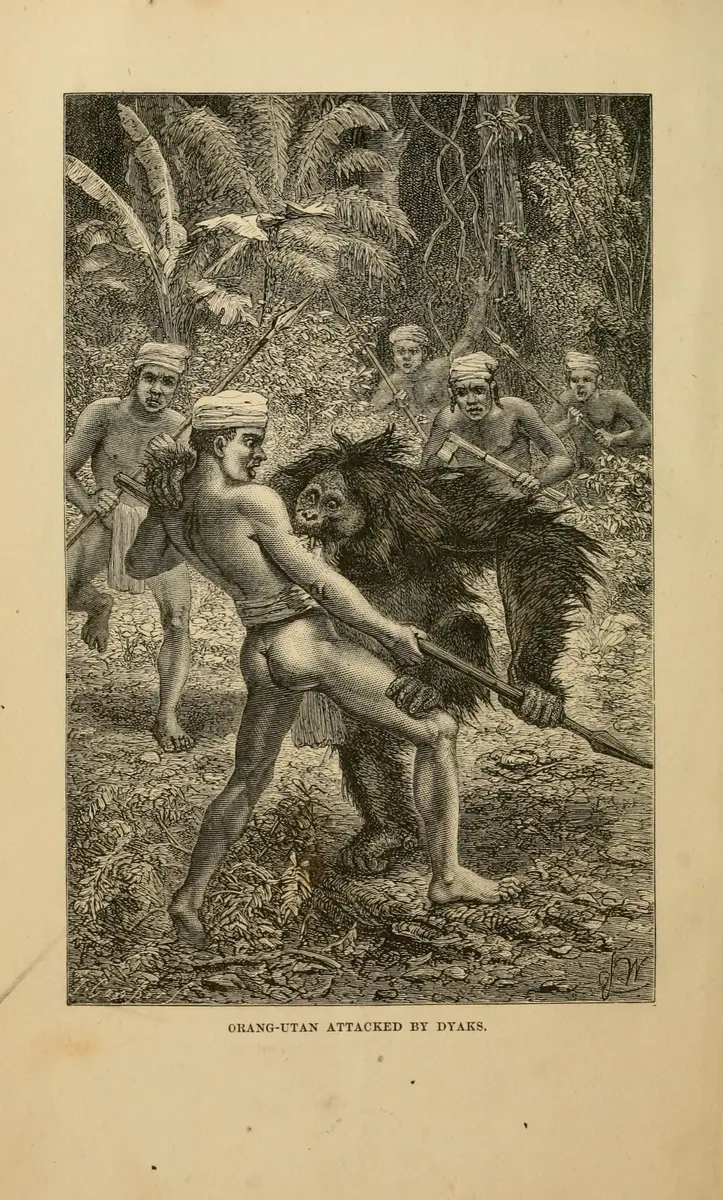
The Descent of Man, and Selection in Relation to Sex puts humans in the tree of life and explains the peacock's tail by the choices of females; The Hornet answers on March 22 with Darwin as an orang-utan, and The Expression of the Emotions in Man and Animals follows in 1872.
- 1881
His last book, on the formation of vegetable mould through the action of worms, sums up the earthworms he had watched since his first paper on them in the 1830s; the same year he arranges a state pension for Wallace.
Down House, Downe, Kent: his home from September 1842, where the Origin was written and where he died on April 19, 1882 - 1882
Dies at Down House aged seventy-three. He expected the churchyard at Downe, but at the request of members of Parliament and the Royal Society he is buried in Westminster Abbey on April 26, next to Sir John Herschel and a few feet from Newton, with Hooker, Huxley, Wallace and Lubbock among the pall-bearers.
Westminster Abbey: buried in the north aisle of the nave on April 26, 1882, beside Herschel and near Newton