Augustine of Hippo
“The North African bishop of the Confessions and The City of God, whose teaching on sin and grace shaped Western Christianity, Catholic and Protestant, more than anyone's since Paul.”
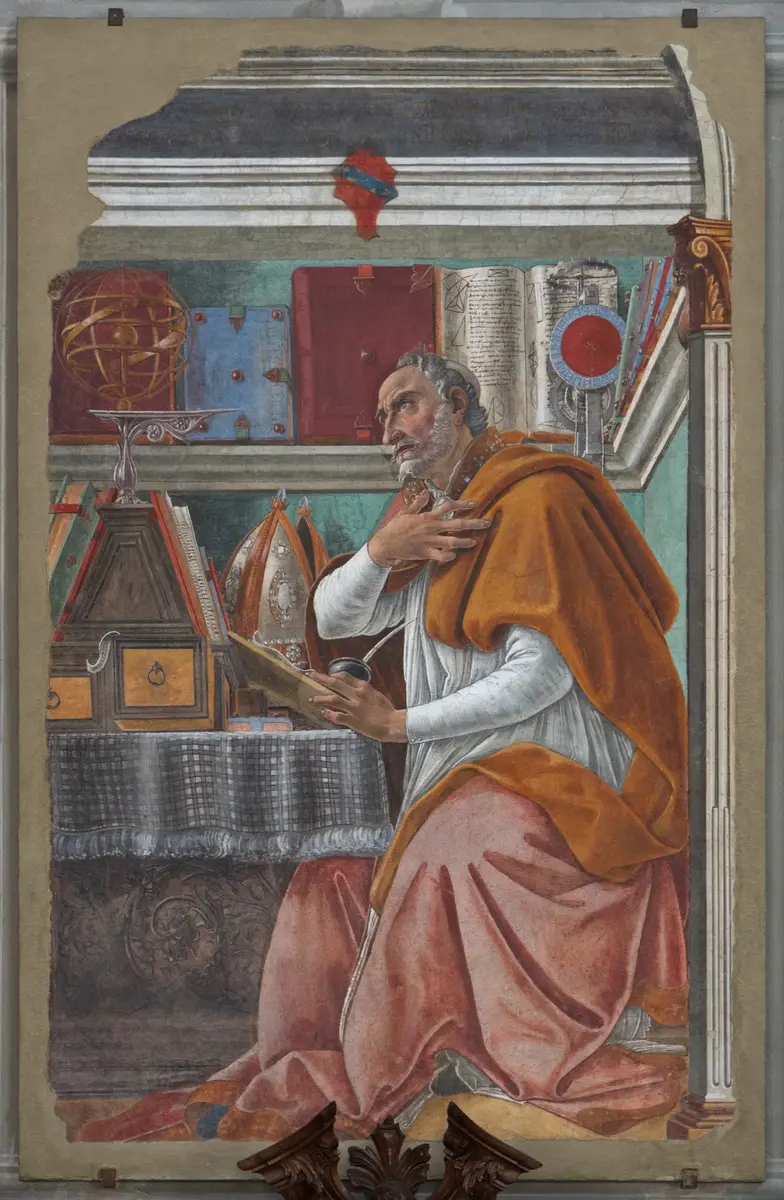
Augustine was a bishop in Roman North Africa, a writer and a philosopher, and perhaps the most influential thinker in the history of Western Christianity after Paul. He was born on 13 November 354 at Thagaste, a small Roman town in the hills of Numidia, today Souk Ahras in Algeria. His father Patricius, a town councillor of modest means, was a pagan who was baptised only on his deathbed; his mother Monica was a devout Christian whose long prayers for her son he made famous. The family borrowed money to give the gifted boy the best schooling Africa had: at Thagaste, at nearby Madauros, and then at Carthage, the great city of the province, where he studied rhetoric, the art of public speaking that opened the way to a career in government.
At Carthage he took a partner, a woman whose name he never wrote down; they lived together for about fourteen years and had a son, Adeodatus. In his nineteenth year a book of Cicero's, the Hortensius, made him fall in love with philosophy, and soon after he joined the Manichaeans, a dualist religion from Persia that saw the world as a battle between two powers, good and evil. Ambitious, he taught rhetoric at Carthage, sailed for Rome in 383, slipping away from his mother at night, and in 384 won the public chair of rhetoric at Milan, the city of the western emperor's court. There the sermons of Bishop Ambrose and the books of the Platonists, Plotinus above all, changed his mind. In the summer of 386, weeping under a fig tree in a garden, he heard a child's voice chanting 'take up and read', opened Paul's letters and read a verse against a life of pleasure. He gave up his career, his marriage plans and sex. Ambrose baptised him at Easter 387; a few months later his mother died at Ostia as they waited for a ship home.
Back in Africa he lived with friends as a lay community at Thagaste until 391, when on a visit to the port of Hippo Regius the congregation seized him and had him made a priest. About 396 he became its bishop, and stayed for thirty-four years, preaching, judging quarrels and living in a house of clergy who owned nothing. His years were full of battles: with the Manichaeans he had left; with the Donatists, Africa's rival church, defeated at a conference in Carthage in 411 and then suppressed by imperial law; and with the British ascetic Pelagius, who taught that people can choose not to sin. Against him Augustine argued that since Adam's fall every human being is born in sin and can be saved only by God's free grace. He died at Hippo on 28 August 430, aged seventy-five, in the third month of a siege by the Vandals, with the penitential psalms copied on the wall beside his bed.
More than five million of his words survive, more than of almost any other ancient writer. The Confessions, written about 397, is a long prayer that tells the story of his restless heart from infancy to his mother's death, a work that shaped the modern autobiography; its chapters on time is still read by philosophers. The City of God, begun in 412 after Alaric's Goths had sacked Rome in 410 and pagans blamed the Christian God, took him fourteen years: it describes two cities, one built on love of God and one on love of self, and tells all of history as their struggle.
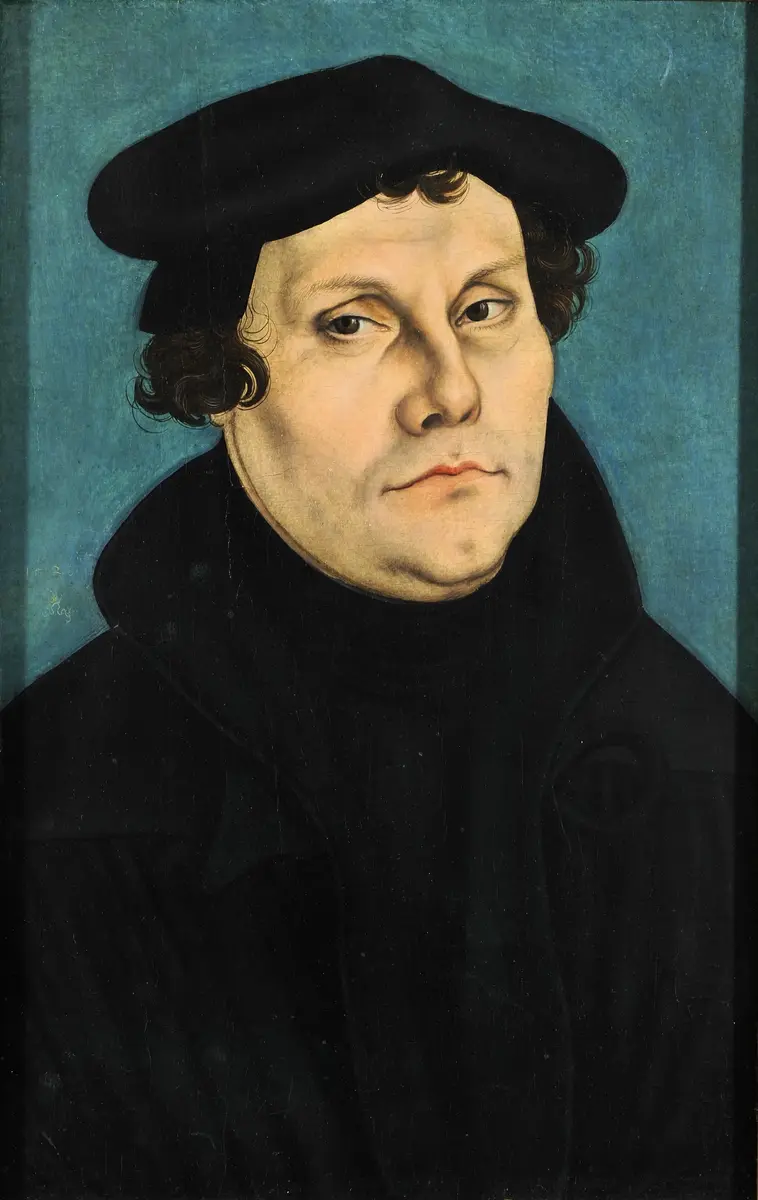
For a thousand years his authority in the Latin West was second only to the Bible's, and Thomas Aquinas read him through Aristotle. Martin Luther, a friar of the order named after him, built on his teaching that grace is a free gift, and John Calvin on his teaching of predestination; Descartes's 'I think, therefore I am' echoes his argument that even if I am mistaken, I must exist to be mistaken. His views on sin, sex and the use of force against heretics are still fiercely debated. The Vandals took Hippo soon after his death, but his books escaped intact, and his body is said to have been carried to Sardinia and later to Pavia, where bones believed to be his lie in a marble shrine.
What happened
- 354
Born at Thagaste, a small town in the hills of Roman Numidia, to Patricius, a pagan town councillor, and Monica, a devout Christian.
Thagaste (Souk Ahras, Algeria): born here in 354; home again with his friends from 388 to 391- 370
Brought home from school at Madauros, the sixteen-year-old spends an idle year at Thagaste while his father saves for Carthage; with friends he steals pears he does not even want, a theft he will dissect in the Confessions. Late in the year he goes to Carthage to study rhetoric.
- 371
His father dies, baptised on his deathbed. At Carthage Augustine takes a partner, whose name he never gives; they will live together for about fourteen years, and about 372 she bears him a son, Adeodatus.
Carthage: student and then teacher of rhetoric from 370 to 383; later the city of the African councils and the conference of 411 - 373
In his nineteenth year he reads Cicero's Hortensius, an appeal to study philosophy, and falls in love with wisdom; the same year he joins the Manichaeans as a 'hearer', and stays with them for nine years.
Carthage: student and then teacher of rhetoric from 370 to 383; later the city of the African councils and the conference of 411 - 375
After teaching for a short time at Thagaste, where the death of a close friend shatters him, he opens a school of rhetoric at Carthage.
Carthage: student and then teacher of rhetoric from 370 to 383; later the city of the African councils and the conference of 411 - 383
Disappointed by Faustus, the Manichaeans' famous bishop, and tired of rowdy students, he sails for Rome by night, leaving his mother praying at the shrine of Saint Cyprian by the harbour; in Rome he falls seriously ill.
- 384
Symmachus, prefect of Rome, picks him for the public chair of rhetoric at Milan, the seat of the western emperor; he moves north and begins to listen to the sermons of Bishop Ambrose.
Milan: professor of rhetoric at the imperial capital from 384; baptised by Ambrose in the baptistery of San Giovanni alle Fonti in 387 - 385
Monica joins him in Milan and arranges a good marriage. The mother of his son is sent back to Africa, vowing never to know another man; Adeodatus stays with his father. Ambrose's preaching and the books of the Platonists change how he reads the Bible.
Milan: professor of rhetoric at the imperial capital from 384; baptised by Ambrose in the baptistery of San Giovanni alle Fonti in 387 - 386
In a garden in Milan, weeping under a fig tree, he hears a child chanting 'take up and read', opens Paul's letters and reads a verse against a life of pleasure: he gives up his career, his marriage and sex. In the autumn he resigns his chair and retires with his mother, his son and friends to a country house at Cassiciacum, where he writes his first surviving books.
Milan: professor of rhetoric at the imperial capital from 384; baptised by Ambrose in the baptistery of San Giovanni alle Fonti in 387- 387
On the night of the Easter Vigil, 24 to 25 April, Ambrose baptises him, with Adeodatus and Alypius, in the baptistery of San Giovanni alle Fonti.
Milan: professor of rhetoric at the imperial capital from 384; baptised by Ambrose in the baptistery of San Giovanni alle Fonti in 387In the autumn, perhaps in November, waiting at Ostia for a ship home, he and his mother share at a window a vision of eternal life; a few days later Monica falls ill with fever and dies, in her fifty-sixth year, asking only to be remembered at the altar.
Ostia, the port of Rome: the vision at the window with his mother, and her death, in 387- 388
After the usurper Maximus is killed in August, he sails for Africa, and at Thagaste sells his inheritance and lives with friends in a community of prayer and study.
Thagaste (Souk Ahras, Algeria): born here in 354; home again with his friends from 388 to 391 - 390
His son Adeodatus dies in his late teens; his friend Nebridius also dies in these years.
- 391
On a visit to the port of Hippo Regius he is seized by the congregation and, in tears, ordained priest by the old bishop Valerius, a Greek who needs a Latin preacher; he founds a monastery in the church grounds.
Hippo Regius (Annaba, Algeria): priest from 391, bishop from about 396, died here during the Vandal siege in 430 - 392
In a public debate at Hippo he defeats Fortunatus, a leading Manichaean priest, who leaves the city.
Hippo Regius (Annaba, Algeria): priest from 391, bishop from about 396, died here during the Vandal siege in 430 - 393
The bishops of Africa meet in council at Hippo; at their request the priest Augustine addresses them, a talk he later publishes as On Faith and the Creed.
Hippo Regius (Annaba, Algeria): priest from 391, bishop from about 396, died here during the Vandal siege in 430- 396
Consecrated co-bishop of Hippo by Megalius, primate of Numidia, while Valerius still lives, he soon succeeds him and will hold the see for thirty-four years.
Hippo Regius (Annaba, Algeria): priest from 391, bishop from about 396, died here during the Vandal siege in 430 - 397
About now he begins the Confessions, the story of his life and conversion told as a prayer to God, finished around 400.
- 410
Alaric's Goths enter Rome and hold it for three days, the first foreign army in the city for nearly eight hundred years; refugees reach Africa, and pagans blame the abandoned gods.
- 411
The great conference of Catholic and Donatist bishops, hundreds on each side, opens at Carthage before the emperor's commissioner; Augustine is there for the Catholics, and after three sessions, by 8 June, the ruling goes against the Donatists, who are then suppressed by law.
Carthage: student and then teacher of rhetoric from 370 to 383; later the city of the African councils and the conference of 411- 412
He begins The City of God, his answer to those who blamed Christianity for the fall of Rome; it will take him until 426.
- 418
After years of his writing against them, Pelagius and his follower Caelestius are condemned by the African bishops at Carthage and then excommunicated; to the end of his life Augustine argues with the Pelagian bishop Julian of Eclanum.
- 426
In the Church of Peace at Hippo, at seventy-one, he names the priest Eraclius as his successor, and the people acclaim him; about now he also begins the Reconsiderations, a critical review of all his books.
Hippo Regius (Annaba, Algeria): priest from 391, bishop from about 396, died here during the Vandal siege in 430- 429
The Vandals under King Gaiseric cross from Spain into Africa and move east, laying the country waste.
- 430
He dies at Hippo, aged seventy-five, in the third month of the Vandal siege, having had the penitential psalms copied onto the wall by his bed; he leaves no will, only the order to keep the church's library. Hippo falls to the Vandals the next year.
Hippo Regius (Annaba, Algeria): priest from 391, bishop from about 396, died here during the Vandal siege in 430