George Stephenson
“The self-taught colliery engineer who built the Stockton and Darlington (1825) and the Liverpool and Manchester (1830) railways: the father of railways.”
George Stephenson was the self-taught English colliery mechanic who did more than anyone to turn the steam locomotive from an experiment into the basis of a railway system. He built his first engine for a coal waggonway in 1814. In 1825 he drove the opening train of the Stockton and Darlington, the first public railway to use locomotives. He then built the Liverpool and Manchester Railway, opened in 1830, the first line between two cities worked entirely by steam. Engines from the works he founded with his son Robert, above all the Rocket of 1829, set the pattern for those that followed. The gauge he used, 4 feet 8½ inches, is still the standard on most of the world's railways. The Victorians called him the father of railways.
He was born on 9 June 1781 in a one-room cottage beside the waggonway at Wylam on the Tyne, west of Newcastle, the second son of Robert Stephenson, a fireman who stoked a colliery pumping engine. He had no schooling. As a boy he herded cows and led a gin horse at a pit; at fourteen he was helping his father, and at seventeen he was in charge of a pumping engine. Only at eighteen did he pay for night school to learn to read and write. He married Frances (Fanny) Henderson in 1802, and their son Robert was born in 1803. After she died in 1806 he raised the boy alone, mended clocks and shoes for extra money, and worked through Robert's school lessons with him in the evenings. In 1812 he became enginewright at the Killingworth collieries, in charge of all their machinery.
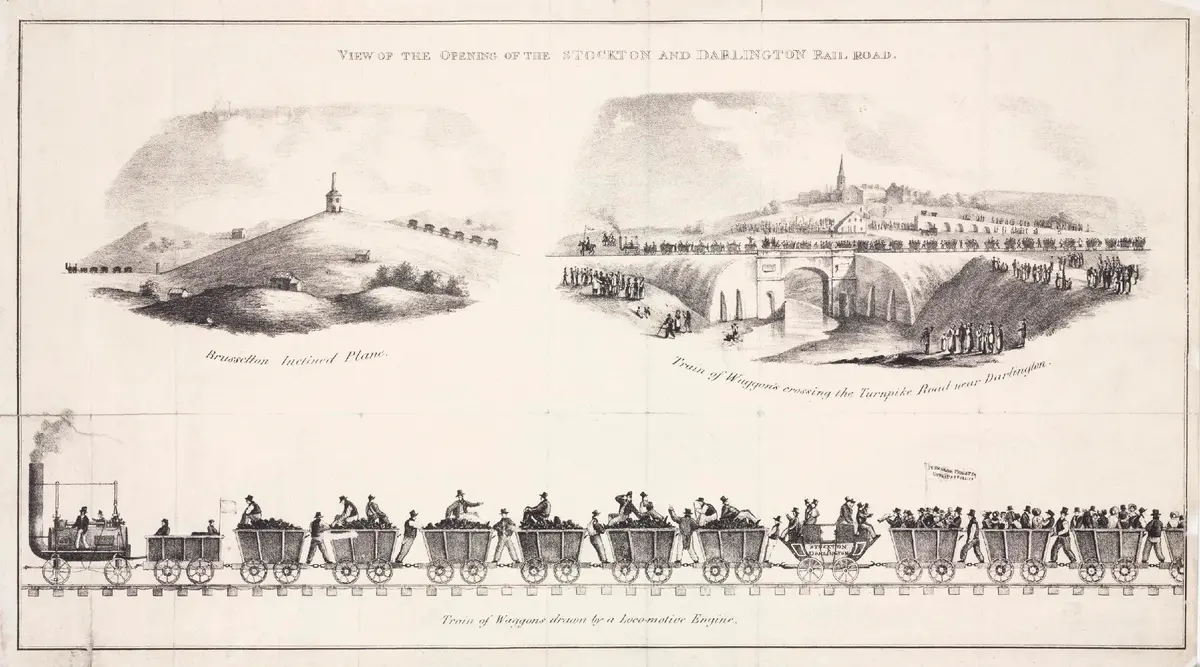
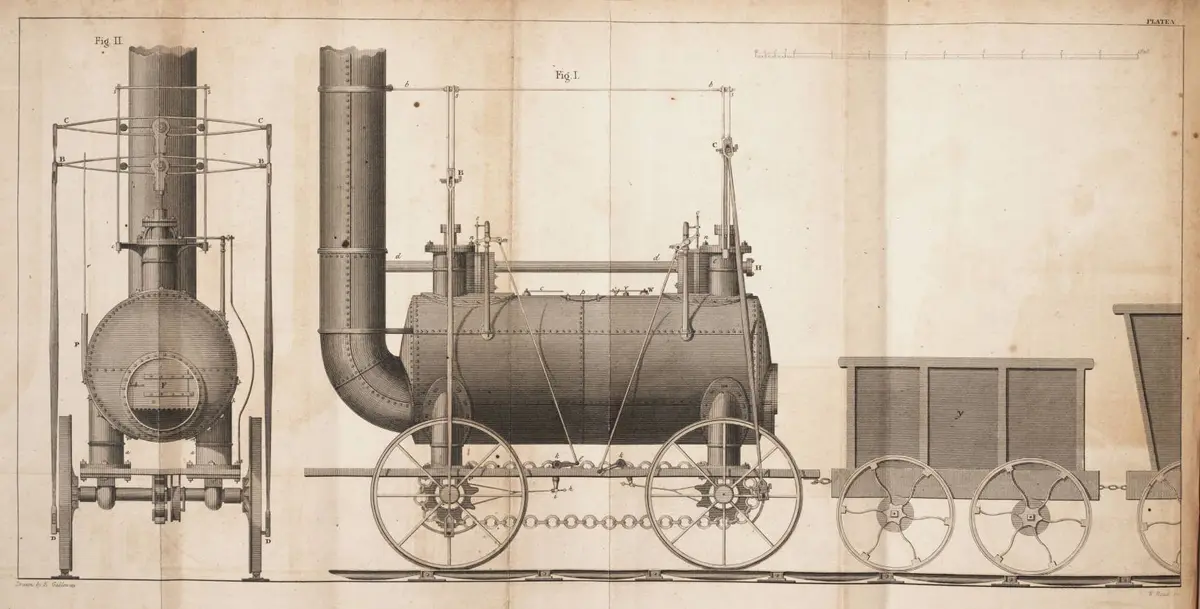
Killingworth made his name. In 1814 he built a locomotive, the Blücher, that pulled eight loaded waggons, about 30 tons, at four miles an hour, and he went on improving the type. In 1815 he made a miner's safety lamp, the 'Geordie lamp', and tested it in the pit at the same time as the chemist Humphry Davy was producing his own. Davy's admirers said Stephenson had copied him; his own supporters published a report in 1817 to defend him, and today both men are thought to have reached the idea separately. He laid out the Hetton colliery railway, opened in 1822, and persuaded Edward Pease that the Stockton and Darlington should use locomotives. In 1823 he, Robert and Pease set up Robert Stephenson and Company in Newcastle, the first works built to make locomotives.
The Liverpool and Manchester was his hardest test. In 1825 lawyers for canal owners and landowners took his survey apart in Parliament, and the first bill failed. A new route was approved in 1826 and the company made him engineer again. He carried the line across Chat Moss, a bog that critics said no railway could cross, by floating it on brushwood and earth, and cut through rock at Olive Mount. In October 1829 the directors held trials at Rainhill to choose their engines, and the Rocket, built by Robert's firm to Robert's design with George's advice, won the prize of £500. At the opening on 15 September 1830 the Rocket struck and fatally injured the politician William Huskisson, and Stephenson himself drove the injured man to Eccles at about 36 miles an hour, a speed that astonished the country.
In the 1830s and 1840s he was engineer or consultant to many of the main lines of the Midlands and the North, and advised King Leopold of Belgium, who made him a knight of the Order of Leopold. From 1838 he lived at Tapton House near Chesterfield, where he mined the coal his railway cuttings had found, burned lime and grew prize fruit under glass. In 1847 he became the first president of the Institution of Mechanical Engineers. He married twice more, in 1820 and in 1848, and died at Tapton House on 12 August 1848, aged 67; he is buried in Holy Trinity Church, Chesterfield. His fame rests on organisation and persistence more than on a single invention: he brought the locomotive, the track, the bridges and the trained men together and showed that a railway worked by steam could pay.
What happened
- 1781
George Stephenson is born in the cottage beside the waggonway at Wylam on the Tyne, the second of six children of Robert Stephenson, the fireman of the colliery pumping engine, and his wife Mabel.
George Stephenson's Birthplace, Wylam, on the old waggonway by the Tyne: born here on 9 June 1781- 1798
After years as a cowherd and gin-horse driver, and as assistant fireman to his father from his fourteenth year, he is put in charge of a pumping engine as plugman at seventeen. At eighteen, still unable to read, he pays for night school to learn reading and writing so that he can study the engines of Boulton and Watt.
- 1802
Now an engineman, he marries Frances (Fanny) Henderson, a farm servant, at Newburn church, and they set up house at Willington Quay, where he cleans clocks and mends shoes to earn more.
- 1803
His only son, Robert, is born at Willington Quay. George later sends him to school in Newcastle and goes through his lessons with him every evening, learning alongside him.
- 1804
He moves to West Moor, Killingworth, as brakesman of the colliery engine, and lives in the cottage now called Dial Cottage.
Dial Cottage, West Moor, Killingworth: his home while he was brakesman and then enginewright at the Killingworth collieries, where he built the Blücher (1814) and tested his safety lamp (1815) - 1806
Fanny dies of consumption, soon after the birth of a daughter who does not live long; George is left to bring up Robert alone.
- 1812
Having made a failing pumping engine at the High Pit work, he is appointed enginewright of the Killingworth collieries at £100 a year, in charge of all their machinery.
- 1814
His first locomotive, the Blücher, built in the colliery workshops at West Moor with Lord Ravensworth's backing, is put on the Killingworth waggonway and tried the same day: it pulls eight loaded waggons, about 30 tons, up a gentle slope at four miles an hour. He soon improves the type, turning the exhaust steam up the chimney to draw the fire.
Dial Cottage, West Moor, Killingworth: his home while he was brakesman and then enginewright at the Killingworth collieries, where he built the Blücher (1814) and tested his safety lamp (1815)- 1815
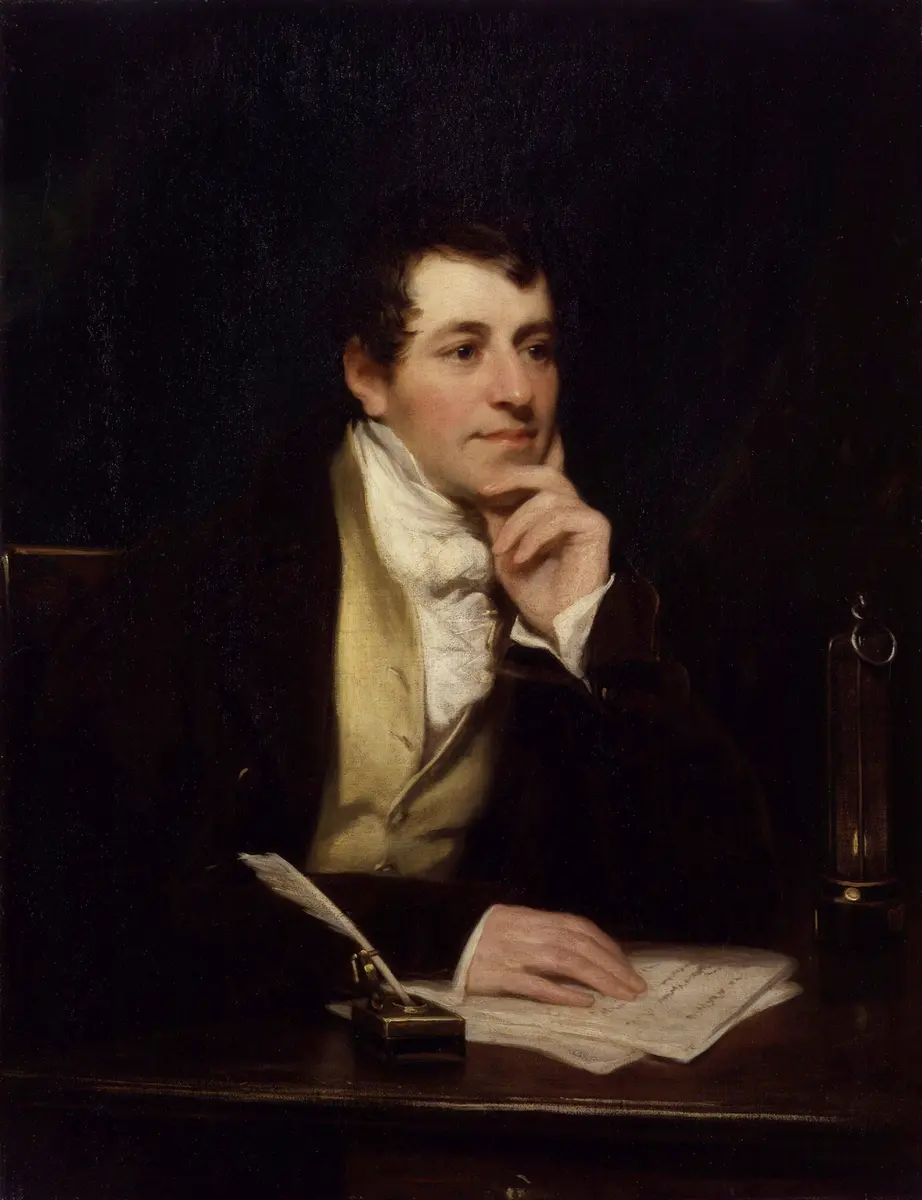
He takes his first safety lamp down the Killingworth pit and holds it in a jet of firedamp, at the risk of his life. A second follows on 4 November; Humphry Davy shows his lamp to the public on 9 November. The quarrel over who came first lasts for years: Davy's admirers give him a service of plate, Stephenson's give him £1,000 early in 1818, and miners in the north-east call his lamp the Geordie.
Dial Cottage, West Moor, Killingworth: his home while he was brakesman and then enginewright at the Killingworth collieries, where he built the Blücher (1814) and tested his safety lamp (1815)- 1820
He marries his second wife, Elizabeth Hindmarsh, a farmer's daughter from Black Callerton.
- 1821
On the day the Stockton and Darlington Railway Act receives royal assent, he calls on the Quaker Edward Pease at Darlington and talks him into using locomotives; in January 1822 the company makes him its engineer.
- 1822
The Hetton colliery railway to the Wear at Sunderland, which he laid out, opens: about eight miles of rope inclines worked by fixed engines and level stretches worked by his locomotives.
- 1823
With Robert, Edward Pease and his cousin Thomas Richardson he founds Robert Stephenson and Company in Forth Street, Newcastle, the first factory built to make locomotives.
- 1824
The Liverpool and Manchester committee engages him as the engineer of its projected railway; he surveys the line through the summer and autumn, often driven off by landowners' men.
He signs the plan and section of the line, with the surveyor Thomas O. Blackett, for deposit with Parliament.
- 1825
After he has spent three days in the witness box, cross-examined by Edward Alderson and other counsel for the canal owners and landowners on his levels, his speeds and his plan to cross Chat Moss, the opposition closes its case. The committee votes down the clauses to build the line and take the land, and the promoters withdraw the bill.
He drives Locomotion at the head of the opening train of the Stockton and Darlington Railway, from Shildon through Darlington to Stockton, reaching 15 miles an hour.
- 1826
Parliament having passed a Liverpool and Manchester bill on a new route surveyed by George and John Rennie and Charles Vignoles, the company makes Stephenson principal engineer again; with Joseph Locke and John Dixon as resident engineers, work starts on Chat Moss.
Chat Moss, between Manchester and Liverpool: the bog he carried the Liverpool and Manchester Railway across, finished by 1 January 1830- 1829
At the Rainhill trials, which opened on 6 October to choose the railway's engines, the Rocket, built by Robert's firm, completes the full test: twenty runs over the course with 13 tons behind it, averaging 15 miles an hour and touching 29. It is the only engine to meet every condition, and the £500 prize goes to the Stephensons and Henry Booth.
- 1830
The road across Chat Moss is finished, floated on drained peat, brushwood and hurdles; the Rocket pulls the first experimental passenger train across it. The crossing cost £28,000, against the £270,000 his critic Francis Giles had predicted.
Chat Moss, between Manchester and Liverpool: the bog he carried the Liverpool and Manchester Railway across, finished by 1 January 1830The Liverpool and Manchester Railway opens with eight trains, all their engines from the Stephensons' works, Stephenson driving the Northumbrian with the Duke of Wellington's carriage. At Parkside, where the engines stop for water, William Huskisson steps onto the other track and is run over by the Rocket. Stephenson takes him in the Northumbrian to Eccles, about 15 miles in 25 minutes, but Huskisson dies there that evening.
- 1835
King Leopold I asks George and Robert Stephenson how Belgium should build its national railways; after their visit he makes George a knight of the Order of Leopold.
- 1838
He moves to Tapton House above Chesterfield, leased with the coal pits he opens on seams found while building the North Midland Railway. In August he is a vice-president of the mechanical science section at the British Association's meeting in Newcastle.
Tapton House, Chesterfield: his home from 1838; he died here on 12 August 1848 - 1847
Engineers meeting in Birmingham found the Institution of Mechanical Engineers, and he becomes its first president.
- 1848
Four years after Elizabeth's death in 1845, he marries for the third time: Ellen Gregory, who had kept house for him at Tapton.
In his last public appearance he reads a paper, 'On the Fallacies of the Rotatory Engine', to the Institution of Mechanical Engineers in Birmingham.
After about ten days of fever and a haemorrhage of the lungs, he dies at Tapton House a few minutes before noon, aged 67. Chesterfield closes its shops for the funeral, and he is buried in Holy Trinity Church, where Robert later puts up a memorial window.
Tapton House, Chesterfield: his home from 1838; he died here on 12 August 1848