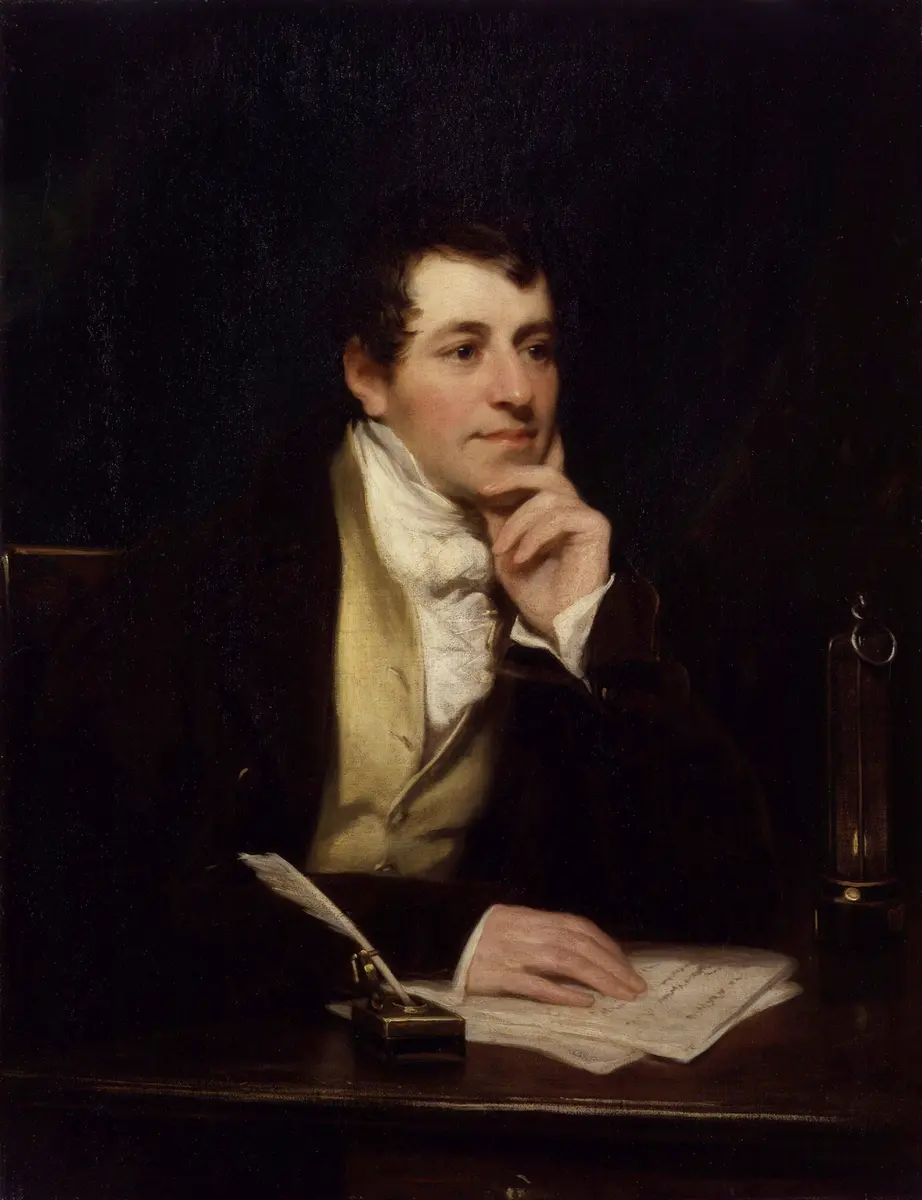
Humphry Davy
“The Cornish chemist of the Royal Institution who used the electric battery to discover potassium and sodium (1807), named chlorine, and invented the miner's safety lamp (1815).”
Humphry Davy was the most famous English chemist of the early nineteenth century. He discovered the strange effects of breathing nitrous oxide, or laughing gas; used the new electric battery to split substances that no one had been able to break down, and so found the metals potassium and sodium in 1807 and calcium, magnesium, strontium and barium in 1808; showed that chlorine is an element and gave it its name; and in 1815 invented the miner's safety lamp, which let coal miners carry a flame into gassy pits without setting off explosions. He was also a brilliant public speaker, a poet and friend of poets, and in later life President of the Royal Society.
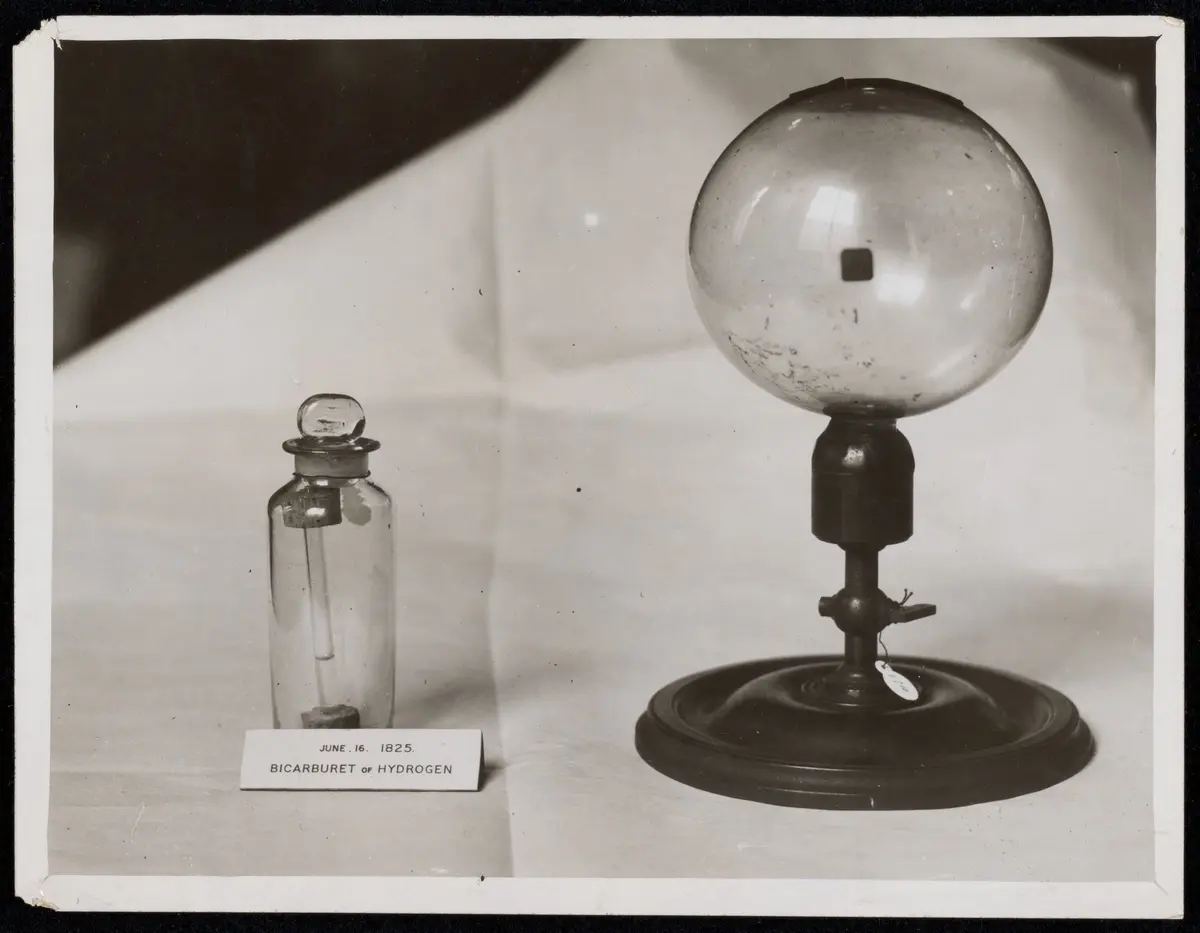
He was born in Penzance, at the far western tip of Cornwall, on 17 December 1778. His father, who farmed a small family estate, died when Humphry was fifteen, and the boy was apprenticed to a local surgeon-apothecary. He taught himself chemistry from books, and in 1798, aged nineteen, he was hired by the radical Bristol doctor Thomas Beddoes to run his Medical Pneumatic Institution, which tested whether newly discovered gases could cure diseases. There Davy breathed nitrous oxide himself, recorded its euphoria and its power to dull pain, gave it to friends such as the poets Samuel Taylor Coleridge and Robert Southey, and published the results in 1800.
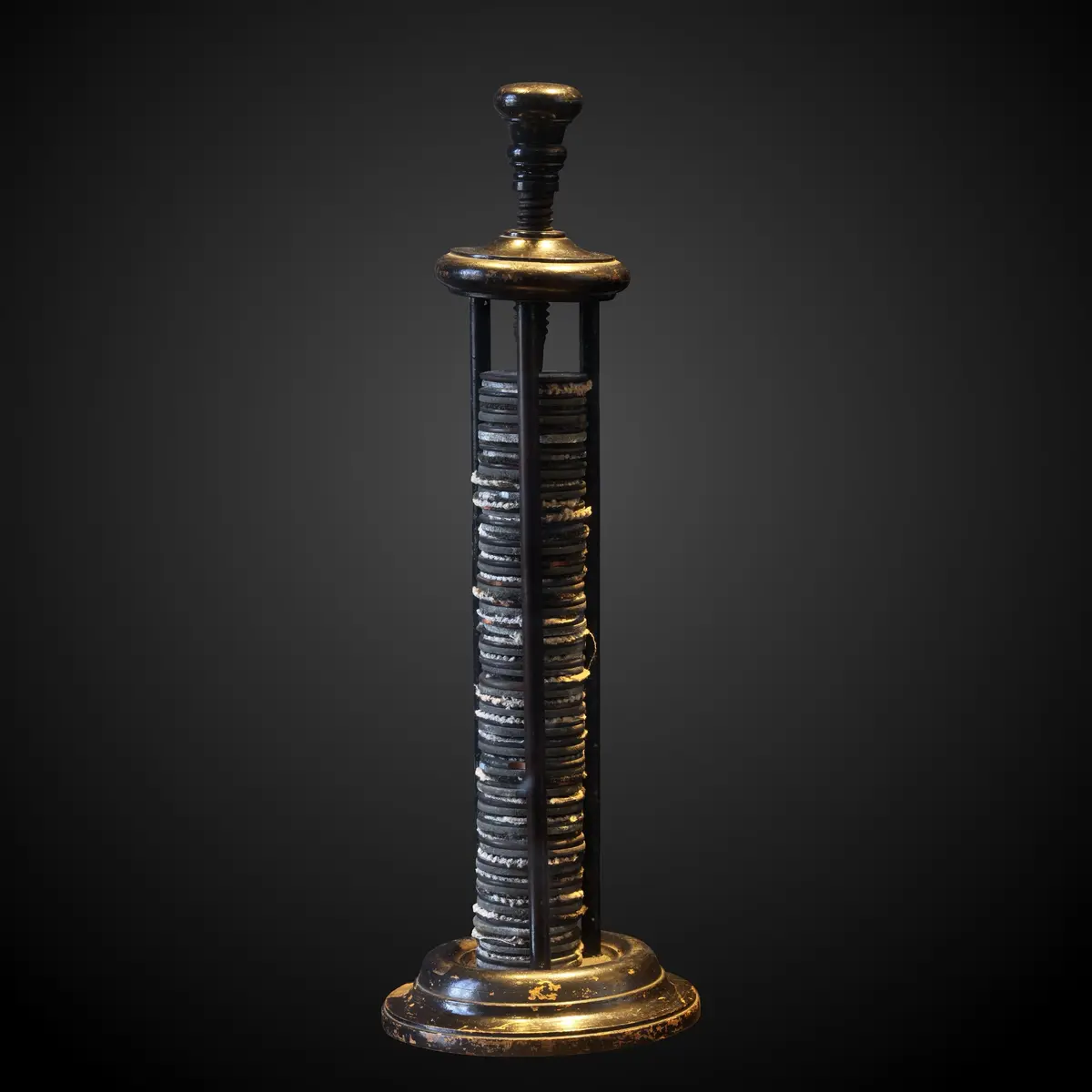
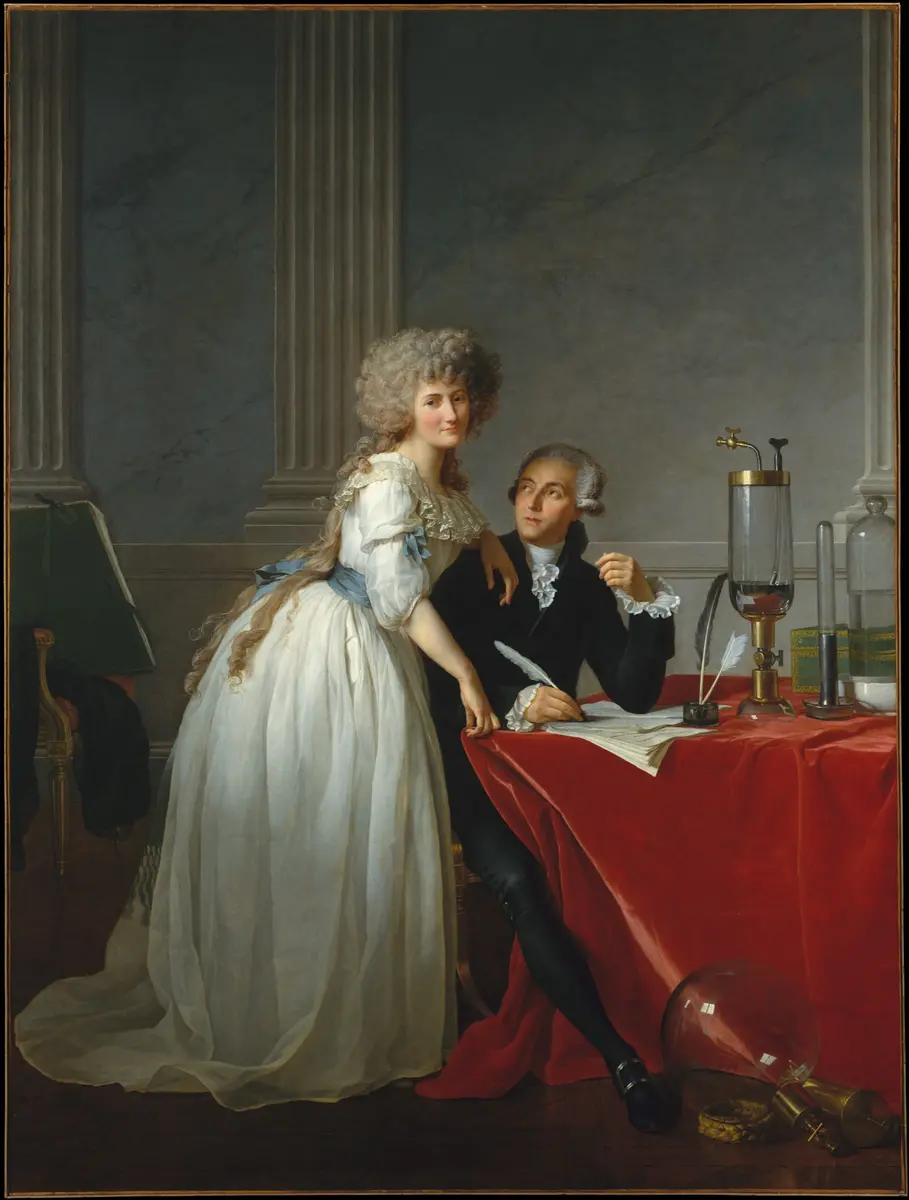
In 1801 the new Royal Institution in London took him on, and within a year he was its Professor of Chemistry. His lectures in Albemarle Street became a fashionable sensation, attended by crowds of men and women. In the Institution's laboratory he built ever larger batteries and argued that chemical attraction and electricity are the same force. In October 1807 he passed a current through moist potash and saw tiny globules of a new metal burst into flame: potassium. In 1810 he proved that the green gas then called oxymuriatic acid contained no oxygen, against the theory of Antoine Lavoisier, and named it chlorine. In 1812 he was knighted, married the rich widow Jane Apreece and gave up his paid posts; the next year he took the young Michael Faraday, his new laboratory assistant, on a long tour of Europe.
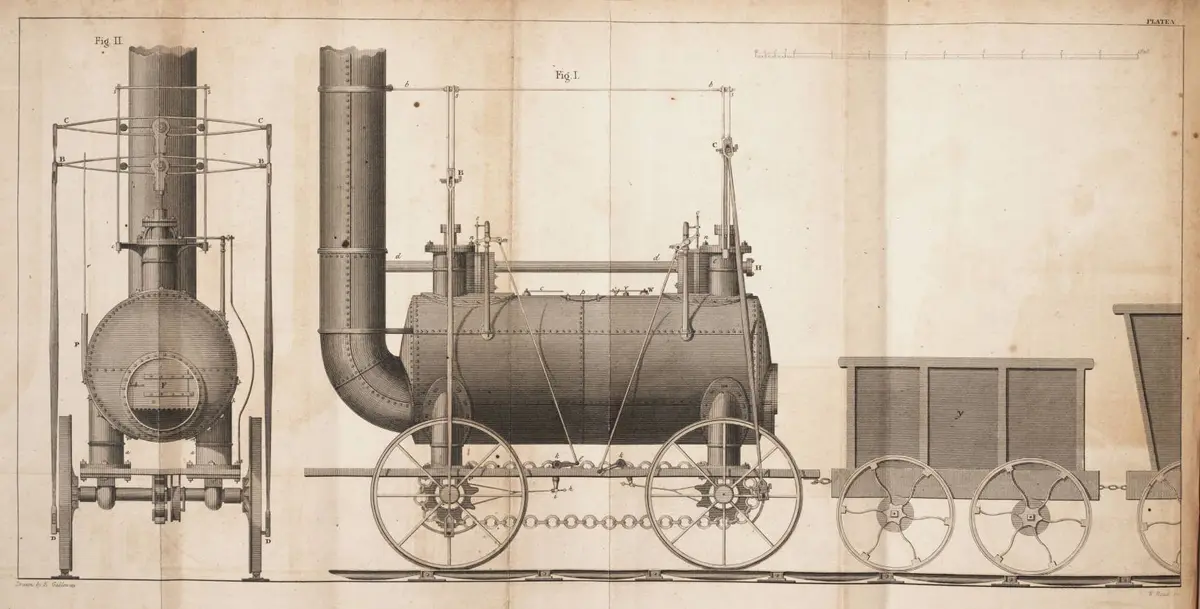
After a series of mine explosions in north-east England, Davy was asked in 1815 to find a safe way to light coal mines. Within weeks he found that a flame wrapped in fine metal gauze cannot set fire to the gas outside it; his gauze lamp was tested underground in January 1816 and was soon in use across the coalfields. The engineer George Stephenson had made a similar lamp at the same time, and the bitter quarrel over who came first lasted years. Davy was made a baronet in 1818 and in 1820 was elected President of the Royal Society, a post he found hard. After a stroke in 1826 he travelled in Italy and the Alps, fishing and writing, and he died in Geneva on 29 May 1829, aged fifty. He is remembered as the man who showed how much electricity could do for chemistry, and as the scientist whose lamp saved miners' lives.
What happened
- 1778
Humphry Davy is born in Penzance, at the western tip of Cornwall, the eldest son of Robert Davy, who farms a small family estate at Ludgvan nearby, and Grace Millet.
Penzance, Cornwall: born on 17 December 1778 in a house at the top of Market Jew Street, where his statue now stands- 1793
After Penzance grammar school he spends a year at Truro grammar school, paid for by a family friend, Dr John Tonkin.
- 1794
His father dies, leaving the family poor; Humphry, fifteen, gives up his hope of studying medicine at Edinburgh.
- 1795
He is apprenticed for five years to John Bingham Borlase, a surgeon-apothecary in Penzance, and teaches himself chemistry from books, among them Lavoisier's.
Penzance, Cornwall: born on 17 December 1778 in a house at the top of Market Jew Street, where his statue now stands- 1797
Gregory Watt, son of the engineer James Watt, and Tom Wedgwood winter in Penzance; Watt lodges with the Davys, and the two friends turn Humphry towards chemistry and geology.
- 1798
Released from his apprenticeship, he leaves Cornwall to become superintendent of Thomas Beddoes's new Medical Pneumatic Institution near Bristol, which is to test gases as cures for tuberculosis. Beddoes had hired him on the strength of an essay on heat and light that attacked French chemistry. He arrives five days later.
6 Dowry Square, Hotwells, Bristol: Beddoes's Medical Pneumatic Institution, where Davy lived and worked from 1798 to 1801 and breathed nitrous oxide- 1799
He breathes nitrous oxide and finds that it brings giddy pleasure and dulls pain; after one dose he writes 'Davy and Newton' in his notebook in huge letters. He soon gives the gas to friends.
6 Dowry Square, Hotwells, Bristol: Beddoes's Medical Pneumatic Institution, where Davy lived and worked from 1798 to 1801 and breathed nitrous oxideHe meets Samuel Taylor Coleridge, who breathes the gas with him and becomes a close friend; Robert Southey prints Davy's poems in his Annual Anthology. The next year Davy helps see the second edition of Wordsworth's Lyrical Ballads through the press in Bristol.
6 Dowry Square, Hotwells, Bristol: Beddoes's Medical Pneumatic Institution, where Davy lived and worked from 1798 to 1801 and breathed nitrous oxide- 1800
He publishes Researches, Chemical and Philosophical; Chiefly Concerning Nitrous Oxide, the book that makes his name. That year he also starts experiments with Volta's new battery.
6 Dowry Square, Hotwells, Bristol: Beddoes's Medical Pneumatic Institution, where Davy lived and worked from 1798 to 1801 and breathed nitrous oxide- 1801
Appointed in February assistant lecturer at the new Royal Institution, founded in 1799 by Count Rumford and Sir Joseph Banks, he arrives in London; he gives his first lecture there on 25 April.
The Royal Institution, 21 Albemarle Street, London: his lecture theatre and laboratory from 1801, where he found potassium, sodium and chlorine and built the safety lamp- 1802
His Discourse Introductory to a Course of Lectures on Chemistry draws a fashionable crowd to Albemarle Street; by now his lectures are among the sights of London, and James Gillray caricatures them that year.
The Royal Institution, 21 Albemarle Street, London: his lecture theatre and laboratory from 1801, where he found potassium, sodium and chlorine and built the safety lampHe is made Professor of Chemistry at the Royal Institution, at twenty-three.
The Royal Institution, 21 Albemarle Street, London: his lecture theatre and laboratory from 1801, where he found potassium, sodium and chlorine and built the safety lamp- 1803
He gives his first lecture to the Board of Agriculture, the first of a yearly series on the chemistry of soils and crops.
He is elected a Fellow of the Royal Society.
Somerset House, Strand, London: home of the Royal Society, which he served as Secretary (1807–12) and President (1820–27)- 1806
In his first Bakerian Lecture, 'On Some Chemical Agencies of Electricity', he argues that chemical attraction is electrical. Although Britain and France are at war, the Institut de France awards him its prize for the work in 1807.
Somerset House, Strand, London: home of the Royal Society, which he served as Secretary (1807–12) and President (1820–27)- 1807
He is elected Secretary of the Royal Society, a post he holds until 1812.
Somerset House, Strand, London: home of the Royal Society, which he served as Secretary (1807–12) and President (1820–27)Running the current of the Royal Institution's battery through moist potash, he sees small globules of a bright metal form at the negative wire; some burst into flame. 'Capital experiment proving the decomposition of potash,' he writes. Within days he gets sodium from soda the same way.
The Royal Institution, 21 Albemarle Street, London: his lecture theatre and laboratory from 1801, where he found potassium, sodium and chlorine and built the safety lampHe announces potassium and sodium in his second Bakerian Lecture to the Royal Society. Soon after, worn out, he falls dangerously ill for two months.
Somerset House, Strand, London: home of the Royal Society, which he served as Secretary (1807–12) and President (1820–27)- 1808
The Royal Society hears his paper on the earths: by electrolysis he has obtained magnesium, calcium, strontium and barium.
Somerset House, Strand, London: home of the Royal Society, which he served as Secretary (1807–12) and President (1820–27)- 1810
He reports to the Royal Society that he cannot find any oxygen in 'oxymuriatic acid', the green gas Carl Wilhelm Scheele had made in 1774, and that it seems to be a simple substance. This overturns Lavoisier's rule that every acid contains oxygen.
Somerset House, Strand, London: home of the Royal Society, which he served as Secretary (1807–12) and President (1820–27)In his Bakerian Lecture he proposes to call the gas 'Chlorine', from its colour.
Somerset House, Strand, London: home of the Royal Society, which he served as Secretary (1807–12) and President (1820–27)- 1812
The Prince Regent knights him; the next day he gives his last lecture at the Royal Institution.
The Royal Institution, 21 Albemarle Street, London: his lecture theatre and laboratory from 1801, where he found potassium, sodium and chlorine and built the safety lampHe marries Jane Apreece, a rich widow whose fortune came from her father's estates in slave-worked Antigua, and soon gives up his paid posts to do research. His Elements of Chemical Philosophy follows in August.
- 1813
On his recommendation Michael Faraday, a young bookbinder who had attended his lectures and sent him his notes, is appointed laboratory assistant at the Royal Institution.
The Royal Institution, 21 Albemarle Street, London: his lecture theatre and laboratory from 1801, where he found potassium, sodium and chlorine and built the safety lampHe publishes Elements of Agricultural Chemistry, his lectures to the Board of Agriculture.
With Napoleon's permission he sets out with Lady Davy and Faraday on a tour of France, Italy, Switzerland and Germany. In Paris in December he shows that the new substance 'X' is an element, iodine; in Florence he burns diamond and proves it is carbon; in Naples he climbs Vesuvius. They are back in London in April 1815.
- 1815
Asked by Robert Gray, Rector of Bishopwearmouth, to find a safe light for coal mines full of explosive firedamp, he visits the Newcastle pits and then, with Faraday in the Royal Institution laboratory, makes lamp after lamp.
The Royal Institution, 21 Albemarle Street, London: his lecture theatre and laboratory from 1801, where he found potassium, sodium and chlorine and built the safety lampHis paper 'On the fire-damp of coal mines' is read to the Royal Society: flame cannot pass through narrow tubes or fine gauze. By December his lamp is a simple flame inside a chimney of wire gauze.
Somerset House, Strand, London: home of the Royal Society, which he served as Secretary (1807–12) and President (1820–27)- 1816
Gauze lamps are tested underground in Hebburn Colliery and work. They are quickly made and spread through the coalfields; George Stephenson has made a similar lamp at the same time, and their bitter quarrel over priority runs until 1818.
The Royal Society awards him its Rumford Medal for the lamp.
Somerset House, Strand, London: home of the Royal Society, which he served as Secretary (1807–12) and President (1820–27)- 1817
The coal owners of the north-east give him a silver dinner service worth more than £1,000 in thanks for the lamp.
- 1818
He is made a baronet. Sent by the Prince Regent to Naples, he spends 1818 to 1820 trying to unroll the carbonised papyri of Herculaneum with chemicals; he opens a number of them but destroys many in the process.
- 1820
After the death of Sir Joseph Banks he is elected President of the Royal Society. He proves an ambitious but quarrelsome president.
Somerset House, Strand, London: home of the Royal Society, which he served as Secretary (1807–12) and President (1820–27)- 1823
From the President's chair he accuses Faraday of not giving others credit for his discovery of electromagnetic rotation, and in May he opposes Faraday's election to the Society; Faraday is elected all the same in January 1824.
Somerset House, Strand, London: home of the Royal Society, which he served as Secretary (1807–12) and President (1820–27)- 1824
He reports his plan, made for the Navy Board, to stop sea water eating the copper bottoms of warships by fixing blocks of iron or zinc to them. The method fails in practice, and in 1825 he is sharply criticised for it in private and in public.
Somerset House, Strand, London: home of the Royal Society, which he served as Secretary (1807–12) and President (1820–27)- 1826
He suffers a stroke. In the new year he leaves for Italy and the Alps, travelling, fishing and writing.
- 1827
He resigns the presidency of the Royal Society.
Somerset House, Strand, London: home of the Royal Society, which he served as Secretary (1807–12) and President (1820–27)- 1828
He publishes Salmonia, or Days of Fly Fishing, a book of conversations on angling and nature, and writes Consolations in Travel, published after his death.
- 1829
In Rome he suffers a second stroke; his brother John comes to him.
On his way home he reaches Geneva, where Lady Davy joins him.
Cimetière des Rois (Plainpalais cemetery), Geneva: died in the city on 29 May 1829 and buried here on 1 June with civic honoursHe dies in Geneva at about three in the morning, aged fifty. On 1 June he is buried with full civic honours in the Plainpalais cemetery.
Cimetière des Rois (Plainpalais cemetery), Geneva: died in the city on 29 May 1829 and buried here on 1 June with civic honours