John Logie Baird
“The Scottish engineer who gave the world's first demonstration of television in London in 1926, then lost the race to all-electronic television.”
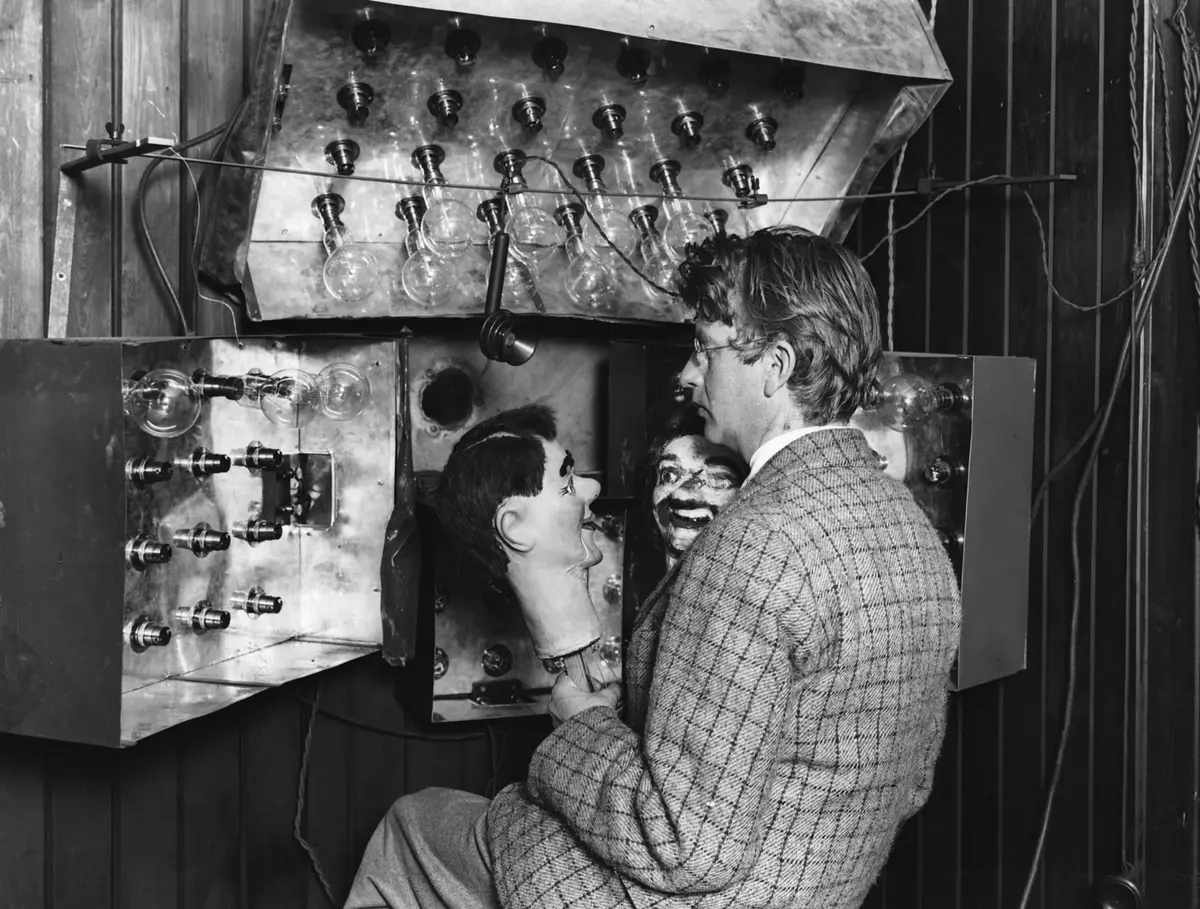
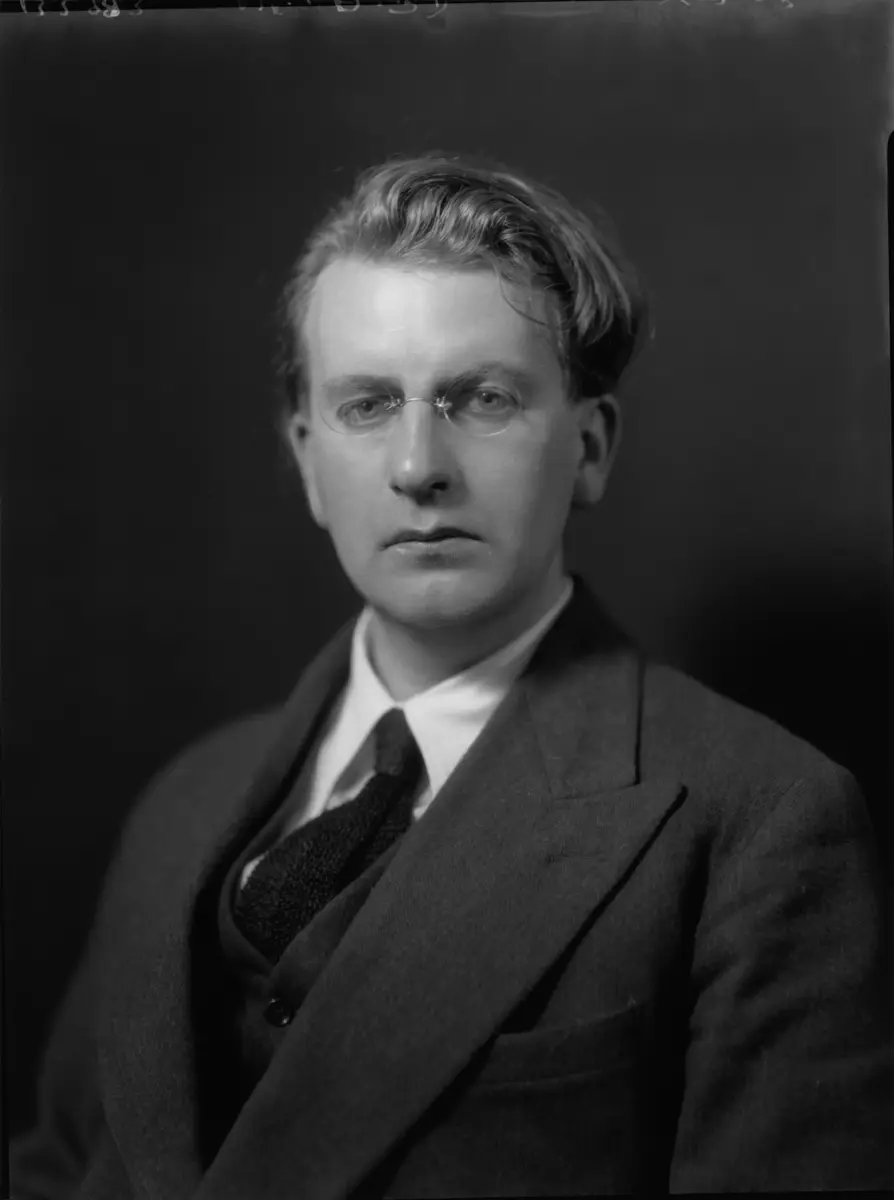
John Logie Baird was the Scottish engineer who gave the world's first demonstration of television. On 26 January 1926, in two small attic rooms at 22 Frith Street in London's Soho, he showed members of the Royal Institution a moving, recognisable human face sent by wire from one room to another. His machine was mechanical: a spinning disc pierced with a spiral of holes cut the scene into 30 lines, a light-sensitive cell turned the light into an electric current, and a second disc rebuilt the picture behind a glowing neon lamp. Within a few years he had sent pictures by telephone line from London to Glasgow and by radio across the Atlantic, shown the first colour and stereoscopic television, and given the BBC its first television programmes.
He was born on 13 August 1888 at The Lodge, the manse of the West Parish Church in Helensburgh, a seaside town on the Firth of Clyde, the youngest of the four children of the Reverend John Baird. A sickly boy who read H. G. Wells, he ran a telephone line to his friends' houses and helped launch a home-made glider from the roof, which crashed into the garden. He studied electrical engineering at the Glasgow and West of Scotland Technical College (today the University of Strathclyde), was turned down by the army in the First World War because of his health, and worked as an engineer for the Clyde Valley Electrical Power Company. He then lived on his wits as a salesman: a 'medicated' Baird Undersock, which made money, a jam factory in Trinidad in 1919 and 1920, which failed, then soap and boot polish in London.
Worn out and ill, he went to the seaside town of Hastings in 1923 to recover, and there, with a hat box, a tea chest, bicycle-lamp lenses and borrowed batteries, he began to build a television. He filed his first patent that July, sent the shadow of a Maltese cross across his workshop in 1924, and moved to Frith Street in London. On 2 October 1925 he saw the face of a ventriloquist's dummy, Stooky Bill, in light and shade, and three months later he showed the Royal Institution. Baird was as much a showman and businessman as an inventor: his companies, run with Oliver Hutchinson and the journalist Sydney Moseley, sold the first 'Televisor' sets, recorded pictures on gramophone discs (Phonovision), televised the Derby live in 1931 and, from 30 September 1929, made the BBC's first experimental broadcasts. He held 178 patents in the end.
His system was a dead end, however. Engineers in America, Philo Farnsworth with his image-dissector camera tube from 1927 and Vladimir Zworykin at RCA with the iconoscope, showed that television could be made wholly electronic, with no moving parts, and so with far sharper pictures. Baird's company, taken over by the film firm Gaumont British in 1932, moved its laboratories into the Crystal Palace and even bought a Farnsworth camera, but it kept faith with mechanical scanning too long. When the BBC opened the world's first regular high-definition service at Alexandra Palace on 2 November 1936, Baird's 240-line system took turns with the 405-line all-electronic system of Marconi-EMI. Four weeks later the Crystal Palace burned down, and in February 1937 the BBC dropped Baird's system for good.
Baird did not give up. In his private laboratory at his home in Sydenham, south London, he showed large-screen colour television in 1938, high-definition colour in 1940 and colour in three dimensions in 1941, working through the Blitz at his own expense, and in 1944 he demonstrated the Telechrome, the world's first colour picture tube. He died at Bexhill-on-Sea on 14 June 1946, aged 57, a week after the BBC came back on the air after the war. He did not invent the television we came to watch; that was electronic and the work of many hands. But he was the first to make it work at all, and his demonstrations made the public, the press and the BBC believe in it years before anyone else could.
What happened
- 1888
John Logie Baird is born at The Lodge in Helensburgh, on the Firth of Clyde, the youngest of the four children of the Reverend John Baird, minister of the West Parish Church, and Jessie Morrison Inglis.
The Lodge, West Argyle Street, Helensburgh: the manse where Baird was born on 13 August 1888 and grew up- 1906
After three Helensburgh schools, where his friend Jack Buchanan was a schoolfellow, he enters the Glasgow and West of Scotland Technical College to study electrical engineering. Illness keeps interrupting his studies; he gains the college's associateship in 1914 and spends a year at Glasgow University without taking the degree.
- 1916
Turned down for the army on health grounds, he works as an assistant mains engineer for the Clyde Valley Electrical Power Company, and blacks out part of the network trying to make diamonds with its current.
- 1918
He resigns to work for himself. His Baird Undersock, a plain cotton sock sprinkled with borax and sold as a cure for cold, damp feet, advertised with sandwich-board women and a wooden tank, makes him far more than his engineer's pay.
- 1919
Hoping a warm climate will cure his colds, he sails from Liverpool on the freighter Novian for Trinidad, where he sets up a small factory to make jam from cheap local fruit and sugar. Insects and illness ruin it.
- 1920
He is back in Britain with most of his money gone, and in London sells his jam, then soap, honey and boot polish, until his health breaks down again.
- 1923
To recover, he moves to the seaside town of Hastings, lodges at 21 Linton Crescent and starts to build a television from a hat box, a tea chest, bicycle-lamp lenses, darning needles and scissors.
21 Linton Crescent, Hastings: his lodgings from 1923, when he began to build his television in the townWith his backer Wilfred Day he files his first patent, 'a system of transmitting views, portraits and scenes by telegraphy or wireless telegraphy' (British patent 222,604).
21 Linton Crescent, Hastings: his lodgings from 1923, when he began to build his television in the town- 1924
In his Hastings workshop he sends the shadow of a Maltese cross across ten feet. Later that year he survives a 1,000-volt shock, his landlord asks him to leave, and he moves to two attic rooms at 22 Frith Street in Soho, London.
22 Frith Street, Soho, London: his attic laboratory from late 1924; the first face on 2 October 1925 and the first demonstration of television on 26 January 1926 - 1925
He shows his apparatus to shoppers at Selfridge's on Oxford Street: outlines of simple shapes, not yet faces.
His first company, Television Ltd, is registered.
In the Frith Street attic he sees for the first time a picture with light and shade, the head of his ventriloquist's dummy Stooky Bill, then pays William Taynton, an office boy from downstairs, half a crown to be the first person televised.
22 Frith Street, Soho, London: his attic laboratory from late 1924; the first face on 2 October 1925 and the first demonstration of television on 26 January 1926- 1926
About forty members of the Royal Institution, and a reporter from The Times, climb to his rooms and watch a moving face sent from one room to the next: the first demonstration of television.
22 Frith Street, Soho, London: his attic laboratory from late 1924; the first face on 2 October 1925 and the first demonstration of television on 26 January 1926- 1927
He sends television pictures 438 miles by telephone line from London to Glasgow.
By now he can record television pictures on gramophone discs, which he calls Phonovision; the oldest surviving recordings of television are on these discs.
- 1928
His company sends television across the Atlantic by short-wave radio, from a transmitter south of London to a receiver at Hartsdale outside New York. The New York Times compares it to Marconi's first transatlantic signal.
He shows the first colour television, using discs with red, green and blue filters over the holes.
At his company's laboratories in Long Acre he demonstrates stereoscopic television, pictures that seem to stand out in depth; he shows colour and stereo to the British Association in Glasgow the next month.
- 1929
The BBC, long sceptical, transmits its first experimental television broadcast with Baird's 30-line system from his studio in Long Acre; his company sells Televisor sets to the few who can watch. The German post office also gives him facilities that year.
- 1930
The BBC and Baird broadcast the first British television play, Pirandello's 'The Man with the Flower in His Mouth'; Marconi watches on a 2,100-lamp screen on the Long Acre roof and the Prime Minister at Downing Street.
- 1931
Baird televises the Derby live from Epsom racecourse, the first outside broadcast in television, sending the pictures by telephone line to London and over the BBC.
On a business trip to New York he marries Margaret Albu, a young concert pianist from Johannesburg; they will have a daughter, Diana, and a son, Malcolm.
- 1932
After the film company Gaumont British takes over his firm, the BBC begins its own public 30-line service with Baird equipment, which runs until September 1935.
- 1933
Baird Television moves its laboratories and studios into the Crystal Palace in south London; Baird himself works mostly in a private laboratory next to his house in Sydenham.
3 Crescent Wood Road, Sydenham, London: his home and private laboratory in the 1930s and the war, where he showed high-definition colour in 1940 and built the Telechrome- 1936
The BBC opens its high-definition service at Alexandra Palace, letting Baird's 240-line system and Marconi-EMI's all-electronic 405-line system take turns; Baird's goes first.
Fire destroys the Crystal Palace, and with it most of Baird Television's laboratories and studios.
- 1937
The BBC ends the trial and keeps only the Marconi-EMI system; the last Baird transmission had gone out on 30 January. His company carries on making sets.
- 1938
At the Dominion Theatre in London he shows colour television on a cinema screen about 3.7 by 2.7 metres.
- 1939
The BBC shuts down television for the war. Baird Television goes into receivership and Baird sends his family to Cornwall, but keeps working in Sydenham at his own expense with one assistant, Edward Anderson.
- 1940
In his laboratory at Crescent Wood Road he demonstrates high-definition colour television on 600 lines.
3 Crescent Wood Road, Sydenham, London: his home and private laboratory in the 1930s and the war, where he showed high-definition colour in 1940 and built the Telechrome- 1941
He has a heart attack and spends the summer recovering in a country hospital at Tempsford, Bedfordshire.
He shows the press stereoscopic television in colour.
- 1944
He demonstrates the Telechrome to the press, the world's first colour picture tube, with no moving parts.
3 Crescent Wood Road, Sydenham, London: his home and private laboratory in the 1930s and the war, where he showed high-definition colour in 1940 and built the Telechrome- 1945
With the Sydenham house damaged by bombs, the family moves to a rented house at 1 Station Road, Bexhill-on-Sea; Baird plans a new company, John Logie Baird Ltd, backed by Jack Buchanan.
Station Road, Bexhill-on-Sea: the rented house where he lived from January 1945 and died on 14 June 1946- 1946
He suffers a stroke and is mostly confined to bed.
John Logie Baird dies in his sleep at Bexhill, aged 57, a week after the BBC resumed its television service. He is buried in Helensburgh cemetery.
Station Road, Bexhill-on-Sea: the rented house where he lived from January 1945 and died on 14 June 1946