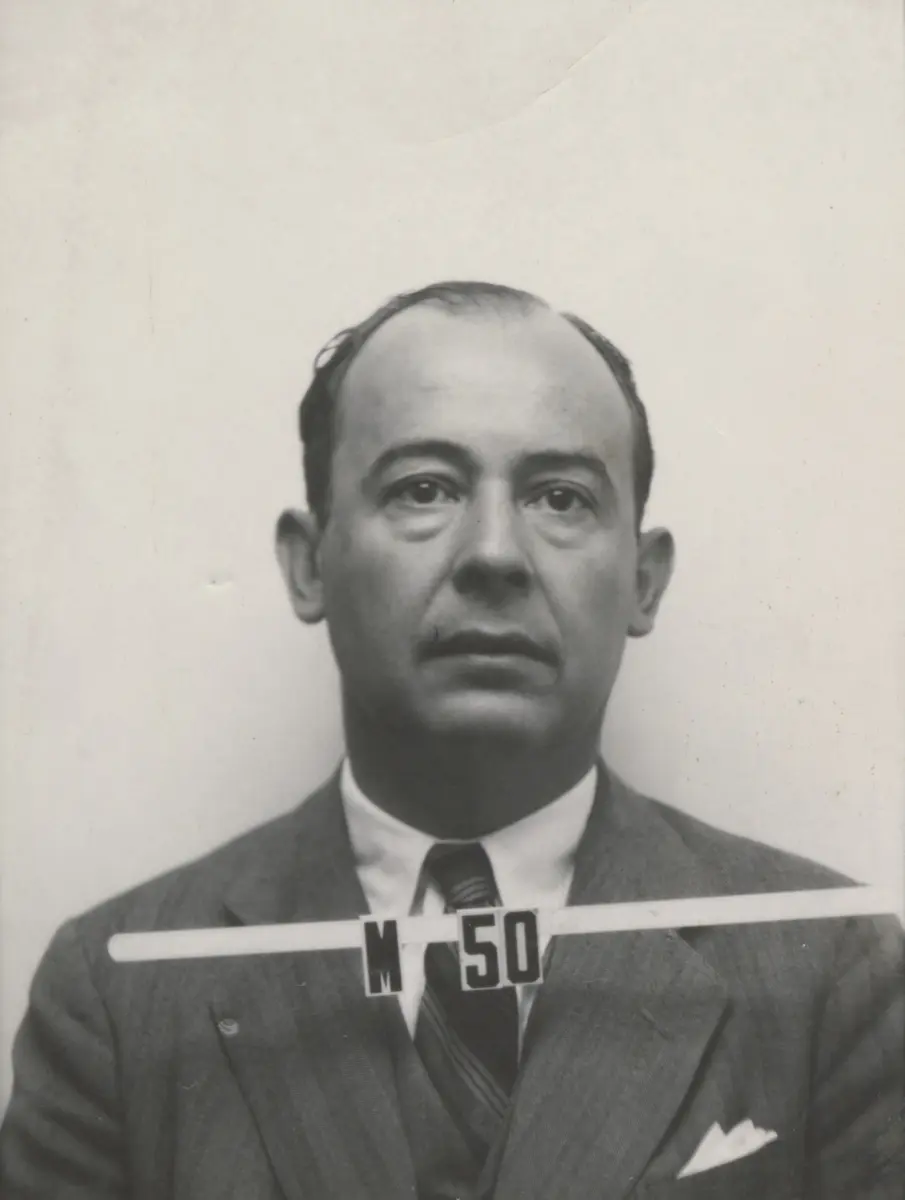
John von Neumann
“The Hungarian-American mathematician of game theory, quantum mechanics and the atomic bomb, whose 1945 report set out the stored-program design that almost every computer still follows.”
John von Neumann (1903–1957) was a Hungarian-born American mathematician who worked in more fields than almost any other scientist of his century: the foundations of mathematics, quantum mechanics, game theory, the atomic bomb and, above all for this calendar, the design of the computer. In June 1945 he wrote the 'First Draft of a Report on the EDVAC', which described a machine that keeps its program in the same memory as its data. That stored-program design, now called the von Neumann architecture, is still the plan of almost every computer in use.
He was born in Budapest on 28 December 1903, the eldest son of a wealthy Jewish banker, Max Neumann, who bought a hereditary title in 1913 (hence the 'von'). A child prodigy, he went to Budapest's Lutheran Gymnasium, where his teachers gave him extra lessons and Eugene Wigner was a year ahead of him. His father wanted a practical career, so he studied chemistry in Berlin and at the Federal Institute of Technology in Zürich (diploma in chemical engineering, 1925) while earning a doctorate in mathematics at Budapest in 1926. With a Rockefeller grant he joined David Hilbert's circle at Göttingen, where he gave the new quantum mechanics a strict mathematical form, and he then taught in Berlin and Hamburg. His 1928 paper on parlour games proved the minimax theorem and founded game theory.
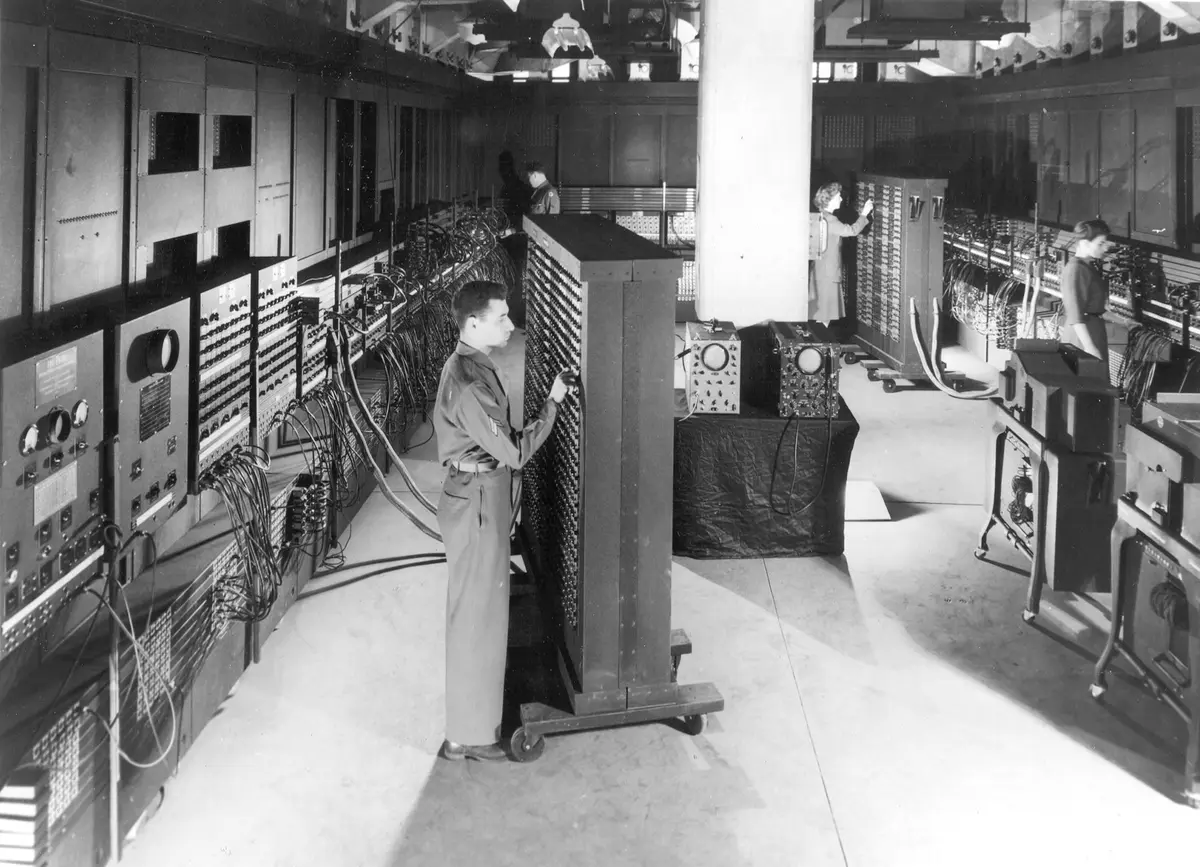
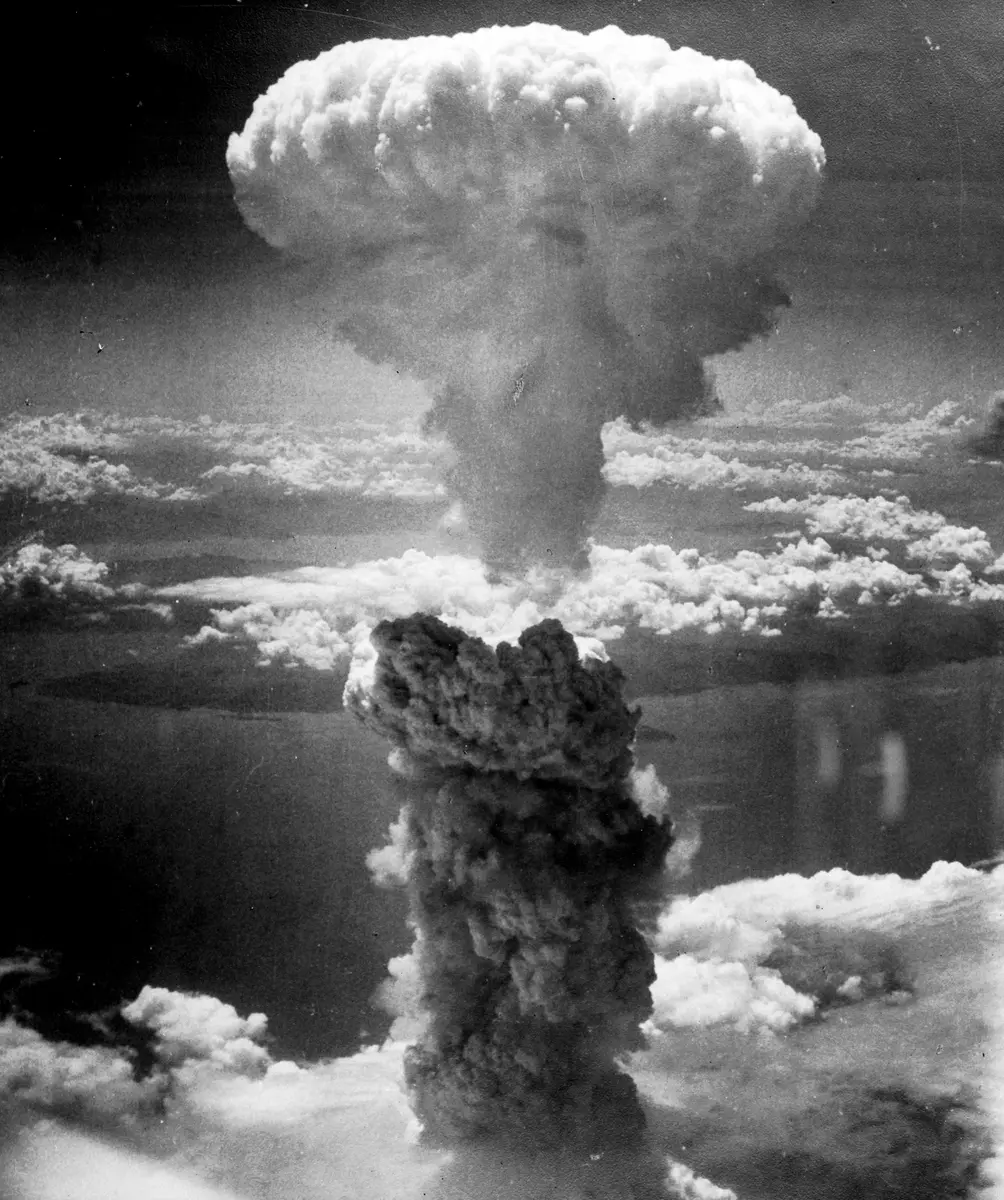
In 1930 he came to Princeton, and in 1933 he became one of the first professors of the new Institute for Advanced Study, beside Einstein. His book on the mathematical foundations of quantum mechanics appeared in 1932, and Theory of Games and Economic Behavior, written with the economist Oskar Morgenstern, in 1944. From 1940 he advised the Army on ballistics, and from late 1943 he worked for Los Alamos, where he helped design the 'lenses' of explosives that squeezed the plutonium core of the implosion bomb tested at Trinity and dropped on Nagasaki. In August 1944 a chance meeting with Herman Goldstine on a station platform brought him to ENIAC, the electronic computer then being built at the University of Pennsylvania's Moore School.
The credit for the stored program is shared. The ideas in the First Draft grew out of discussions with ENIAC's builders, J. Presper Eckert and John Mauchly, and their team, but the report carried only von Neumann's name, and its wide circulation made the design public, which later undermined Eckert and Mauchly's patent claims; historians still weigh how much was his. What is not in doubt is what he did next. He built his own machine at the Institute for Advanced Study (1946–1951; it is now in the Smithsonian) and sent its reports out so freely that copies such as MANIAC at Los Alamos, JOHNNIAC, ILLIAC and BESK spread the design around the world. He used these machines for hydrogen-bomb calculations and the first computer weather forecasts.
In the 1950s he was one of the most influential scientific advisers of the Cold War: he supported the hydrogen bomb, chaired the Air Force committee behind the first intercontinental missiles and in 1955 became a member of the Atomic Energy Commission. That summer he fell ill with cancer. In February 1956 he received the Medal of Freedom from President Eisenhower in a wheelchair, and he died at Walter Reed hospital in Washington on 8 February 1957, aged 53. His unfinished lectures were published as The Computer and the Brain (1958). He is remembered as one of the sharpest minds of the twentieth century, and as a man whose mathematics shaped both the computer and the nuclear age.
What happened
- 1903
János Neumann is born in Budapest, the eldest of three sons of the banker Max Neumann and Margit Kann, in the family's corner house at Báthory utca 26.
Budapest, Báthory utca 26 (Bajcsy-Zsilinszky út 62): the corner house where von Neumann was born on 28 December 1903 and lived until he was eighteen- 1913
His father is granted a hereditary Hungarian title; the son later writes his name in the German form, von Neumann.
- 1919
During Béla Kun's short communist regime the family leaves for a brief exile in Vienna and the Adriatic resort of Abbazia.
- 1921
He finishes the Lutheran Gymnasium, where his mathematics teacher arranged special lessons for him. Since his father wants a practical career, he enrols in mathematics at Budapest but studies chemistry in Berlin.
- 1922
His first mathematical paper, written with his tutor Mihály Fekete, is published; he is eighteen.
- 1923
He moves to the Federal Institute of Technology (ETH) in Zürich to study chemical engineering, while Hermann Weyl and George Pólya notice his mathematics.
- 1925
He takes his diploma in chemical engineering at Zürich.
- 1926
In the spring he receives his doctorate in mathematics at Budapest for an axiomatic foundation of set theory, then goes to Göttingen on a Rockefeller grant to work with David Hilbert.
At the Göttingen Mathematical Society he presents his theory of parlour games, the start of game theory.
- 1927
Max Born presents his paper 'Mathematische Begründung der Quantenmechanik' to the Göttingen Society of Sciences: the first of the papers in which he gives quantum mechanics an exact mathematical form.
- 1928
Now a lecturer (Privatdozent) at the University of Berlin, he publishes 'Zur Theorie der Gesellschaftsspiele', which proves the minimax theorem for two-person zero-sum games.
- 1929
He moves to the University of Hamburg, and Oswald Veblen invites him to Princeton to lecture on quantum theory.
- 1930
He marries Mariette Kövesi in Budapest, is baptized a Catholic, and sails for Princeton, where he becomes a visiting professor; from 1931 he works in the university's new Fine Hall.
- 1932
Springer in Berlin publishes his book Mathematische Grundlagen der Quantenmechanik, which treats quantum states as vectors in a Hilbert space.
- 1933
He becomes one of the first professors of the new Institute for Advanced Study, with Einstein, Veblen, Weyl and Alexander, and gives up his German posts as Hitler takes power.
Institute for Advanced Study, Princeton: his post from 1933 to his death, and the home of the IAS computer he built from 1946 - 1935
His daughter Marina, later a leading economist, is born.
- 1937
He and Mariette divorce, he becomes a US citizen, and he is elected to the National Academy of Sciences.
- 1938
He marries Klára Dán, also from Budapest, who later programs ENIAC and MANIAC, and receives the American Mathematical Society's Bôcher Prize.
- 1940
The new Scientific Advisory Committee of the Army's Ballistic Research Laboratory meets for the first time at Aberdeen, Maryland, with von Neumann among its members.
- 1943
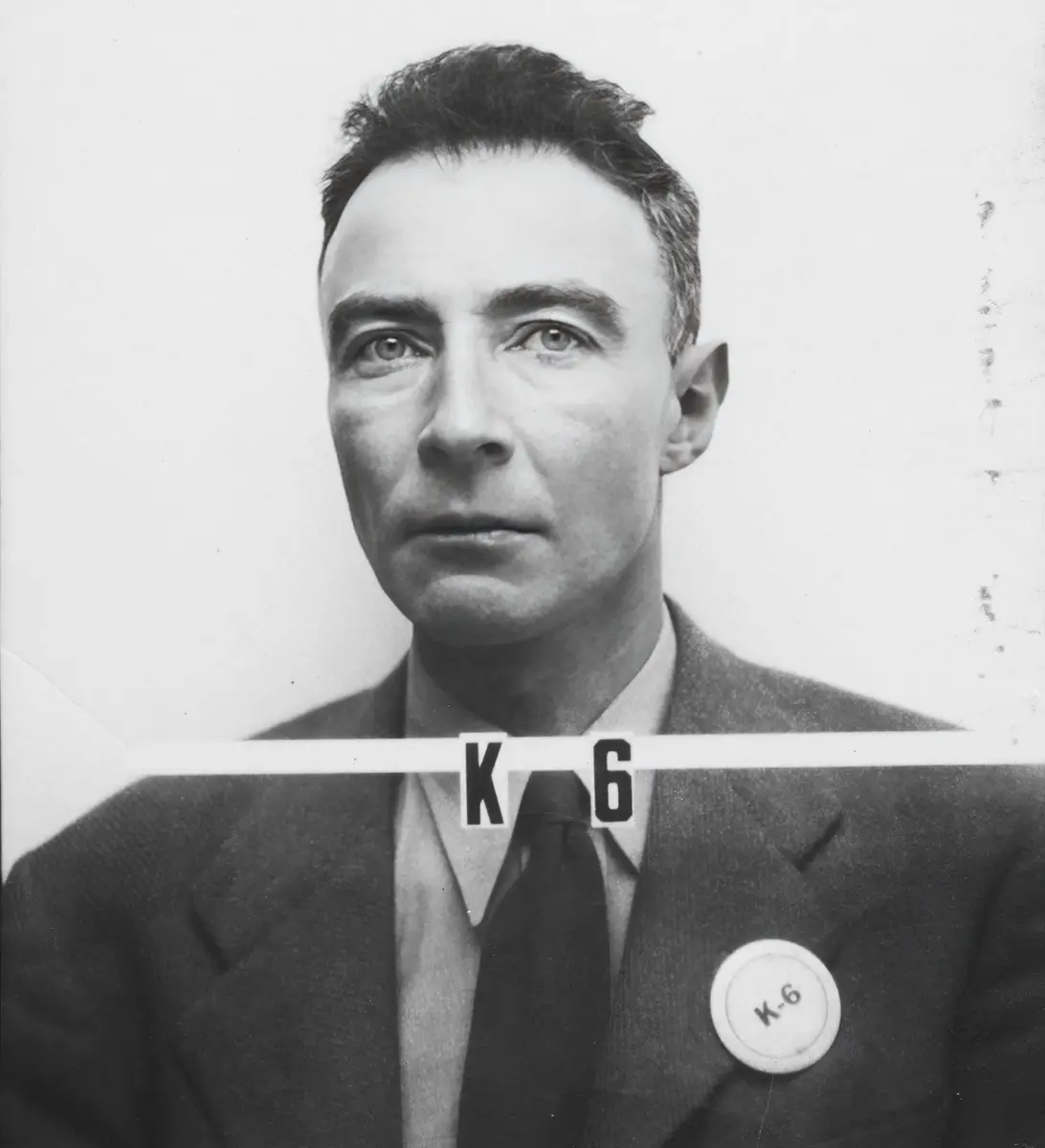
Late in the year he joins the Manhattan Project at Oppenheimer's invitation and works on the implosion design at Los Alamos, calculating how lenses of fast and slow explosives could squeeze a plutonium sphere evenly.
Los Alamos, New Mexico: the wartime laboratory (Project Y) where he worked on the implosion bomb from late 1943, and which he advised until 1955 - 1944
Princeton University Press publishes Theory of Games and Economic Behavior, his 641-page book with the economist Oskar Morgenstern.
In the first week of August Herman Goldstine recognises him on the platform of the Aberdeen railway station and tells him about ENIAC; he soon joins the discussions at the Moore School about its successor, EDVAC.
- 1945
His 'First Draft of a Report on the EDVAC' is dated: it describes a computer with an arithmetic unit, a control, a memory that holds both instructions and data, and input and output. Widely copied, it makes the design public; Eckert and Mauchly, whose team shared in the ideas, later lose their patent claims.
Moore School of Electrical Engineering, University of Pennsylvania, Philadelphia: where he joined the ENIAC and EDVAC discussions from 1944 and where his First Draft of 30 June 1945 was issuedThe implosion device is tested at Trinity in New Mexico; on 9 August the same design, Fat Man, is dropped on Nagasaki. He had also sat on the committee that chose the targets.
- 1946
Julian Bigelow joins the Electronic Computer Project at the Institute for Advanced Study as chief engineer; the project, begun at the end of 1945, is to build von Neumann's own computer.
Institute for Advanced Study, Princeton: his post from 1933 to his death, and the home of the IAS computer he built from 1946- 1947
He receives the Presidential Medal for Merit and the Navy's Distinguished Civilian Service Award.
- 1948
On his suggestion ENIAC is converted to read its program from its function tables, a first step towards a stored program.
- 1951
The IAS computer begins to work; that summer a Los Alamos team runs a thermonuclear calculation on it for about sixty days. He is also president of the American Mathematical Society (1951–53).
Institute for Advanced Study, Princeton: his post from 1933 to his death, and the home of the IAS computer he built from 1946 - 1952
MANIAC, the Los Alamos copy of the IAS design, is completed.
Los Alamos, New Mexico: the wartime laboratory (Project Y) where he worked on the implosion bomb from late 1943, and which he advised until 1955The IAS computer is shown to the press for the first time, with von Neumann and Oppenheimer in front of it.
Institute for Advanced Study, Princeton: his post from 1933 to his death, and the home of the IAS computer he built from 1946The first hydrogen bomb, 'Mike', is exploded on Enewetak; his memoirist notes that his computer is said to have hastened it.
- 1955
Named by President Eisenhower and approved by the Senate, he joins the five-member Atomic Energy Commission; in the summer he falls ill, and cancer is soon suspected. In the fall he still chairs the Air Force's missile advisory committee in California.
- 1956
He receives the Albert Einstein Commemorative Award and the Atomic Energy Commission's Enrico Fermi Award, the latter for his work on fast computing machines.
In a wheelchair at the White House, he receives the Medal of Freedom from President Eisenhower, his last public appearance.
He is taken to Walter Reed hospital in Washington, where he stays to the end, working on his Yale lectures, later published as The Computer and the Brain.
- 1957
He dies at Walter Reed, aged 53, and is buried in Princeton Cemetery.
Princeton Cemetery: his grave