Joseph Haydn
“The Austrian composer, long in the Esterházy princes' service, who shaped the symphony and the string quartet, wrote the London symphonies and The Creation, and was Mozart's friend and Beethoven's teacher.”
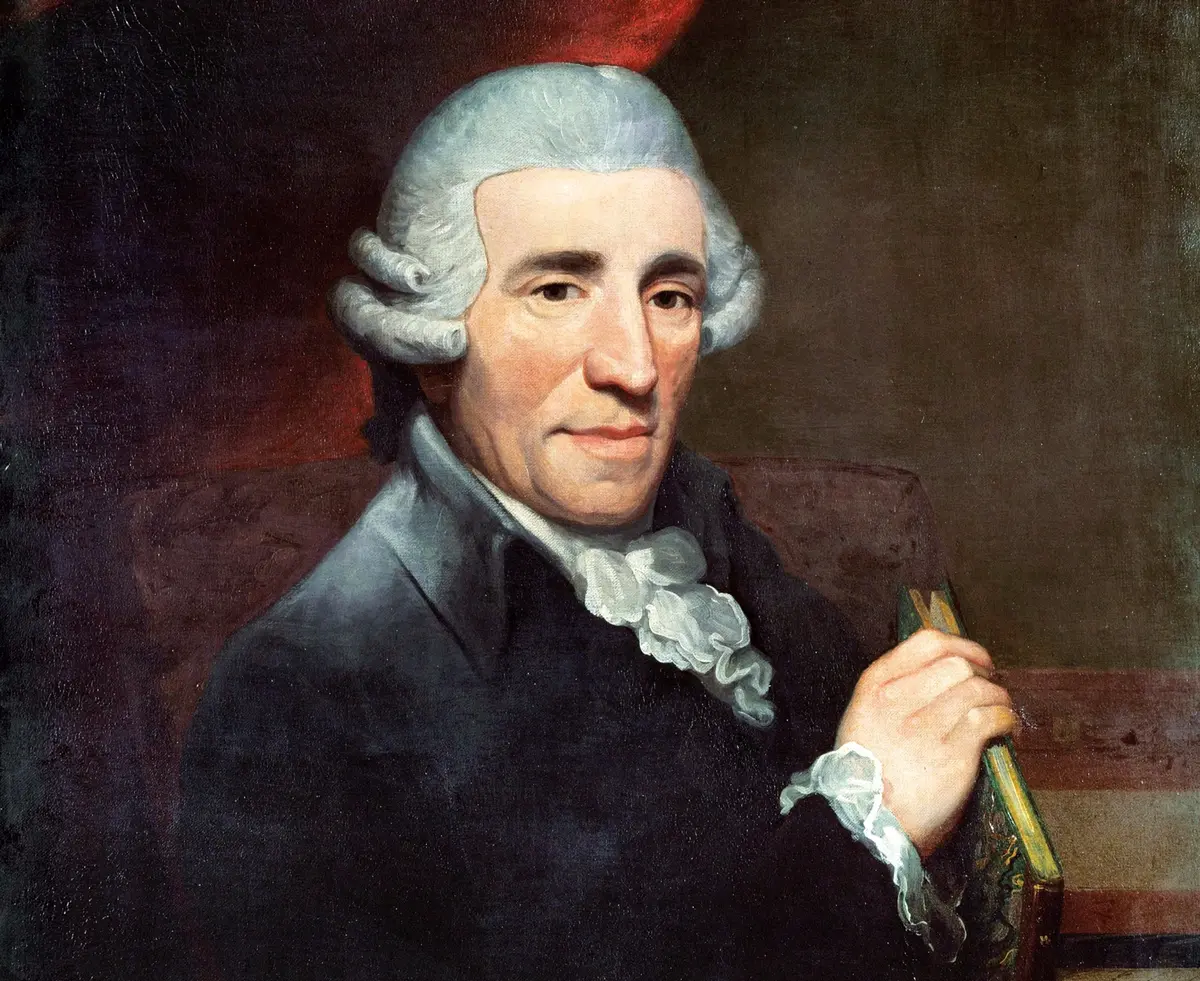
Joseph Haydn was an Austrian composer, the oldest of the three great masters of the Viennese Classical style with Mozart and Beethoven. More than anyone he gave the symphony and the string quartet the shape they kept: he wrote 108 symphonies and 68 string quartets, as well as masses, operas, piano sonatas and trios, and two oratorios, The Creation and The Seasons. His music is known for its wit, its surprises and its clear, tightly built forms, made from small motifs that he worked out with endless invention. In his lifetime he was the most famous composer in Europe.
He was born on 31 March 1732 in Rohrau, a village in Lower Austria on the Hungarian border, the son of a wheelwright and a former cook at the local castle. Before he was six he left home to train with a relative in Hainburg, and in 1740 he became a choirboy at St Stephen's Cathedral in Vienna. When his voice broke, about 1749, he was put out on the street and lived for years from odd jobs, teaching himself from books and from the music of Carl Philipp Emanuel Bach; the Italian composer Nicola Porpora, whom he served as accompanist, taught him more. About 1757 Count Morzin made him his music director, and for him Haydn wrote his first symphonies.
On 1 May 1761 he entered the service of the Esterházy princes, one of the richest families of the Habsburg lands, first at their palace in Eisenstadt and from 1766 also at Eszterháza, the splendid new palace Prince Nikolaus built in the Hungarian countryside. For nearly thirty years, in the prince's uniform, he led the orchestra, ran an opera house that gave as many as ninety performances in a year and wrote whatever the prince needed, from trios for the prince's own instrument, the baryton, to symphonies and operas. Cut off from the world, with his own orchestra to try things out on, he grew into a master; from 1779 he was free to sell his works to publishers, and his symphonies and quartets spread across Europe. In Vienna he became the close friend of the young Mozart, who dedicated six quartets to him.
When Prince Nikolaus died in 1790, the violinist and impresario Johann Peter Salomon took Haydn to London. His two visits, in 1791–92 and 1794–95, were the triumph of his life: he wrote his twelve 'London' symphonies, among them the 'Surprise' and the 'Military', was made a doctor of music at Oxford, and went home a rich man. On the way he agreed to teach Beethoven. Back in Vienna, moved by the Handel oratorios he had heard in London, he wrote The Creation (1798) and The Seasons (1801), six great masses for the new prince, and in 1797 the hymn 'Gott erhalte Franz den Kaiser', whose melody is today the German national anthem.
From 1803 he was too weak to compose. His last public appearance was a performance of The Creation in his honour in March 1808. He died at his house in Gumpendorf, outside Vienna's walls, on 31 May 1809, less than three weeks after Napoleon's army had taken the city. Two admirers of the new science of phrenology stole his head from the grave; his body was moved to Eisenstadt in 1820, but the skull only joined it in 1954, in the Bergkirche where his last mass had first been sung. His music, out of fashion in the Romantic century, was rediscovered in the twentieth: he is now seen as the composer who, more than any other, shaped the classical forms.
What happened
- 1732
Born at Rohrau, probably on this day, the second of twelve children of the wheelwright Mathias Haydn and his wife Anna Maria, a former cook at the castle; he is baptised Franz Joseph the next day.
Rohrau, Lower Austria: the farmhouse where he was born on 31 March 1732, now the Haydn birthplace museum- 1737
At five or six he goes to live with a relative, the schoolmaster and choirmaster Johann Mathias Franck in Hainburg, who teaches him music; he never lives with his parents again. In September his brother Michael, also to become a composer, is born.
- 1740
Georg Reutter, music director of St Stephen's Cathedral, takes him as a choirboy; by the summer he is in Vienna, living with the other boys in the cathedral's Kapellhaus.
- 1749
His voice broken, he is dismissed from the choir at about 17. He lodges in a garret in the Michaelerhaus and lives from teaching and odd jobs, while teaching himself composition from books and from the sonatas of C. P. E. Bach.
- 1753
The Italian composer Nicola Porpora takes him on as valet and accompanist and corrects his compositions; about the same time he writes the music for Der krumme Teufel, a comedy by the actor Joseph Felix von Kurz.
- 1757
Count Morzin, who winters in Vienna and summers at his castle in Bohemia, makes him his music director; for the count's small orchestra he writes his first symphonies.
- 1760
He marries Maria Anna Keller in St Stephen's Cathedral, the elder sister of the girl he had loved, who had become a nun. The marriage is childless and unhappy.
- 1761
He becomes vice-Kapellmeister to Prince Paul Anton Esterházy at Eisenstadt, at 400 guilders a year, in charge of all the prince's music except the church music, and bound not to write for anyone else without leave.
Schloss Esterházy, Eisenstadt: the princes' seat, where he entered their service in 1761 and spent most summers of his late years; he lies nearby in the Bergkirche- 1762
Prince Paul Anton dies; his brother Nikolaus, a keen musician who plays the baryton, succeeds him, confirms Haydn's contract and over the years enlarges the orchestra to about 25 players.
- 1765
After complaints from the old Kapellmeister Gregor Werner, the prince's administrator reprimands Haydn and tells him to write more for the baryton; over the next ten years he writes 126 baryton trios.
- 1766
Werner dies and Haydn becomes full Kapellmeister. On 2 May he buys a house of his own in Eisenstadt.
- 1768
The opera house of the prince's new palace at Eszterháza opens in the autumn, probably with Haydn's Lo speziale; in August his Eisenstadt house burns down in a town fire and the prince pays to rebuild it.
Eszterháza (Fertőd, Hungary): Prince Nikolaus's palace with its opera house, where Haydn lived and worked most of each year from 1769 to 1790 - 1772
With the 'Farewell' Symphony, whose players leave one by one in the last movement, he reminds the prince that the musicians, kept at Eszterháza while their families stay in Eisenstadt, want to go home; the court leaves soon after. The same year he writes the six 'Sun' quartets, Op. 20.
Eszterháza (Fertőd, Hungary): Prince Nikolaus's palace with its opera house, where Haydn lived and worked most of each year from 1769 to 1790 - 1773
Empress Maria Theresa visits Eszterháza: his opera L'infedeltà delusa is repeated for her, and the next day his puppet opera Philemon und Baucis opens the new marionette theatre.
Eszterháza (Fertőd, Hungary): Prince Nikolaus's palace with its opera house, where Haydn lived and worked most of each year from 1769 to 1790- 1779
A new contract drops the rule that his music belongs to the prince: from now on he may write for others and sell his works to publishers in Vienna, Paris and London.
Fire destroys the Eszterháza opera house with scores and parts; his L'isola disabitata is given in the puppet theatre on 6 December, and the foundation stone of a new house is laid before Christmas.
Eszterháza (Fertőd, Hungary): Prince Nikolaus's palace with its opera house, where Haydn lived and worked most of each year from 1769 to 1790- 1781
The new opera house opens with his La fedeltà premiata. The opera season now runs from February to late in the year; in 1780, even while the house was being rebuilt, more than ninety performances were given, mostly of Italian comic operas he prepared and conducted.
Eszterháza (Fertőd, Hungary): Prince Nikolaus's palace with its opera house, where Haydn lived and worked most of each year from 1769 to 1790Artaria publishes his six quartets Op. 33, which he advertises as written 'in a completely new, special way'; one is probably played at a concert for the Russian grand duchess on 26 December. They set a new standard for the string quartet.
- 1785
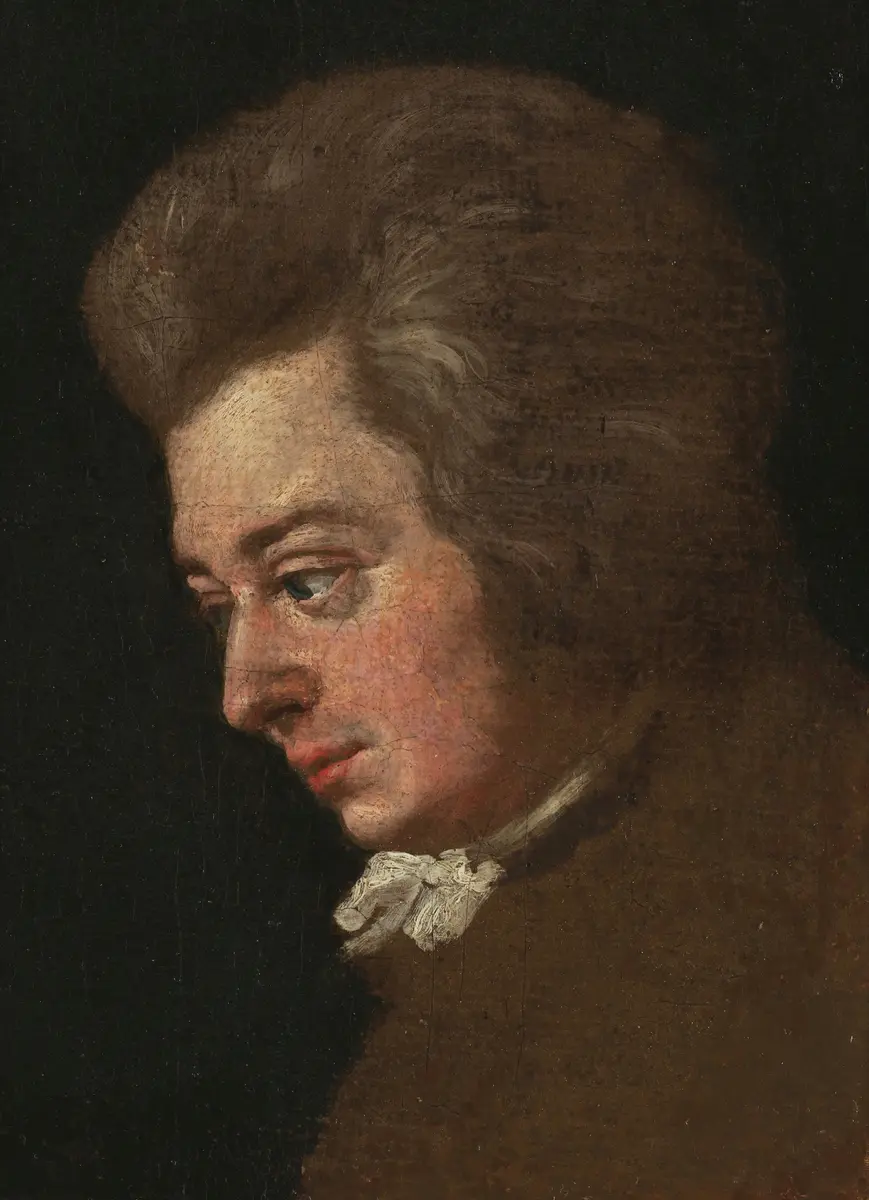
Mozart, his friend since about 1784, plays him the new quartets he has written for him; on 11 February Haydn joins Mozart's Masonic lodge, 'Zur wahren Eintracht'.
Mozart dates the printed dedication of the six quartets 'to my dear friend Haydn', entrusting him with his 'six sons'.
- 1786
He completes the six 'Paris' symphonies for a concert society in Paris and writes the orchestral Seven Last Words of Our Saviour on the Cross for a canon of Cádiz.
- 1790
Prince Nikolaus dies. His son Anton dismisses the orchestra but keeps Haydn on his salary, with no duties; Haydn moves to Vienna.
After a farewell dinner with Mozart he leaves Vienna with Johann Peter Salomon, who has engaged him for a London concert season and a new opera.
- 1791
Having crossed the Channel on New Year's Day, he reaches London; Burney writes verses on his arrival, and he lodges that year in Great Pulteney Street, Soho.
18 Great Pulteney Street, Soho, London: where a plaque marks his lodging of 1791, the first of his two London visitsSalomon's first concert at the Hanover Square Rooms: twelve Friday concerts until 3 June, with new Haydn symphonies, and a benefit for him on 16 May. His opera for the King's Theatre is never staged, for want of a licence.
Oxford makes him an honorary Doctor of Music at the end of a three-day festival in the Sheldonian Theatre, where his Symphony No. 92, since called the 'Oxford', is played under his direction.
Writing home, he mentions the portrait the Prince of Wales has commissioned from John Hoppner; at the end of the year he hears of Mozart's death, which shocks him deeply.
- 1792
His second London season opens: twelve concerts until 18 May, with new symphonies including No. 94, the 'Surprise'.
He is back in Vienna. On the way he has stopped at Bonn, where it is agreed, probably then, that the young court musician Ludwig van Beethoven will come to study with him.
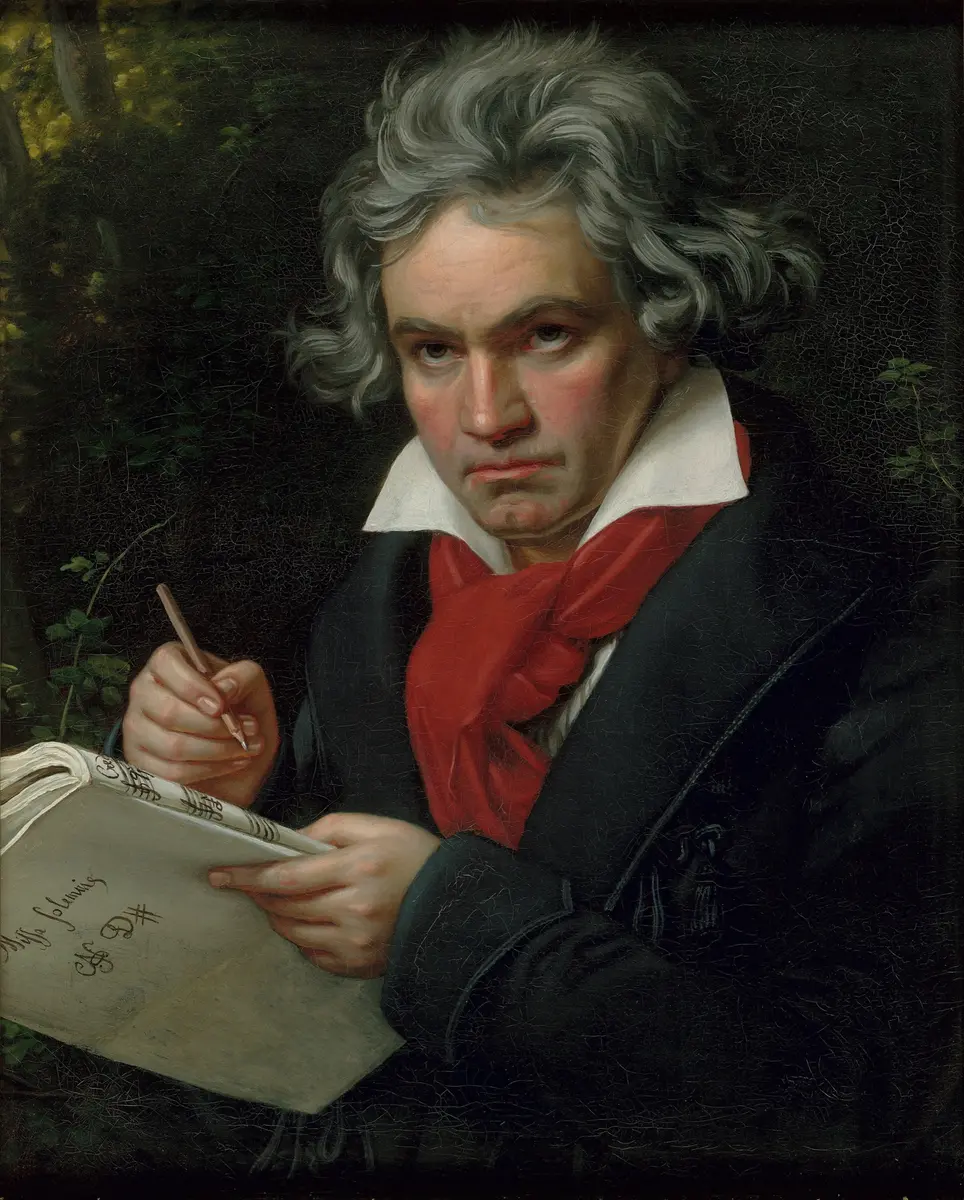
Beethoven arrives in Vienna and becomes his pupil; in 1793 Haydn writes to the elector of Cologne that Beethoven will one day be counted among Europe's greatest composers.
- 1793
He buys a house in the suburb of Gumpendorf, adds a storey and moves into it in 1797; there he will write The Creation and The Seasons.
Haydngasse 19, Vienna (then Gumpendorf): the house he bought in 1793, lived in from 1797 and died in on 31 May 1809, now the Wien Museum's Haydnhaus - 1794
He leaves for his second visit to England and reaches London on 4 February; the new symphonies of the season include the 'Military' (No. 100) and 'The Clock' (No. 101).
- 1795
His last London benefit concert. In this season, at the King's Theatre, he has given the first performances of his last three symphonies, Nos. 102 to 104, the last called the 'London'.
He leaves England for good, although King George III and Queen Charlotte have asked him to stay; he returns to the service of the new prince, Nikolaus II.
- 1796
His Missa in tempore belli, the 'Mass in Time of War', is first sung in the Piarist church in Vienna; each year from now on he writes a mass for the princess's name day at Eisenstadt.
- 1797
On the emperor's birthday his hymn 'Gott erhalte Franz den Kaiser', written to answer the French 'Marseillaise', is sung in the court theatre in Francis II's presence, in the other theatres of Vienna and in Prague; he uses its melody that year in the 'Emperor' Quartet, Op. 76 No. 3.
- 1798
He conducts the first performance of The Creation, before invited guests in Prince Schwarzenberg's palace in Vienna; it is a sensation.
- 1799
The first public performance of The Creation, with some 200 performers, in the court theatre.
- 1800
His wife Maria Anna dies at Baden, near Vienna.
Admiral Nelson, with Sir William and Emma Hamilton, spends three days at Eisenstadt, where the mass of 1798 later called the 'Nelson Mass' is performed.
Schloss Esterházy, Eisenstadt: the princes' seat, where he entered their service in 1761 and spent most summers of his late years; he lies nearby in the Bergkirche- 1801
He conducts the first performance of The Seasons, again at the Schwarzenberg palace; 'The Seasons broke my back', he is said to have remarked.
- 1802
His last mass, the Harmoniemesse, is first sung in the Bergkirche at Eisenstadt.
- 1803
His last appearance as a conductor, in The Seven Last Words in the Redoutensaal in Vienna; by now he can hardly compose any more.
- 1805
On a false report of his death, The Gentleman's Magazine in London prints his obituary and Cherubini writes a funeral cantata in Paris; Haydn, very much alive, has his valet Johann Elssler draw up a catalogue of his works.
- 1808
At a performance of The Creation in his honour in the hall of the University, led by Antonio Salieri, the frail composer is carried in to the cheers of the audience; it is his last public appearance.
- 1809
After shelling that reaches Gumpendorf, Napoleon's army takes Vienna. Haydn refuses to leave his house, plays his emperor's hymn on the piano, and is moved when a French officer visits him and sings an aria from The Creation.
- 12:40 a.m.
He dies at home, 'at twenty to one in the morning', aged 77, and is buried the next day in the Hundsturm cemetery; Mozart's Requiem is sung at his memorial in the Schottenkirche. Days later his head is stolen for phrenologists; his body, moved to Eisenstadt in 1820, is reunited with the skull only on 5 June 1954, in the Bergkirche.
Haydngasse 19, Vienna (then Gumpendorf): the house he bought in 1793, lived in from 1797 and died in on 31 May 1809, now the Wien Museum's Haydnhaus