Samuel Morse
“The American portrait painter who invented a recording electric telegraph, sent 'What hath God wrought' in 1844 and gave his name to Morse code; also a nativist and defender of slavery.”
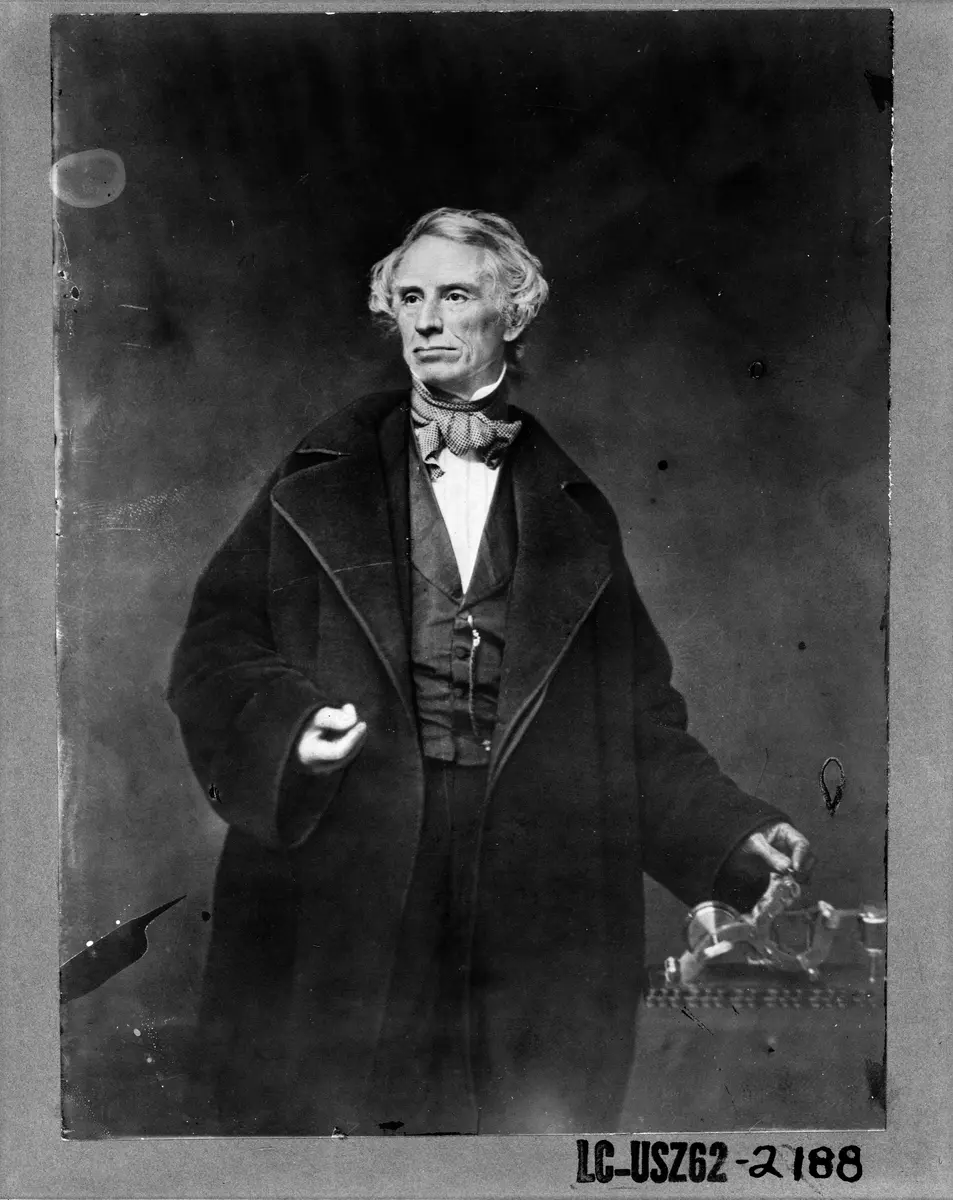
Samuel Finley Breese Morse was an American painter who became the best-known inventor of the electric telegraph. For twenty-five years he lived by his brush: he painted some of the finest American portraits of his time, a huge view of the House of Representatives and his Gallery of the Louvre, and he founded the National Academy of Design in New York. Then, in his forties, he turned to electricity. His recording telegraph, patented in 1840 and opened between Washington and Baltimore in 1844, and the code of dots and dashes he worked out with Alfred Vail, carried news across America and, by undersea cable, the world. He was also a bitter nativist who wrote against Catholics and immigrants, and a defender of slavery who campaigned against Lincoln during the Civil War.
He was born in Charlestown, Massachusetts, on 27 April 1791, the eldest son of Jedidiah Morse, a Congregational minister and the country's leading geographer. At Yale he heard lectures on electricity and paid his way by painting small portraits of classmates. In 1811 his parents let him sail to London with the painter Washington Allston; he studied at the Royal Academy under Benjamin West, and his huge Dying Hercules was praised there. Back home in 1815 he found that Americans wanted portraits, not history paintings, and he travelled from New England to Charleston to find sitters. He married Lucretia Walker in 1818. In February 1825, while he was in Washington painting the Marquis de Lafayette for the City of New York, she died suddenly at home in New Haven; by the time the letter reached him she had been buried. A year later he led the young artists who founded the National Academy of Design and became its first president.
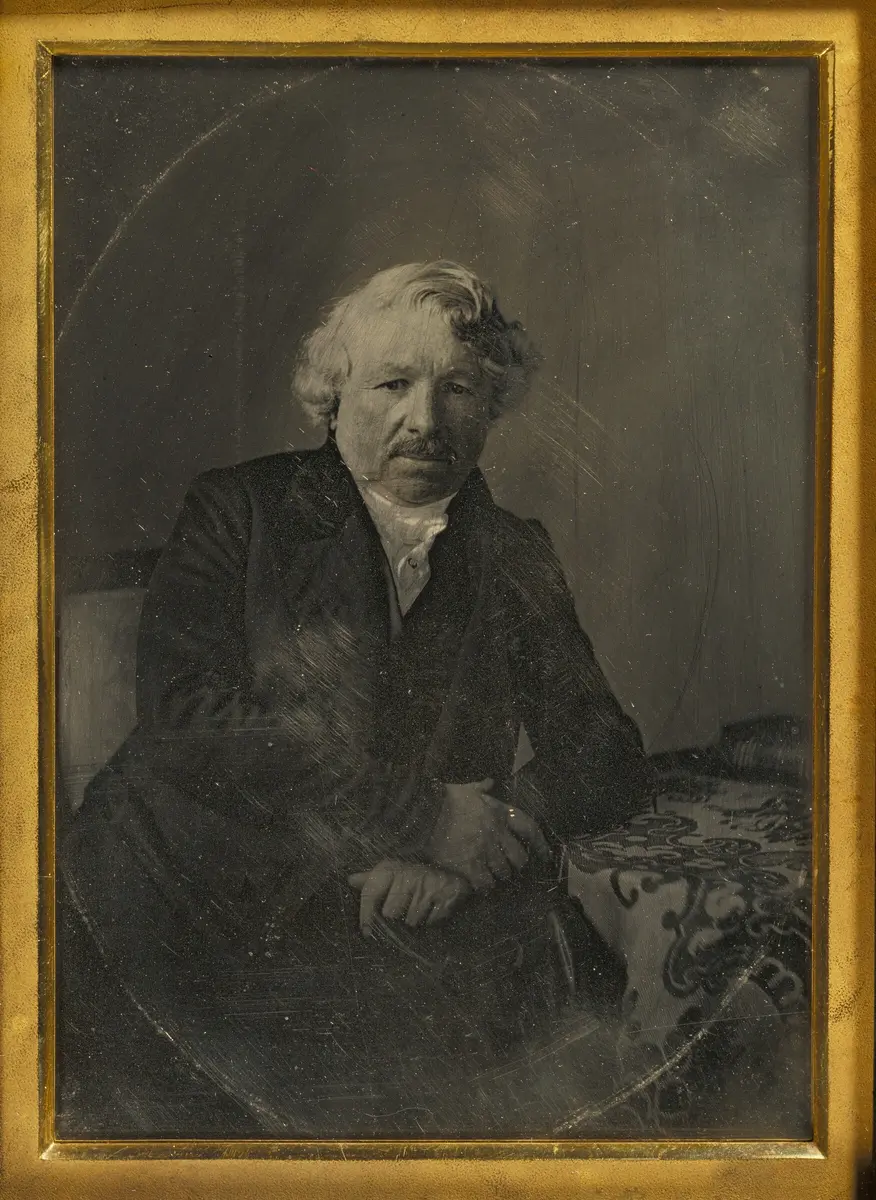
On the ship Sully, sailing home from France in October 1832, Morse heard passengers talk about electromagnets and filled his sketchbook with the idea of a telegraph that would write its message on paper. He was by then professor of painting at the new University of the City of New York, and there, with help from the chemist Leonard Gale, who showed him Joseph Henry's powerful magnets, and from Alfred Vail, who built the instruments, he made the idea work. In 1837 he filed a caveat for a patent and painted his last pictures. He was not the only inventor: in Britain, Cooke and Wheatstone patented a needle telegraph the same year, Henry had shown the principles earlier, and both a fellow passenger, Charles Jackson, and later Vail's family claimed more credit than Morse allowed. In Paris in 1839 he met Louis Daguerre, and he brought the daguerreotype home, ran a portrait studio with John Draper and taught the craft to Mathew Brady. After years of begging, Congress paid for a test line, and on 24 May 1844 he sent 'What hath God wrought' from the Capitol to Baltimore.
Success brought money and lawsuits. Rival companies copied his system; in 1854 the Supreme Court upheld his patent in O'Reilly v. Morse, though it struck down his broadest claim, to own the use of electromagnetism for writing at a distance. He bought Locust Grove, an estate above the Hudson near Poughkeepsie, built an Italian villa there, married his second cousin Sarah Griswold in 1848 and started a second family. In politics he was a harsh nativist. His Foreign Conspiracy (1835) claimed that Catholic Europe was using immigrants to destroy American freedom, and he ran for mayor of New York on an anti-immigrant ticket in 1836 and 1841. He believed slavery was ordained by God and not a sin, hated the abolitionists, and in the Civil War published a pamphlet defending slavery and worked for the Democrat George McClellan against Lincoln in 1864.
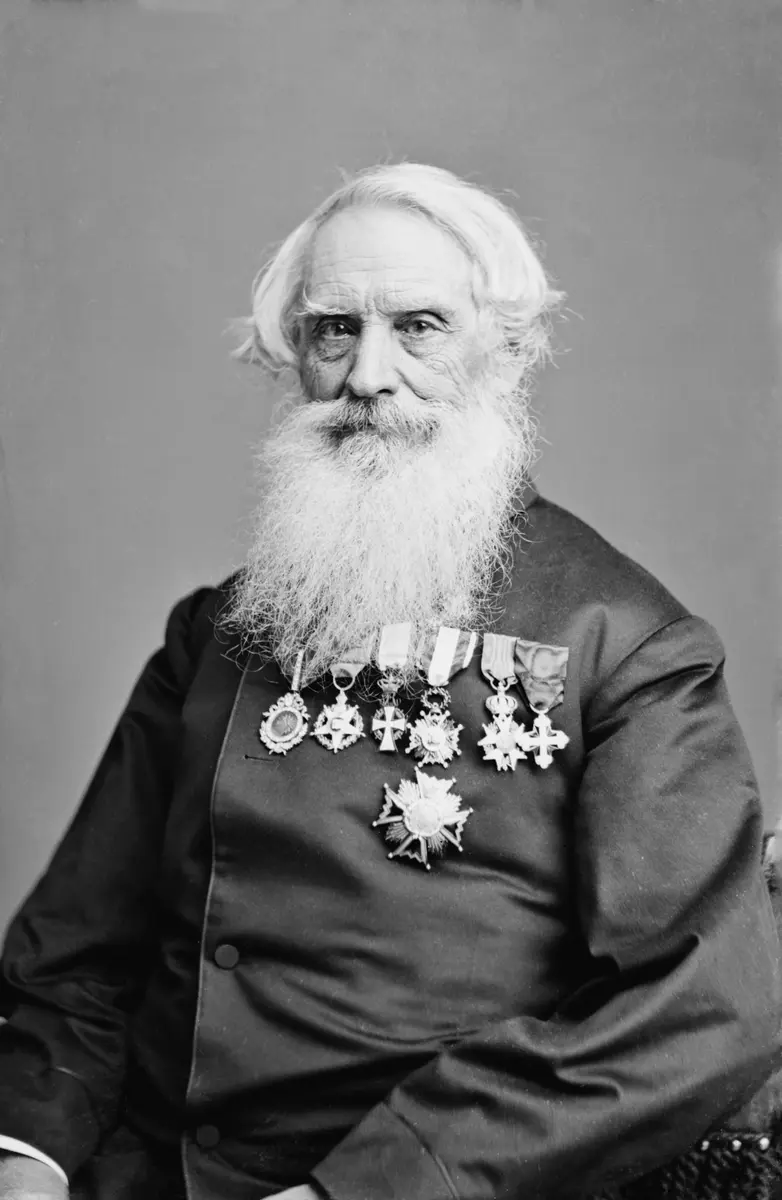
In old age, with a long white beard and the medals of many governments, Morse gave money to Yale, Vassar College and churches. Telegraph operators paid for a bronze statue of him in Central Park, unveiled on 10 June 1871, and that evening his farewell message went out over the wires. He died at his house on West 22nd Street in New York on 2 April 1872 and was buried in Green-Wood Cemetery, Brooklyn. The telegraph changed newspapers, markets, railways and war. Today his paintings hang in the National Gallery of Art and the Metropolitan Museum, and his reputation as an artist has grown, while his writings against Catholics, immigrants and abolition make him a harder hero than the schoolbooks once allowed.
What happened
- 1791
Samuel Finley Breese Morse is born in Charlestown, Massachusetts, the first child of Jedidiah Morse, the town's Congregational minister and a well-known geographer, and Elizabeth Ann Finley Breese.
Charlestown, Massachusetts (now part of Boston): Morse was born in a house on Main Street on 27 April 1791- 1805
At fourteen he enters Yale College, where he hears Benjamin Silliman and Jeremiah Day lecture on electricity and earns money painting small portraits of classmates and teachers.
- 1810
He graduates from Yale. His parents want him to be a bookseller and he becomes a clerk for his father's Boston publisher, though he longs to paint.
- 1811
His parents relent and he sails for England with the painter Washington Allston. In London he studies at the Royal Academy under Benjamin West and makes friends with Charles Leslie and Samuel Taylor Coleridge.
- 1812
His plaster statuette of the Dying Hercules wins a gold medal at the Adelphi Society of Arts, and the large painting made from it is praised at the Royal Academy.
- 1815
He returns to the United States and opens a studio in Boston, but finds no buyers for history paintings and travels in search of portrait sitters.
- 1818
He marries Lucretia Pickering Walker in Concord, New Hampshire. That winter he paints the first of many portraits in Charleston, South Carolina.
- 1822
He finishes The House of Representatives, a huge night view of the chamber in the Capitol with more than eighty figures painted from life. Toured in 1823, it loses money.
- 1825
Lucretia, aged twenty-five, dies suddenly at their home in New Haven after the birth of their third child. Morse is in Washington; by the time his father's letter reaches him and he gets home, she has been buried.
In Washington he breakfasts with the Marquis de Lafayette and begins the full-length portrait commissioned by the City of New York for $1,000; the two become friends for life.
- 1826
Artists who have broken with the conservative American Academy of the Fine Arts found the National Academy of Design in New York, run by artists, and elect Morse its first president.
- 1829
Leaving his children with relatives, he sails for Europe: he visits Lafayette in Paris, paints in Rome and spends much time with the novelist James Fenimore Cooper.
- 1832
Sailing home from Le Havre on the packet ship Sully, he hears Dr Charles T. Jackson describe experiments with electromagnetism and fills his sketchbook with a telegraph that writes on paper and a code of dots and lines.
He lands in New York and tells his brothers about his invention. He becomes professor of painting and sculpture at the new University of the City of New York.
Washington Square East, New York: the site of the University Building, where Morse taught painting from 1832 and worked out the telegraph with Gale and Vail- 1833
He finishes Gallery of the Louvre, forty-one Old Masters in one imagined room. Its exhibition in New York loses money.
- 1835
He publishes Foreign Conspiracy against the Liberties of the United States, articles first printed in his brothers' New-York Observer, which warn that Catholic Europe is using immigration to destroy the republic.
- 1836
He runs for mayor of New York for a nativist, anti-immigrant party and receives 1,496 votes. Congress passes him over for the paintings of the Capitol rotunda, a blow he never forgets.
- 1837
Days after a partnership agreement with Alfred Vail and Leonard Gale, he files a caveat for a patent on his electromagnetic telegraph.
Washington Square East, New York: the site of the University Building, where Morse taught painting from 1832 and worked out the telegraph with Gale and VailHe finishes his last paintings and gives up art to devote himself to the telegraph.
- 1839
- 12:00 p.m.
In Paris, Louis Daguerre, who has shown Morse his daguerreotypes, comes at noon to see Morse's telegraph and stays more than an hour; meanwhile Daguerre's Diorama, with his house and notes, burns down.
- 1840
Back in New York, with a camera made for him by his instrument maker George Prosch, he opens a daguerreotype portrait studio with the chemist John William Draper and teaches the process to others, among them Mathew Brady.
He receives US Patent 1,647 for his telegraph.
- 1841
He runs again for mayor as a nativist; a forged letter in a newspaper announces his withdrawal and he gets fewer than a hundred votes.
- 1843
After five years of lobbying, Congress votes $30,000 for an experimental telegraph line from Washington to Baltimore.
- 1844
- 8:45 a.m.
From the Supreme Court chamber in the Capitol he sends 'What hath God wrought' to Alfred Vail in Baltimore (the story is told in the entry on the first telegraph message).
- 1847
He buys Locust Grove, about a hundred acres on the Hudson two miles south of Poughkeepsie, for $17,500: at fifty-six, his first home of his own.
Locust Grove, Poughkeepsie: the estate on the Hudson Morse bought in 1847, with the villa built for him in 1851–52; now a museum- 1848
He marries Sarah Elizabeth Griswold, a second cousin twenty-six years younger; they will have four children.
- 1851
Work begins on the Italian villa at Locust Grove that Alexander Jackson Davis designed for him from his own sketches; it is finished the next year.
Locust Grove, Poughkeepsie: the estate on the Hudson Morse bought in 1847, with the villa built for him in 1851–52; now a museum - 1854
He runs for Congress as a Democrat in the Poughkeepsie district and loses.
In O'Reilly v. Morse the Supreme Court upholds his patent against Henry O'Reilly's companies but strikes down his broadest claim, to the use of electromagnetism for writing at a distance however it is done. Companies using his system now pay him royalties.
- 1857
He sails as electrician with Cyrus Field's first attempt to lay a telegraph cable across the Atlantic; the cable breaks.
- 1858
Ten European governments jointly award him 400,000 francs for the invention of the telegraph.
- 1859
In the autumn he buys a brownstone at 5 West 22nd Street, New York, where the family spends its winters from now on.
5 West 22nd Street, New York: his winter home from 1859, where he died on 2 April 1872 - 1863
As the Civil War goes on, he publishes An Argument on the Ethical Position of Slavery, a pamphlet that calls slavery a relation ordained by God and not a sin, through a Democratic society that attacks Lincoln's government.
- 1864
Days before the election, he presents General George McClellan, the Democratic candidate against Lincoln, to a huge torchlight crowd from the balcony of the Fifth Avenue Hotel.
- 1871
Telegraph operators unveil Byron Pickett's bronze statue of him in Central Park; Morse stays away. That evening, at the Academy of Music, he taps out a farewell message to the telegraphers of the world on the instrument of the first Washington–Baltimore line.
Central Park, New York: Byron Pickett's bronze statue of Morse, paid for by telegraph operators and unveiled on 10 June 1871- 1872
Morse dies in the evening at his house on West 22nd Street, aged eighty; he is buried in Green-Wood Cemetery, Brooklyn.
5 West 22nd Street, New York: his winter home from 1859, where he died on 2 April 1872