Sandford Fleming
“The Scottish-Canadian engineer who built the Intercolonial and surveyed the Pacific railway, designed Canada's first stamp and, after a misprinted Irish timetable in 1876, campaigned for world standard time.”
Sandford Fleming was a Scottish-born Canadian engineer who surveyed and built railways and who spent much of his life campaigning for one orderly way of keeping time. He was born on 7 January 1827 in Kirkcaldy in Fife, the son of a carpenter, trained as a surveyor under John Sang, and in 1845 sailed from Glasgow to Canada with his brother and a cousin. He settled in Peterborough, then Toronto, made maps of Canadian towns while waiting for his surveyor's certificate, helped found the Canadian Institute in 1849, and in 1851 designed the Three-Penny Beaver, Canada's first postage stamp and the first pictorial stamp in the world not to show a ruler.
His working life was spent on railways. He was assistant engineer and then chief engineer of the Northern Railway from Toronto to Georgian Bay, was chosen in 1863 as chief surveyor of the Intercolonial Railway between Canada and the Maritime provinces and, from 1867 until 1876, was its engineer-in-chief, building bridges of stone and iron that lasted. In 1871 he became chief engineer of the Pacific railway. In 1872 he crossed Canada by the Yellowhead Pass to see the route, with George Monro Grant, whose diary of the trip, Ocean to Ocean, became a best-seller. He was dismissed in 1880, because his outspoken views had made him a political liability while the project passed to a private company, but he returned in 1884 as a director of the Canadian Pacific Railway, and in November 1885 he stood in the crowd, in a top hat, when the last spike was driven at Craigellachie.
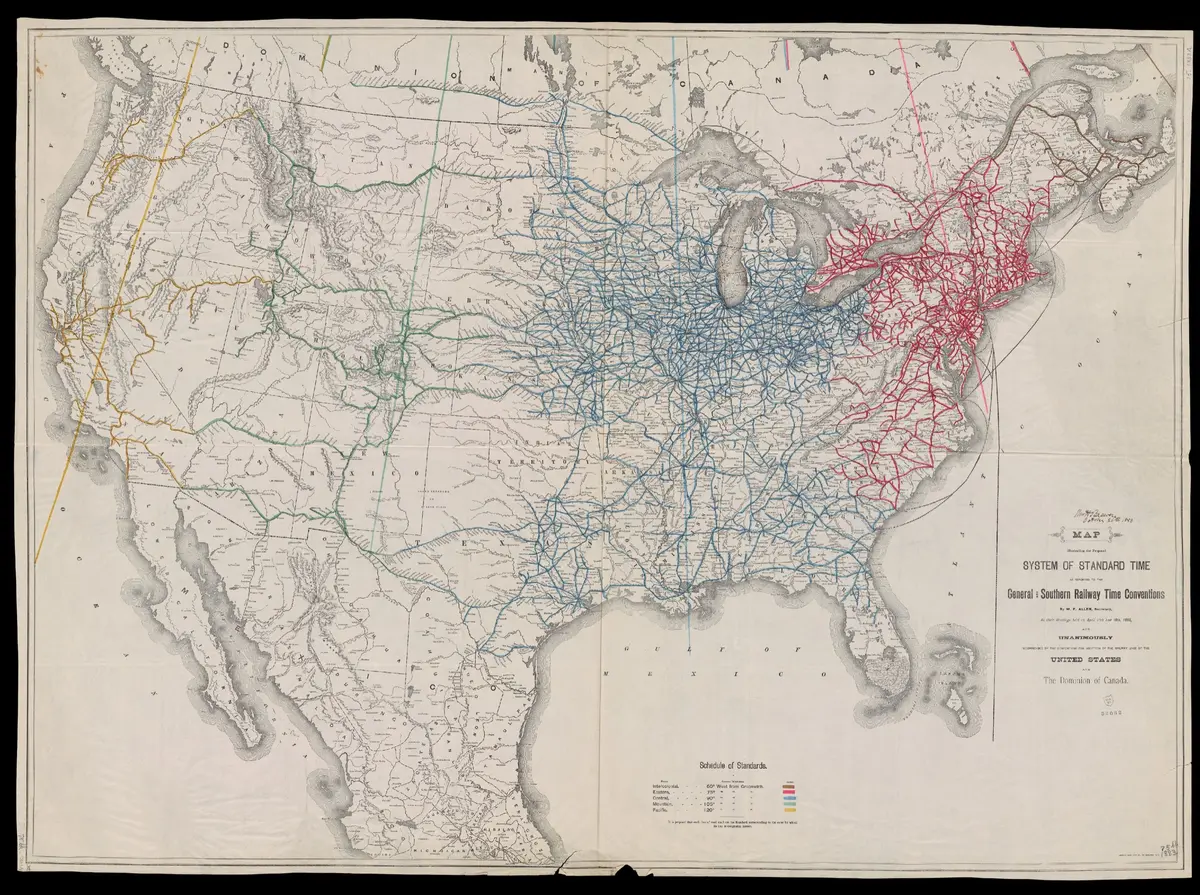
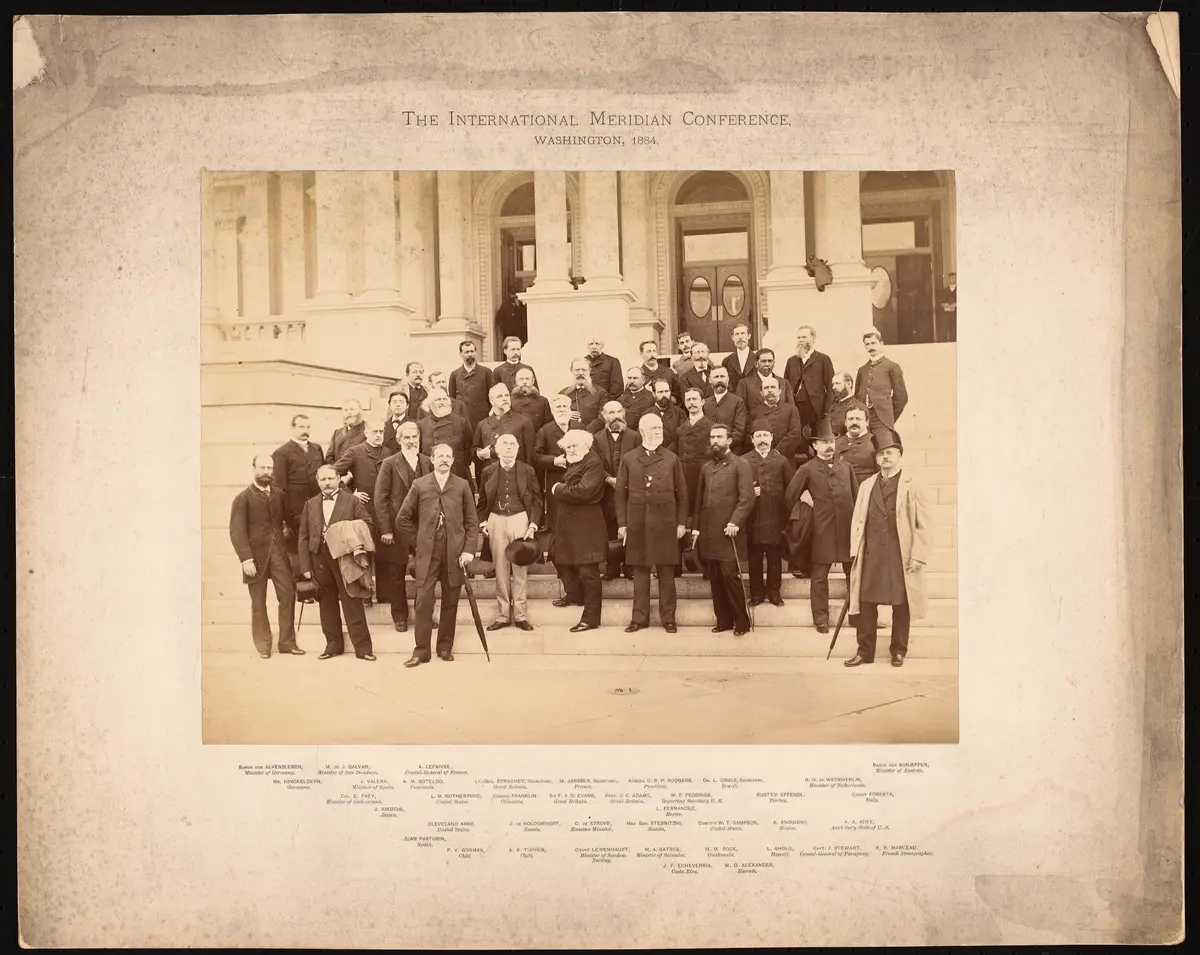
The idea he is remembered for began, in his own telling, in July 1876. Arriving in Ireland, he drove to Bundoran for a train that the printed guide gave as 5.35 in the afternoon, and found that it should have read 5.35 in the morning. He lost sixteen and a half hours and began to think about the twelve-hour clock and about the many local times used by trains and ships. That year he printed a memoir, Terrestrial Time, and in 1879 he read papers on time and a common prime meridian to the Canadian Institute in Toronto, which the Governor General sent on to London. He argued for a world time kept alongside local time, and he took his case to Venice in 1881, to the American railwaymen and engineers whose own reform of November 1883 gave North America its time zones, and to the International Meridian Conference at Washington in 1884, where he sat in the British delegation for Canada. The conference chose Greenwich as the zero of longitude and a universal day beginning at Greenwich midnight. It did not adopt his Cosmic Time, and it did not adopt time zones: each country was left to set its own local time.
The popular story is a little tidier than the record. He did not miss a train: he reached the station in time for one that did not exist. His memoir of 1876 and his papers of 1879 are different works, the first for private circulation and the second to the Canadian Institute, not to the Royal Society of Canada, which was founded only in 1882, when he became a charter member. The time zones of North America came from the railway managers themselves, who acted on a survey he had paid for. His idea of one world time kept beside local time anticipates what is now Coordinated Universal Time, and the lettered hourly zones used by some armed forces echo the lettered divisions he proposed (a resemblance noted by Wikipedia, not checked against a military source).
He worked on other fronts too. For twenty-three years, from a letter of 1879, he campaigned for a British state-owned cable across the Pacific from Canada to Australia and New Zealand, and on the last day of October 1902 he sent two messages round the world over the finished line. From December 1879 until his death he was Chancellor of Queen's University in Kingston; he was knighted in 1897; in 1908 he gave Halifax the park called the Dingle and proposed the tower that stands in it. He died in Halifax on 22 July 1915, aged 88, and was buried in Beechwood Cemetery in Ottawa. His strength, as the Dictionary of Canadian Biography puts it, lay in using institutions for his causes, and the word that fits him best is promoter.
What happened
- 1827
Sandford Fleming is born in Kirkcaldy, the 'Lang Toun' of Fife in Scotland, the son of Andrew Greig Fleming, a carpenter, and Elizabeth Arnot. He is named after his mother's father and an uncle, a Sanskrit scholar.
Kirkcaldy, Fife: where he was born on 7 January 1827- 1841
At fourteen, after school at Kennoway and Kirkcaldy, he becomes a pupil of the Scottish engineer and surveyor John Sang.
- 1845
Fleming leaves Glasgow from the Broomielaw on the sailing ship Brilliant, bound for Quebec, with his brother David and his cousin Henry; his father cheers them from the wharf. The passage costs 13 pounds 10 shillings a head. They settle at Peterborough in Upper Canada, where he finds work with the surveyor Richard Birdsall.
- 1849
With Kivas Tully, Frederic Cumberland and others he helps to found the Canadian Institute in Toronto, an early society of architects, surveyors and engineers that he later turns into a broad scientific one. He is certified as a land surveyor in the same year.
Toronto: where he lived from about 1845 to 1864, made his maps and the first Canadian stamp, helped found the Canadian Institute and read his time papers on 8 February 1879- 1851
Hugh Scobie's firm publishes the topographical plan of Toronto that Fleming made jointly with the surveyor John Stoughton Dennis.
Toronto: where he lived from about 1845 to 1864, made his maps and the first Canadian stamp, helped found the Canadian Institute and read his time papers on 8 February 1879The Province of Canada issues its first postage stamp, the Three-Penny Beaver, which Fleming has designed. It is the first pictorial postage stamp in the world that does not show a ruler's head, and it helps to make the beaver a national emblem.
- 1852
Fleming becomes assistant engineer under Cumberland on the Ontario, Simcoe and Huron Union Railroad, later the Northern Railway, from Toronto to Georgian Bay. The two quarrel, and in 1855 he takes Cumberland's place.
- 1863
After intense lobbying he is the choice of the colonial governments and the Colonial Office as chief surveyor for the railway between Canada and the Maritime colonies, the Intercolonial, which the American Civil War has made a matter of security and which becomes a condition of Confederation.
- 1867
The new Dominion appoints him engineer-in-chief of the Intercolonial Railway, a post he keeps until 1876. He insists on bridges of stone and iron instead of timber, and his piers and bridges outlast the cheaper kind.
- 1871
After hesitating because of his Intercolonial duties he accepts the post of chief engineer of the Pacific railway, the line promised to bring British Columbia into Confederation.
- 1872
Fleming sets out from Halifax with his son Frank, and is joined at Toronto by the botanist John Macoun, a doctor and the Rev. George Monro Grant, to see the Pacific railway route himself: by rail to Collingwood, steamer to Thunder Bay, the Dawson route to Fort Garry, then horses across the plains and over the Rockies by the Yellowhead Pass.
After a little over three months the party reaches Victoria on Vancouver Island (the 9th by Burpee's count; the table in Grant's book runs to 11 October). Grant's diary of the trip, 'Ocean to Ocean', becomes a best-seller and prepares public opinion for the railway.
- 1876
Landing at Londonderry on his way to a friend near Sligo, Fleming drives to Bundoran for a train that the 'Official Irish Travelling Guide' says leaves at 5.35 p.m. He arrives at 5.10 and learns that no train will run that evening: the Guide should have read 5.35 a.m. He loses sixteen and a half hours, and the error sets him thinking about the twelve-hour clock and about time as a whole.
Bundoran, County Donegal: where the misprinted railway guide stranded him in July 1876Before the end of the year he has written 'Terrestrial Time: A Memoir', printed for private circulation. It proposes one time for the whole world, kept by a standard clock and divided into twenty-four parts named by letters, alongside local time. It is not yet a scheme of time zones.
- 1877
His 'Report on the Surveys and Preliminary Operations on the Canadian Pacific Railway up to January 1877' is printed at Ottawa with a general map; in the same year he is made a Companion of the Order of St Michael and St George.
- 1878
At the British Association meeting in Dublin Fleming's offered paper on time is put at the end of the programme. The mathematics and physics section closes on 20 August without reading it, and his letter of complaint to the President is ignored.
- 1879
In a letter to Frederic Newton Gisborne, superintendent of the Dominion telegraph service, Fleming first raises the idea of a cable across the Pacific linking Canada with Australasia: the start of a campaign that lasts 23 years.
Fleming reads his papers 'Time-Reckoning' and the selection of a prime meridian to the Canadian Institute in Toronto, proposing one reckoning of time for the world and a prime meridian common to all nations, and analysing shipping figures that point to Greenwich. The Governor General, Lord Lorne, sends the papers to the Colonial Office with his support.
Toronto: where he lived from about 1845 to 1864, made his maps and the first Canadian stamp, helped found the Canadian Institute and read his time papers on 8 February 1879He is drafted as Chancellor of Queen's College, Kingston, where his friend Grant is principal. He keeps the post for the rest of his life, and his inaugural address of 1880 argues for putting science at the centre of university teaching.
- 1880
Sir Charles Tupper, the minister of railways, dismisses him as chief engineer of the Pacific railway because his independent and outspoken stand has made him a political liability, as the work passes to a private syndicate. He receives a payment of 30,000 dollars and a promise, later revoked, of a monopoly on the Pacific cable.
- 1881
As a delegate of the Canadian Institute and the American Metrological Society, Fleming reads a paper on the adoption of a prime meridian at the International Geographical Congress in Venice and proposes resolutions; they are adopted, and a conference at Washington is called for.
- 1883
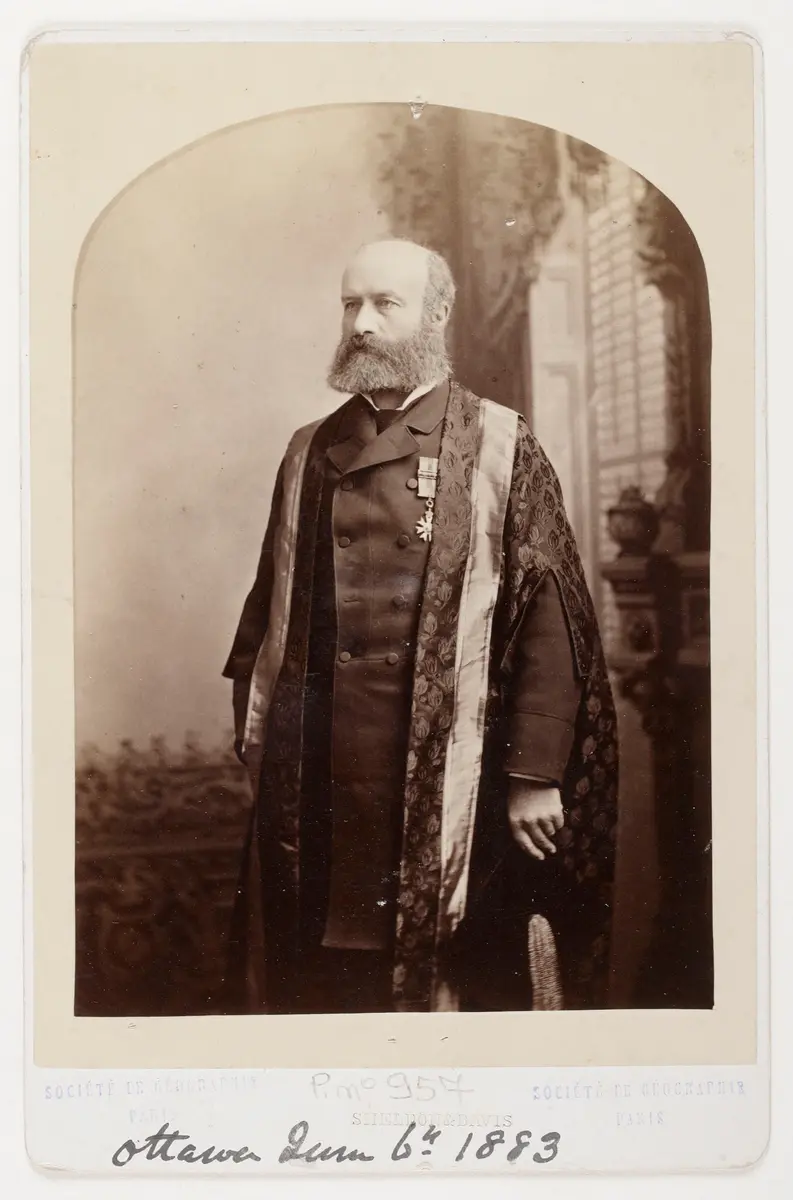
Fleming sits for a photograph in his Queen's robes in Ottawa and sends the card, with a handwritten note on his career and on his Time-Reckoning papers, to the Societe de geographie in Paris, which stamps it on 20 June.
The railways of North America adopt standard time in one-hour zones. Fleming has chaired the American Society of Civil Engineers' committee on time and paid for its survey of railwaymen and scientists himself; the railway managers act at once on its results.
- 1884
His directorship of the Canadian Pacific Railway is confirmed, after he has been resident Canadian director of the Hudson's Bay Company since November 1881.
At the International Meridian Conference in Washington, where he sits in the British delegation as the representative of Canada, Fleming argues against the French motion for a 'neutral' meridian and moves an amendment that leaves open whether the zero lies at Greenwich or on the far side of the globe; it is lost, and the conference chooses Greenwich.
State, War and Navy Building, Washington (now the Eisenhower Executive Office Building), where the State Department's Diplomatic Hall held the International Meridian Conference in October 1884Fleming speaks at length for 'Cosmic time' and for longitude counted continuously in one direction, and has his printed recommendations entered in the record. The conference that day votes to count longitude both ways from Greenwich up to 180 degrees; it does not take up his scheme of cosmic time, and leaves local time to each country.
State, War and Navy Building, Washington (now the Eisenhower Executive Office Building), where the State Department's Diplomatic Hall held the International Meridian Conference in October 1884- 1885
At Craigellachie in Eagle Pass the last rail is laid about nine o'clock and Donald A. Smith drives the last spike of the Canadian Pacific Railway. Fleming, who has come out from Montreal in a private railway car with the party, stands at the centre of the famous photograph in a top hat; that night a telegram sent to Ottawa carries the news.
Craigellachie, Eagle Pass, British Columbia: where the last spike of the Canadian Pacific Railway was driven on 7 November 1885- 1897
He is knighted, having been made a Companion of the Order of St Michael and St George in 1877.
- 1902
The Pacific cable is complete. On the last day of October Fleming hands two messages to the Ottawa telegraph office, one to go west and one east round the globe; the first message received in Canada is the New Zealand prime minister's congratulations to him.
- 1908
Fleming gives his Halifax estate, the Dingle, to the city as a park and proposes a tower on it for the 150th anniversary of the first elected assembly in Nova Scotia (2 October 1758); the tower is built by 1912.
- 1915
Sir Sandford Fleming dies in Halifax at the home of his daughter, aged 88, and is buried in Beechwood Cemetery in Ottawa.